Loyalty

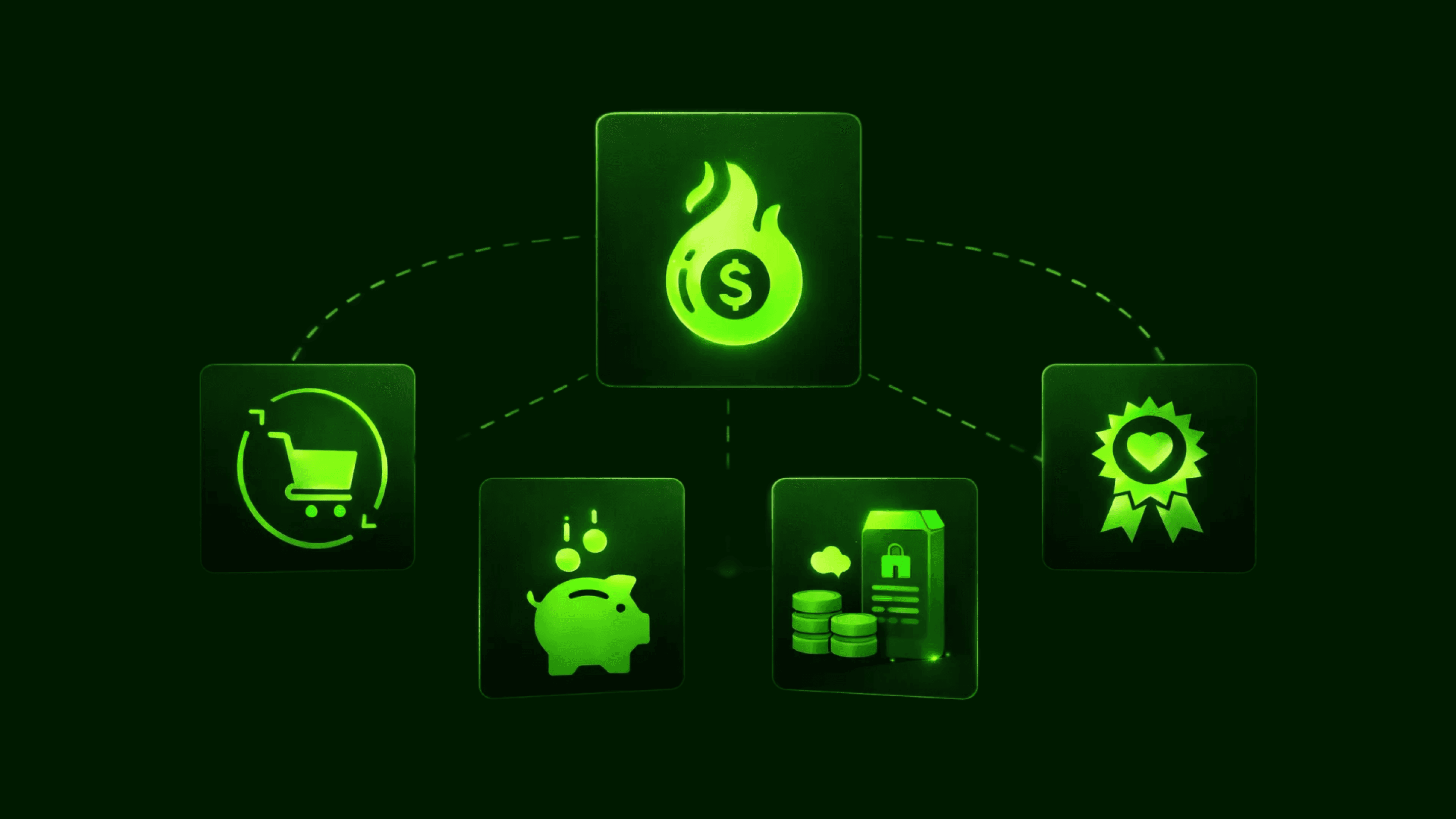
Not every loyalty program needs tiers, tokens, or a sense of belonging. For many customers, it’s still about something basic: buy something — get something back.
That’s the core of an earn and burn loyalty program. Simple, familiar, and still surprisingly effective. In 2026, it remains the backbone of loyalty strategies across industries, not because it’s flashy, but because it works.
This guide explores why the model continues to hold up, how leading brands are making it smarter, and what to keep in mind if you're building (or fixing) one yourself.
What Is an Earn and Burn Loyalty Program
Definition and Concept
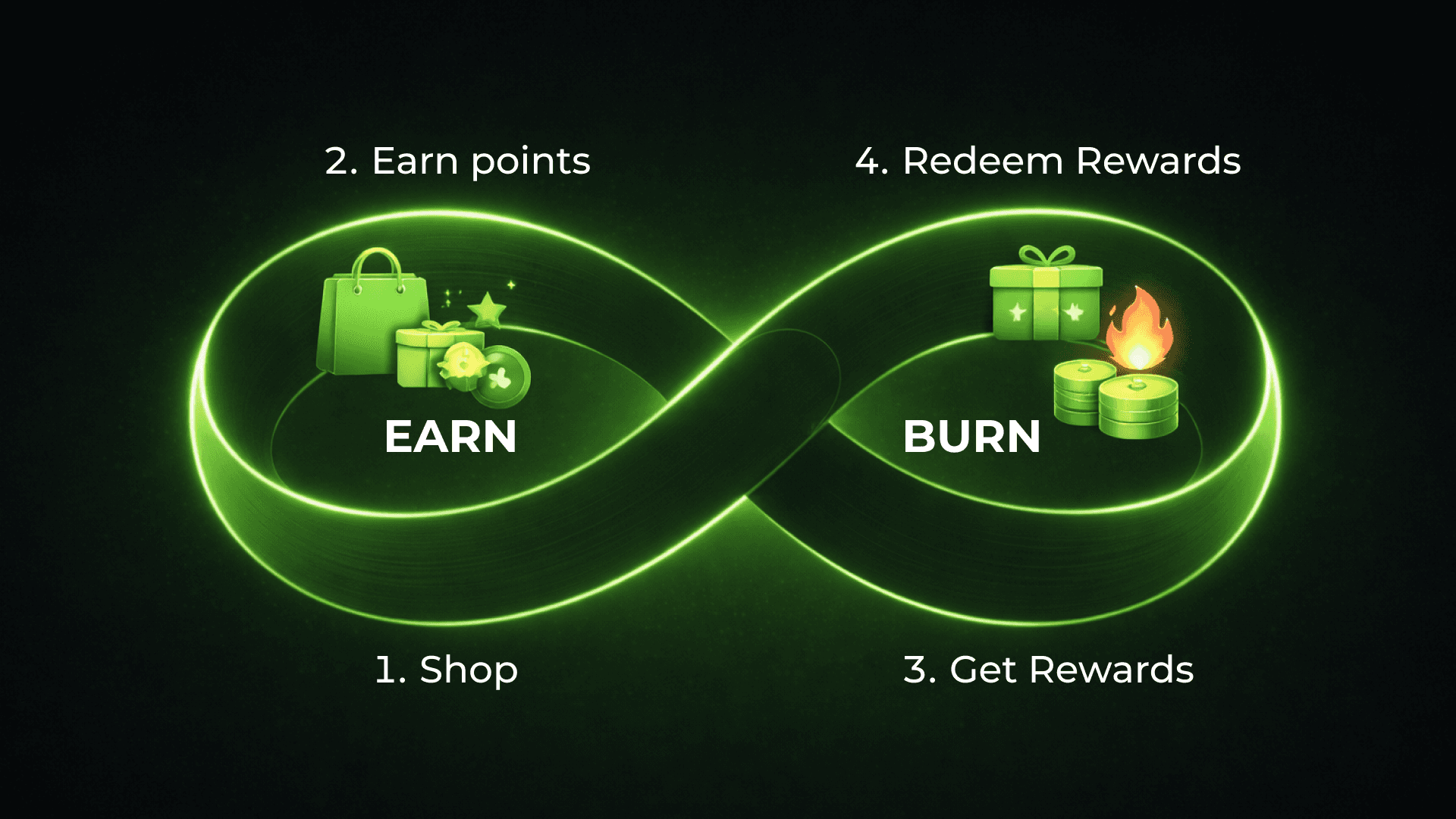
At its most basic, earn and burn loyalty is a two-step loop:
Earn points → Redeem rewards.
That’s it. Customers take a qualifying action (usually a purchase), they get points, and they can later trade those points for something of value — a discount, a free item, a surprise gift.
It’s not trying to build a community and it’s not asking for emotional commitment. It simply gives people a reason to come back. And that’s exactly why it works.
How the Earn and Burn Model Works
Most programs follow a straightforward path:
A customer buys something.
They earn points (usually in proportion to what they spend) and those points stack up inside their account.
No extra steps, no searching, just a balance that quietly builds in the background with every action.
When it makes sense for them, they use those points for something that feels worth it: a discount, a free item, early access, whatever fits. That’s the “burn” — simple, satisfying, and immediate.
Sometimes the reward is fixed (e.g., 100 points = $5 off). Other times, it’s more flexible: customers choose from a catalog, convert points into perks, or apply them toward upgrades.
Modern loyalty rewards program software, like Enable3, allows brands to adjust how this loop works — layering on segmentation, personalized triggers, and real-time feedback, without overcomplicating the core.
The loop stays the same. The experience gets smarter.
Why the Model Still Dominates Global Loyalty Programs
Despite all the innovation in loyalty — emotional engagement, gamified tiers, web3 tokens — most customers still engage with earn and burn loyalty programs more than any other type.
Why? Because they know what to expect.
As highlighted in the Bond Loyalty Report, programs that are easy to understand and deliver early wins see higher participation and redemption rates. And that’s exactly what this model excels at.
It’s familiar, it scales and it rewards behavior immediately, not after a long onboarding journey.
Benefits of Earn and Burn Loyalty Programs
For Customers
Customers don’t always want to learn a new system. They want something that works. Earn and burn points deliver that:
Clarity – No complex tiers or mystery perks.
Speed – You see progress with every transaction.
Control – You decide how and when to redeem.
As Forrester notes, redemption is the moment loyalty feels real. And when that moment comes early, even after a few interactions, it builds trust.
For Businesses
From a brand’s perspective, the benefits are clear:
Lower barrier to entry
Fast launch timelines
Trackable behaviors tied to ROI
Clean data loops for optimizing rewards
Platforms like Enable3 go a step further by helping teams surface what’s working (and what’s not) in real time. If one offer gets redeemed faster than others, or one segment drops off after earning points, the system flags it and adapts automatically.
The result? Less guesswork. More movement.
Brand Examples That Prove the Model Works
Starbucks Rewards — You order, you earn, you see stars stack up. The app keeps it moving with little challenges and real-time nudges. No drama, just a loop that fits into your coffee routine and keeps people coming back.
Sephora Beauty Insider — It’s not only points, it’s the way they show up: a birthday gift that actually feels personal, a reward drop that matches your habits. Simple structure, but with a human touch.
Delta SkyMiles — Book a flight, earn miles, use them later. Nothing fancy and that’s the point. It works because it doesn’t get in the way. The value is clear, and redemption feels like progress, not paperwork.
These programs are built on the same foundation. What sets them apart is how they surface value and how quickly customers feel it.
Limitations of Traditional Earn and Burn Models
Transactional Nature (Low Emotional Loyalty)
Earn and burn loyalty is built on purchase behavior. That’s both its strength and its weakness.
It rewards spending, but not necessarily connection. Customers who chase points may leave as soon as a better offer comes along. There’s little emotional gravity.
As loyalty analyst Emily Collins puts it: “You’re building habits, not relationships.”
Limited Engagement Beyond Purchases
Reviews. Referrals. Social sharing. Wishlist activity. All of these are valuable signals, but most earn and burn loyalty programs ignore them.
The system often sees customers only as spenders. And that’s a missed opportunity to deepen engagement.
Smarter platforms, like Enable3, allow brands to assign point value to non-transactional behaviors, expanding what “loyalty” actually means.
Points Expiry and Breakage Issues
Point expiration might look good in a spreadsheet (less liability), but it erodes trust. If a customer loses points without warning, it feels like a bait-and-switch.
High breakage, when customers earn points, but never redeem them is often a sign that something’s broken in the experience.
Instead of hiding breakage, good systems surface it. Remind customers. Nudge gently. Keep the loop moving.
Difficulty in Differentiating Among Competitors
If every coffee shop offers “Buy 10, get 1 free,” then the program stops being a differentiator. It’s just table stakes.
To stand out, brands need to layer in what matters to their audience — things like:
Surprise perks
Time-limited challenges
Values-based redemptions (donate your points, plant a tree)
Access over discounts
Earn and burn loyalty programs don’t have to be boring, but without intention, they often drift into sameness.
How to Design a High-Performing Earn and Burn Loyalty Program
Define Clear Objectives and KPIs
Before picking reward types or point ratios, step back and ask: What are we trying to move?
Is it the repeat purchase rate? Basket size? App usage? Retention at 90 days?
Your KPIs shape how the program works. Without clear goals, the system risks becoming a feel-good feature — not a growth tool.
Keep the System Simple and Transparent
If a customer can’t explain how your program works in one sentence, it’s too complex.
Simplicity builds trust, clarity builds action. When people know exactly what they’ll get, and how to get it, they’re more likely to engage.
No hidden tiers, no fuzzy math. Just a loop that’s easy to join, easy to track, and easy to love.
Balance Earning and Redemption Values
The reward has to feel worth it. But the path to get there can’t feel endless.Too slow, and users drop off before they redeem. Too fast, and the program loses margin. It’s a balance and it needs tuning over time.
Test how long it takes for the average user to redeem once. If that number is measured in months, not weeks, then something needs adjusting.
Offer Flexible Reward Options
Not everyone wants the same thing. One user values discounts, another wants early access. A third prefers donating points to a cause.
The more choice you offer, the more likely users are to find a reason to stay active. And flexibility doesn’t have to be expensive, just thoughtful.
Introduce Gamified Mechanics
Gamification focuses on creating movement — keeping users active and motivated through progress and small wins.
Limited-time challenges, surprise boosts, streak rewards, each one gives users a reason to keep going and to check in more often.
Used well, gamification nudges behavior forward without feeling like work.
Personalize Based on Behavior and Preferences
Most of the data you need is already there: what people buy, when they visit, what they click but don’t claim.
The best programs don’t just react, they adapt. A user who’s dropped off? Offer a soft re-entry. Someone who redeems fast? Show them a stretch goal.
Enable3 makes this personalization dynamic, not manual. The result: a program that feels smart without feeling scripted.
Promoting an Earn and Burn Loyalty Program
Leverage Email, SMS, and In-App Channels
You don’t need a huge launch budget, you simply need the right message in the right place.
Email works for explaining the value. SMS works for urgency. In-app nudges work in the moment. Use them together to meet the user where they already are.
Use Launch Incentives to Drive Early Adoption
Momentum matters early on. A welcome bonus, double-point days, or first-month challenges can kick things off. Think less about incentives and more about demonstrating momentum.
Highlight Easy Wins – Showcase “earn → burn” success stories
The fastest way to get someone to engage? Show them someone like them who already did.
Highlight small redemptions. Quick wins. User journeys where the value shows up fast. This builds confidence and removes doubt before it stalls action.
Common Mistakes to Avoid
Overcomplicating the Rules
If it takes a chart to explain your program, it’s already too much. Resist the urge to add layers unless they serve a clear purpose and are easy to understand.
Setting Unrealistic Redemption Thresholds
If a user has to spend $300 to get a $5 reward, they’ll walk. Even worse — they’ll join, engage once, then disengage quietly. That’s harder to recover from than no participation at all.
Make sure the first reward feels reachable, especially in the first 30 days.
Failing to Update Rewards or Communicate Value
Loyalty isn’t a fire-and-forget system. If rewards stay the same or comms go silent, people lose interest. Even light updates like seasonal perks, rotating offers, small surprises show users the program’s alive.
Neglecting Post-Redemption Engagement
Redemption is a high point, don’t let it be the last.
Use that moment to invite them deeper: a bonus round, a referral push, or even just a “what’s next” message.
Case Studies of Successful Earn and Burn Loyalty Programs
Starbucks Rewards – Mobile-first, point-based personalization
Starbucks didn’t just digitize a punch card, they rethought how loyalty fits into daily habits. Everything happens in the app: orders, payments, points, and redemptions. Customers see their stars build up in real time, get nudged with timely bonus offers, and redeem rewards without ever asking how the system works.
The magic is in the clarity. The program adapts based on how (and when) people order. Morning regular? You’ll see early-bird boosts. Weekend shopper? You’ll get weekend perks. That’s what keeps the loop alive, the program moves with the customer, not around them.
Delta SkyMiles – Tiered yet transactional simplicity
Delta SkyMiles is often held up as a tier-based program, but at its heart, it’s a very clean earn and burn engine. You earn miles for every flight (or partner transaction), and you redeem them for flights, upgrades, or perks.
What works is the consistency. The tiers add status — yes, but the base loop is accessible to every customer. You don’t need elite status to see value. There’s no mystery around what miles are worth. And with redemption options available even at low balances, customers stay in the flow.
The simplicity matters, especially in travel, where loyalty can quickly get tangled in blackout dates and fine print. Delta avoids that trap and that's why SkyMiles continues to perform.
Sephora Beauty Insider – Flexible points + emotional engagement
Sephora's program has become a textbook example of how to take a basic structure — earn points, get rewards and make it feel emotionally engaging.
Yes, you earn points when you buy. But what makes Beauty Insider different is how those points are used: for exclusive drops, early access, curated bundles — and often, gifts that feel genuinely thoughtful. Add to that birthday surprises, personalized recommendations, and occasional “just because” perks, and the program starts to feel more like a relationship than a rebate system.
It’s still transactional under the hood, but the experience isn’t cold. That blend is what makes it memorable.
Hilton Honors – Integration of earn/burn with partnerships
Hilton Honors shows how earn and burn loyalty programs can stretch beyond their home base. Members earn points not just from hotel stays, but through rental cars, airline partners, credit cards, dining, and even rideshares in some regions.
Redemption, too, isn’t locked into hotel nights. You can use points for upgrades, experiences, or to pay with points and cash, which lowers the threshold for use and keeps the program feeling relevant.
The biggest win? It doesn’t feel like a hotel program. It feels like a travel ecosystem, one that moves with you from airport to restaurant to check-in.
Earn and Burn vs Other Loyalty Models
Tiered Loyalty Programs – Encourages progression and status
Tiers work best when they reflect actual behavior, not just spending. Progress should feel natural and visible, with benefits that match how someone uses the brand. When done well, tiers sit on top of the earn and burn engine like a boost — adding momentum, not complexity.
Subscription Loyalty Programs – Generates recurring revenue
In this model, users pay to access ongoing benefits. It’s effective when the perks show up quickly and consistently — think fast shipping, member-only prices, or bundled access. The value needs to be clear without over-explaining. When users feel they’re getting more than they paid for, it works.
But it’s a high-trust model. If users feel they’re paying for something they don’t use, churn spikes fast. And unlike earn-and-burn, which rewards action, subscription models rely on perceived utility, even in months when the user isn’t active.
Value-Based and Emotional Loyalty Programs – Builds community and purpose
These programs reward alignment more than activity. Brands like Patagonia, TOMS, or even some DTC beauty brands create loyalty by inviting customers into a shared mission — whether it’s sustainability, social justice, or simply a lifestyle identity.
True rewards go beyond discounts — they create impact.. Donate your points. Support a cause. Join a collective goal. These models can create deep emotional stickiness, but they require clarity and authenticity. If the purpose feels performative, it falls flat.
That said, many brands now blend these models. A strong earn and burn core, with tiered moments and purpose-driven layers, often performs best.
The Future of Earn and Burn Loyalty in 2026
AI-Powered Personalization of Rewards
Personalized rewards work best when the focus shifts from data to timing. When the system understands someone’s patterns, even small nudges (like an offer that lands just before a usual purchase) can keep people moving.
As McKinsey notes, customer lifetime value grows when personalization is based on real behavior — and the system stays responsive over time.
Integration with Digital Wallets and Mobile Apps
Loyalty is shifting closer to where people already are. When points show up in mobile wallets or inside the brand’s app, there’s no need to log in or search. Earning and redeeming happens alongside everyday actions, like tapping to pay or checking out online. No friction, no separate system, only value that’s right there when it’s needed.
Real-Time Points Tracking and Instant Redemption
When point balances update right away and rewards can be used instantly, the whole experience feels smoother. There’s no waiting, no wondering, only a quiet confirmation that the system’s doing its job in the background, exactly when it should.
Hybrid Models Blending Transactional and Experiential Loyalty
The best programs going forward won’t choose between earn and burn, tiers, or purpose — they’ll combine them.
The core stays simple: do something → get rewarded. But around that loop, brands will layer in emotional engagement, personalized moments, status tiers, and values that matter.
It’s loyalty that moves with the user — and grows with the relationship.
Key Takeaways for Marketers
Simple still works — earn and burn remains the foundation for a reason: it’s easy to use, easy to track, and drives behavior fast.
But smart matters — when layered with personalization, flexibility, and emotional relevance, the model becomes much more than transactional.
Avoid the autopilot trap — programs need movement. Update offers. Track redemption. Re-engage after rewards.
Design around how people actually interact — not just how we hope they will. The most effective systems notice patterns, adapt quietly, and stay in sync with real behavior.
That’s what Enable3 is built to support: programs that stay flexible, respond in real time, and feel like they belong in the customer’s world, not outside of it.