Loyalty

Your loyalty program might still function, but does it move with you?
As markets shift and customer expectations grow, older platforms start to feel heavy. Simple updates take weeks. When personalization becomes clunky and even simple tweaks turn into workarounds, the system starts feeling like a blocker — not a tool.
Migration is the moment you stop patching and start building forward.
This guide offers a practical path: what to check, who to involve, how to move without breaking momentum. Outgrowing your loyalty platform often signals something bigger: a shift in what the business needs to deliver and how fast it needs to move.
What Is Loyalty Platform Migration and When Do You Need It?
At its core, loyalty platform migration is a shift from one engine to another, often from legacy infrastructure to a more flexible, cloud-based system.
You don’t need a crisis to justify it. Sometimes, all it takes is recognizing that your current tools were built for a different era:
Campaigns are hard to test or personalize
Reporting feels like detective work
Customers expect more, and your system can’t deliver it
As McKinsey points out, older platforms weren’t built for how fast today’s customers move. When the experience starts to lag — slow load times, clunky UX, limited flexibility, people notice. And they don’t wait around.
A stronger platform doesn’t just speed things up behind the scenes, it shapes how customers stay with you over time. The easier it is to earn, redeem, and engage, the more often people come back. Loyalty becomes part of the value they see, not just a feature they use.
As Forbes notes, the future of loyalty is hyper-personalized. People want programs that feel like they’re made for them, not just segments. That shift only works when your platform responds to real behavior, in real time.
Warning Signs Your Loyalty Program Must Be Migrated or Replatformed
Most migrations don’t start with a roadmap. They start with small signs that something isn’t working the way it used to.
Maybe engagement is flat, even after new offers. Maybe customers sign up but don’t come back. Or they try to redeem rewards and hit a wall.
Sometimes the issues show up behind the scenes. Your team spends more time patching workarounds than building new campaigns. Launching even small changes takes too long. Reporting feels like guesswork. Everyone’s pulling numbers from different places — and no one fully trusts them.
You might also notice:
Campaigns that take weeks to go live, even when they’re simple
Reward rules that no one touches anymore because they’re too hard to update
One-size-fits-all messages, even when you’re sitting on behavior data
Systems that don’t talk to each other without manual exports
Customer questions your support team can’t easily answer
On their own, these issues seem manageable. But together, they add weight and that weight slows everything down.
If any of this sounds familiar, it’s a signal that the program or the platform behind it — has stopped moving with your business.
Key Risks and Pitfalls During Loyalty Program Migration
Every migration involves moving parts. Data, timelines, customer experience — each adds a layer of complexity. But most of the real risks come from underestimating one of three things:
How fragmented your existing data might be
How tightly your loyalty platform is connected to other systems
How people (inside and outside) will react to change
Take a moment to sketch how loyalty flows through your ecosystem. Which tools feed into it? Which ones rely on it? From CRM to checkout, even small breakpoints in the flow can lead to bugs later. Seeing those touchpoints now helps prevent surprises once you switch things on.
Step 1: Audit Your Current Loyalty Program and Data
Before you plan anything new, get clear on what you’re working with, especially your data.
What shape is it in?
Are customer profiles complete?
Are opt-ins tracked?
Look at program performance.
Which rewards see the most traction?
Where’s the drop-off?
An audit should also uncover silent blockers, like legacy rules no one questions anymore, or reward logic that doesn’t scale.
Mapping this gives you the foundation to migrate with confidence and to leave behind what no longer adds value.
Step 2: Define Goals and Requirements for the New Loyalty Platform
Before you explore vendors or schedule demos, take time to define what this loyalty platform migration is supposed to achieve.
Not in abstract terms like “more flexibility” or “better UX.” Get specific.
What kind of loyalty logic should the new system support?
How quickly do you need to roll out new campaigns?
Will multiple teams be working inside the platform daily?
What kind of reporting do you need — and how often?
Treat this step like building a blueprint. The clearer your structure, the easier it becomes to evaluate platforms that actually fit. Without this, you're comparing features out of context — and that’s how poor-fit systems get picked.
A strong loyalty program migration always starts with strong intent.
Step 3: Selecting a Loyalty Platform and Technology Partner
The way your business is set up matters. So does the way your team works. Choosing the right loyalty platform means finding a system that fits how your company actually operates, and a partner that can help you move through change without slowing down.
Start with how the platform connects to your world. Can it integrate smoothly with your CRM, app, POS, analytics tools? Does it allow campaign managers to move without waiting on dev cycles? Will your support team have the visibility they need when customers ask questions?
Then look at the scale. If your loyalty logic gets more complex, can the platform handle it or will every new campaign become a workaround?
But choosing the right tool is only half the equation. You also need the right team on the other side of the migration. A strong technology partner will guide you through the messy middle: mapping legacy logic, resolving conflicts, running dry tests, adjusting when things get stuck.
You’ll want a partner who’s been through this before. One who can work inside your timelines, with your team, and help make decisions when the path forward isn’t obvious.
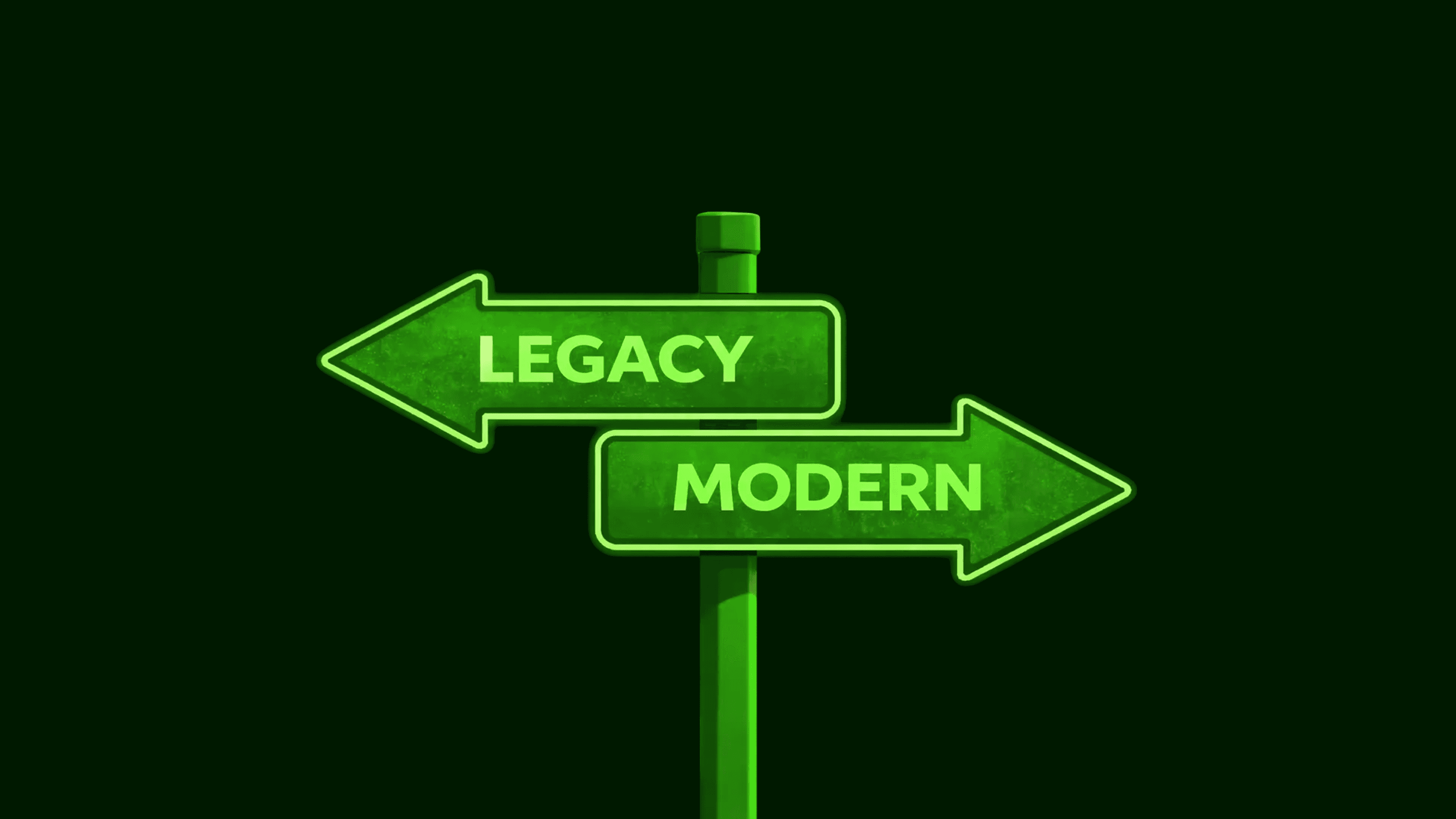
So what exactly changes when you move from a legacy platform to something built for today’s pace?
Here’s a side-by-side snapshot of how modern loyalty platforms unlock speed, flexibility, and long-term value.
Dimension | Legacy Platform | Modern Platform (Enable3) |
Campaign setup | Manual, dev-dependent | No-code dashboard, live updates |
Personalization | Rule-based, static | Event-driven, behavior-based |
Time to launch | Weeks | Days or even hours |
Visibility | Fragmented dashboards | Unified insights, real-time data |
Integration | Fragile, plugin-based | Native, API-first |
Scalability | Difficult to evolve | Built to grow with your business |
When a platform can’t keep up with how fast your business moves, the impact shows up everywhere — in team velocity, campaign agility, and how your customers experience the program.
Choosing both the right system and the right people to support it is what turns a technical decision into a strategic one.
Step 4: Designing the Loyalty Program Migration Roadmap
A migration involves many moving parts. The easiest way to stay on track is to break the process into phases that are easy to follow and even easier to manage.
Loyalty Program Migration Roadmap
Start with setup and configuration. Then move to data mapping and cleanup, internal testing, a limited release, and full relaunch. Each phase should have someone responsible for seeing it through, and a clear signal that it’s ready to hand off.
This kind of structure helps teams stay aligned without needing constant check-ins. It also gives everyone a shared view of what’s happening and what comes next.
Step 5: Data Preparation and Loyalty Platform Migration Execution
What goes into the new platform will shape what comes out of it. And loyalty data is often messier than it looks.
Before migration:
Standardize profile formats across systems
Resolve duplicates and identify partial records
Verify balances, statuses, and historical redemptions
Remove outdated or unused logic from the legacy system
Audit opt-ins and permissions for messaging
Once the data is ready, execution usually starts with migrating in controlled phases — staging, testing, limited release. Don’t expect a single “switch-on” moment. Most successful migrations are layered and iterative.
A well-managed loyalty platform migration is a chance to clean house — not just carry forward every fragment from the past. You’re not just moving data; you’re building a structure that can support your next five years.
Step 6: Customer Communication and Internal Change Management
Many loyalty program replatforming efforts stall because people don’t know what’s coming or why.
Start with internal teams. Explain what will change, when, and how. Give your support, marketing, and operations teams early access. They’re your front line, if they’re confident, your customers will feel it too.
Transitions go smoother when people know what to expect. A few well-placed messages can do more than a full campaign, especially if they show what’s staying familiar, and where to expect something new. That little bit of clarity, right when it’s needed, keeps people moving forward without hesitation.
Next, think about how customers will experience the shift. Will rewards look different? Will balances reset or carry over? Are there any expected gaps in availability?
Get ahead of the questions. Even a short, well-written FAQ or in-app message goes a long way in building trust during transitions.
Step 7: Stay Close After Launch
The platform is live, now you get to see how it holds up.
In the first days, things still shift. Customers move through new flows. Teams adjust their routines. Questions come up you didn’t plan for. That’s normal.
What matters most is staying close. Watch how campaigns behave. Track reward redemptions. Listen to what support keeps hearing. If something’s off, you’ll catch it early — and fix it fast.
Keep feedback tight across teams. Marketing, product, loyalty ops, everyone sees a different part of the picture. Bring it together. What looks small in isolation can point to bigger patterns.
Once things stabilize, look for momentum. Are campaign cycles shorter? Are edits easier to make? Are fewer things getting stuck?
That’s when optimization starts. Not with a big relaunch, but with small wins that stack over time.
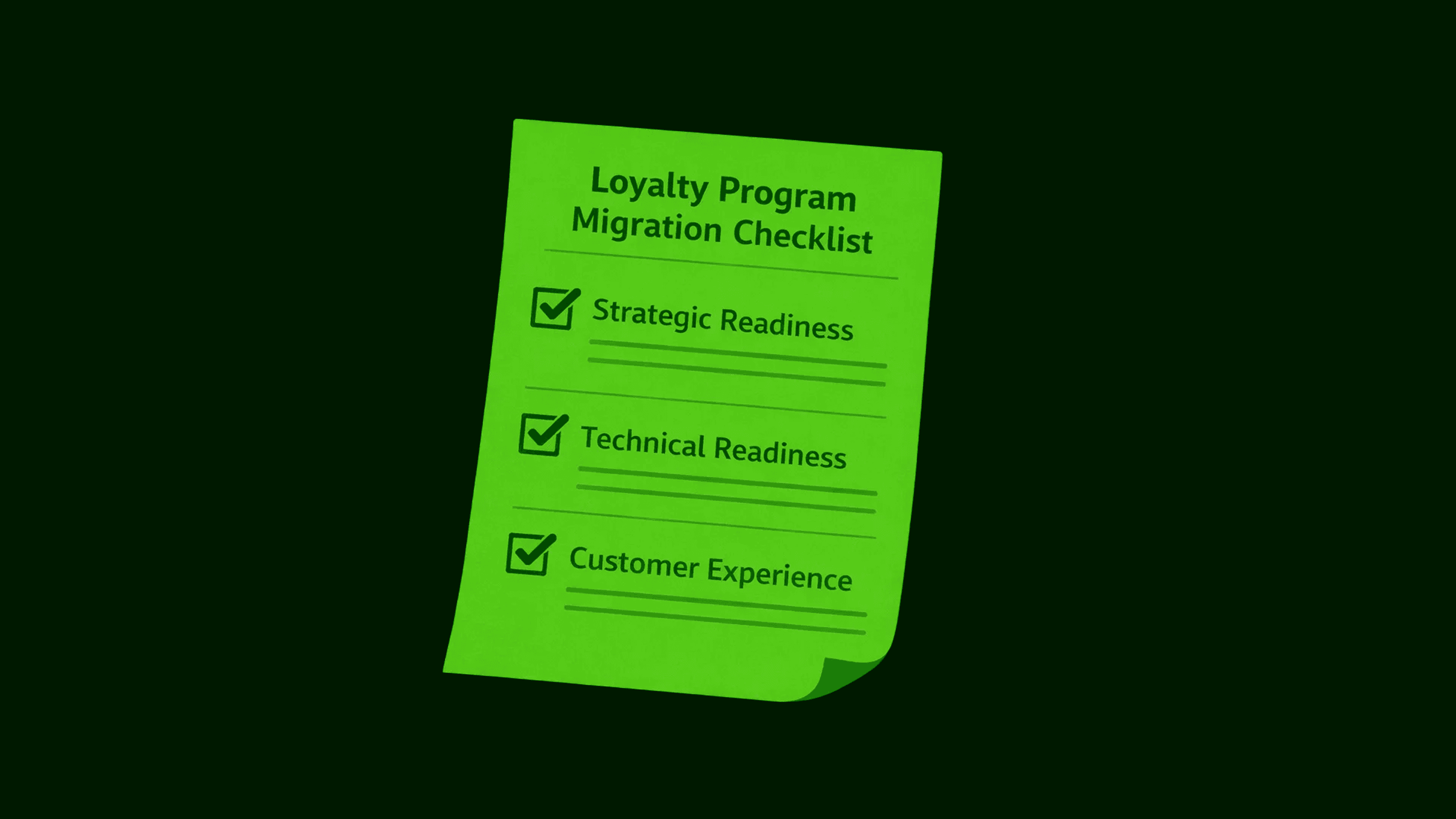
Loyalty Program Migration Checklist
Changing your loyalty platform affects how teams work, how data flows, and how customers engage. That’s why surface-level planning isn’t enough.
This checklist focuses on three areas that define how ready you are to move and how likely it is to go smoothly: strategy, technology, and customer experience.
Most companies start with goals like:
– Increasing repeat purchase rates
– Reducing manual campaign management
– Enabling faster time-to-market for new offers
– Replacing rigid systems that slow down personalization
If any of this feels familiar, this checklist will help you assess what’s working, what’s not, and what needs to happen next.
Strategic Readiness Checklist
Clarify the “why” behind migration.
Are you trying to reduce operational friction? Improve personalization? Or support new business models?Align your teams.
Is marketing focused on personalization, while the product cares about performance? Get everyone solving the same problem.Define clear business goals.
Example: increase repeat purchase rate by 15% or reduce manual campaign ops by 30%.Audit your loyalty logic.
Some rules may still work. Others are legacy leftovers. This is a good time to simplify.
Technical Readiness Checklist
Check your data quality.
Are profiles complete? Do balances match? Are event logs consistent across systems?Evaluate integration points.
Loyalty touches apps, web, POS, CRM. Make sure you know which systems connect — and where the gaps are.Identify outdated logic.
Are there hard-coded rules, dead tiers, or manual reward processes?Run a test environment if possible.
Simulate real user flows: sign-up → earn → redeem. Better to catch friction early.
Customer Experience Checklist
Map the user-facing changes.
Will point balances change? Will users need to re-learn how to earn or redeem?Simplify where possible.
Too many edge-case rules or hidden tiers? Migration is a chance to clean that up.Prepare front-line teams.
Make sure support and marketing can clearly explain what’s changing and why.Plan timely communications.
In-app messages, emails, FAQs — small cues delivered at the right time build more trust than big campaigns.
How Enable3 Reduces the Risk of Loyalty Platform Migration
Migration is rarely a simple switch. It’s a layered shift — technical, operational, behavioral and the more tightly the old system is woven into your business, the more thoughtful the move needs to be.
Enable3 was built for exactly this kind of work.We approach loyalty platform migration the way it actually works in practice — as a layered, collaborative rollout. It starts well before launch day and continues long after. Our role is to support your team through each stage, with clear tools, structured steps, and hands-on guidance that keeps everything moving in the right direction — from the first planning session to the moment real users start engaging.
Migration Tooling and Accelerators
Enable3 gives you the tools to move without stalling. Data can be migrated in stages, fields can be mapped automatically, and existing program logic can be rebuilt without redoing everything from zero. When it comes to data migration and initial user segmentation, this phase usually happens with support from a dev team, especially if the current setup includes custom logic or multiple integrations.
Once this foundation is in place, teams can work much more independently. Enable3 provides a set of proven campaign mechanics: missions, referrals, and actions tied to real user behavior. The campaign mechanics are modular by design and can be adjusted or extended as the program changes over time.
Day-to-day work is handled directly in the dashboard. Campaigns can be launched, edited, or paused without bringing developers into routine updates. This reduces back-and-forth, speeds up iteration, and gives business teams full control over daily loyalty operations.
Dedicated Migration Experts and Playbooks
Migration always brings questions — what to keep, what to rework, what to sunset. You won’t be answering them alone.
Our team has led loyalty programs replatforming across fintech, telecom, EdTech, and community-driven platforms. We start by mapping your current structure, identifying what matters, and helping you rebuild a loyalty model that reflects where your business is going, not just where it’s been.
You’ll also have access to clear, structured playbooks that cover:
Migration sequencing
Data and logic translation
Customer communication plans
Testing and validation flows
These resources function as practical, working tools, supported by a team that stays involved throughout the transition.
Typical Migration Timelines and Outcomes
Most migrations with Enable3 take 4 to 8 weeks, depending on complexity. That includes:
Auditing your current data and rules
Integrating key systems (CRM, app, POS, analytics)
Rebuilding logic in the new platform
QA testing and dry runs
Launch coordination and messaging
Results usually come fast. Within 30 to 45 days, clients often see better engagement, more flexibility, and faster time to market. You move from bottlenecks to real momentum.
What happens after launch?
You see more activity — more sessions, quicker rollouts, stronger engagement from key segments. With clearer insights into what’s working, your next step becomes easier to plan and easier to measure.
Enable3 is designed to open up new possibilities for your program and match the speed of your business, moving well beyond the constraints of legacy platforms.
Conclusion: Turning Loyalty Platform Migration Into an Advantage
Loyalty program migration comes with weight — timelines, systems, expectations. That’s exactly why how you do it matters. A well-run migration does more than fix what's broken. It opens up space to work differently with fewer constraints, more momentum, and the freedom to build loyalty in ways that actually match how your customers behave. That shift is what turns a technical project into a strategic gain.
With the right platform and the right partner, the shift becomes an upgrade. You gain back the ability to move faster, experiment more, and shape loyalty around real behavior, not system limits.
As McKinsey emphasizes, well-executed loyalty programs can increase customer lifetime value by 15–25%, especially when backed by clear strategy and agile technology.
If you're thinking about making a change, we’re here to help you lead it on your terms with full clarity from day one.