Loyalty

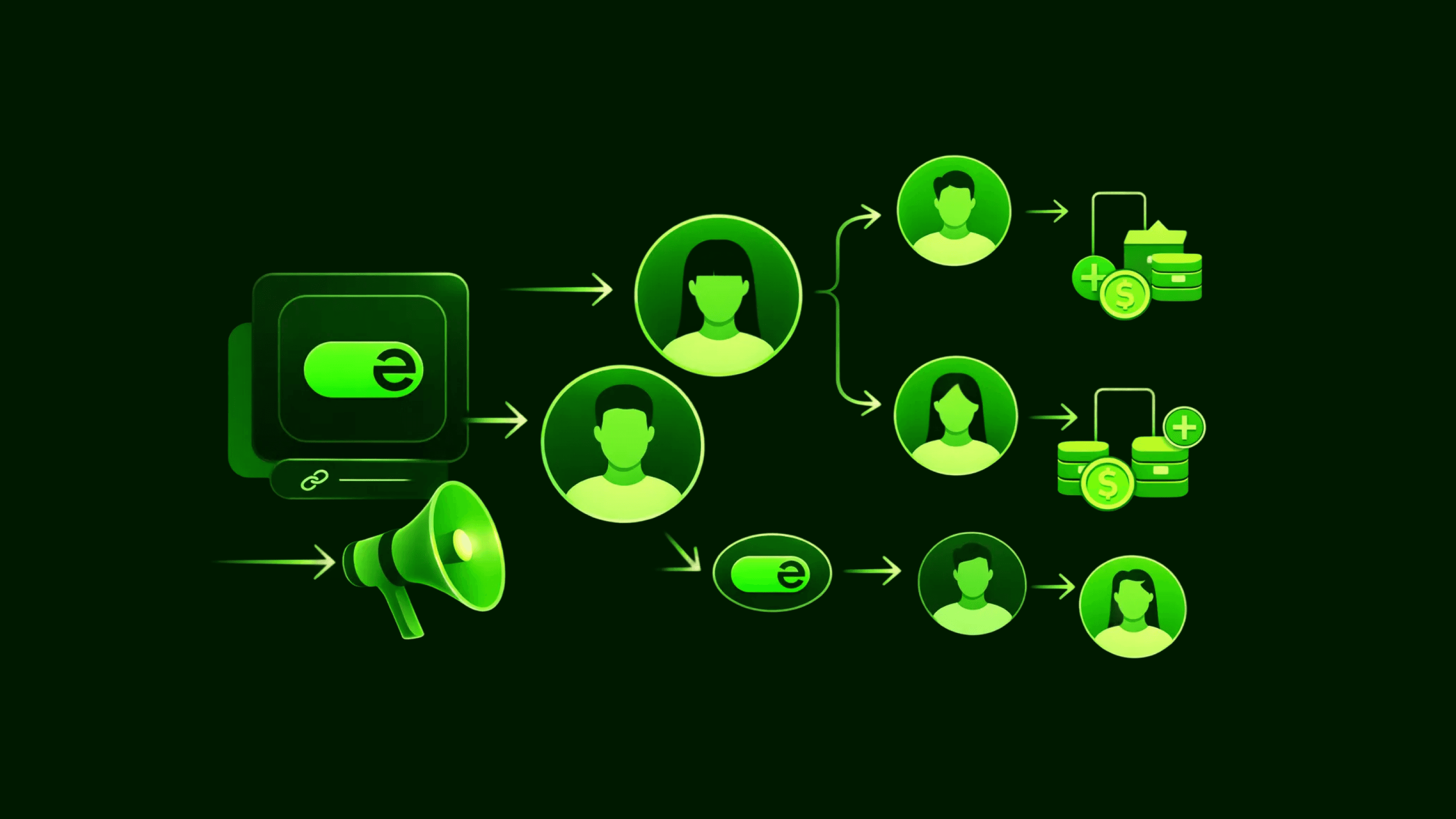
A few years ago, referral programs were mostly transactional. Share a link, get a code. Simple setup, simple return.
That still works sometimes. But for most users, it fades fast. They share once and forget about it. Nothing invites them back.
Today’s referral experience works differently. The best programs give users a reason to return. They show where you are on the journey and what’s ahead. Each small step becomes part of something longer — a path, not a one-time action.
This shift is already visible across industries. In a HubSpot roundup, brands describe how simple referral moments became more effective once embedded in structured, gamified systems, designed for lasting connection, not just immediate reach.
That’s where referral gamification comes in. It adds structure to the process, not noise, but design. You see movement, you unlock feedback, you know what to do next.
At Enable3, we call it momentum by design. A clean cycle that connects action to feedback, and feedback to progress. This built-in motion doesn’t rely on reminders or push tactics. It works because the user can feel it unfolding.
A strong gamified referral program sits within the product experience itself. When it’s well-designed, it gives users a reason to return and keep participating over time.
What Is a Gamified Referral Program
A gamified referral program still follows the basics: someone refers a friend, someone receives a benefit. What changes is how that journey feels.
Instead of a flat sequence — share, reward, done — the process becomes layered. Users earn points, complete challenges, unlock badges, and track their progress. Each interaction leads somewhere. Each result has context.
This doesn’t make the system more complex, it makes it more usable. Users stay aware of how they’re doing. They don’t guess at the value. They see it.
Referral programs that add interactive mechanics hold attention longer. That means higher participation, stronger retention, and more predictable outcomes.
The mechanics are just the surface. What matters is that they’re used to reinforce motivation, not distract from it. When people see movement, they stay with it. When the experience feels clear, they trust it.
Psychology Behind Referral Gamification
There’s a reason referral gamification works and it’s not novelty, it’s familiarity.
People respond to feedback. They track milestones. They build habits around visible outcomes. When a referral program reflects those instincts, it sticks.
Users feel more confident when they know the rules. They stay active when progress is easy to follow. They engage more, when rewards are both visible and relevant.
At Enable3, we approach gamification for customer engagement as a behavioral system. The structure is thoughtfully designed to provide consistent support. In referral programs, benefits can be shared. The person who refers earns progress and the invited friend can receive a welcome coupon or their first loyalty points.
Motivation Triggers and Reward Loops
Every strong gamified referral program runs on a loop:
action → reward → reinforcement → repeat.
And that cycle is what keeps users inside the experience.
Quick feedback is key, users are more likely to repeat behaviors when they get immediate signals of progress, whether that’s points, progress bars, or instant badges. Progress feels real when it feels immediate — that’s what keeps the loop spinning.
The power of referral gamification lies not just in the outcomes, but in the cadence that guides users toward them.
Social Competition and Recognition
Recognition grows stronger when it’s easy to see. A name moving up the leaderboard. A badge that appears after a key action. These small signals help users track where they stand — and why it matters.
As research from PMC notes, referral programs that use gamification most effectively tend to include rewards, badges, points, and social interaction. When users can see each other’s progress and share that experience, participation becomes more active and easier to sustain.
Enable3’s gamification for customer engagement makes this visibility part of the structure. Each user can follow their own steps — what’s complete, what’s active, and what’s coming. That clarity turns participation into momentum.
Habit-Building Through Game Mechanics
Habits form through familiar patterns. When actions repeat with structure, users start returning naturally — without needing prompts.
Referral streaks, recurring goals, and visible milestones act as anchors in the system. These steady points of contact make it easier to stay engaged.
Each action builds on the last. Over time, the behavior reinforces itself — and re-entry becomes part of the flow.
Key Elements of a Gamified Referral Program
A strong gamified referral program relies on clear mechanics that support long-term engagement. These are the elements we see delivering consistent results across different industries.
Points and Levels
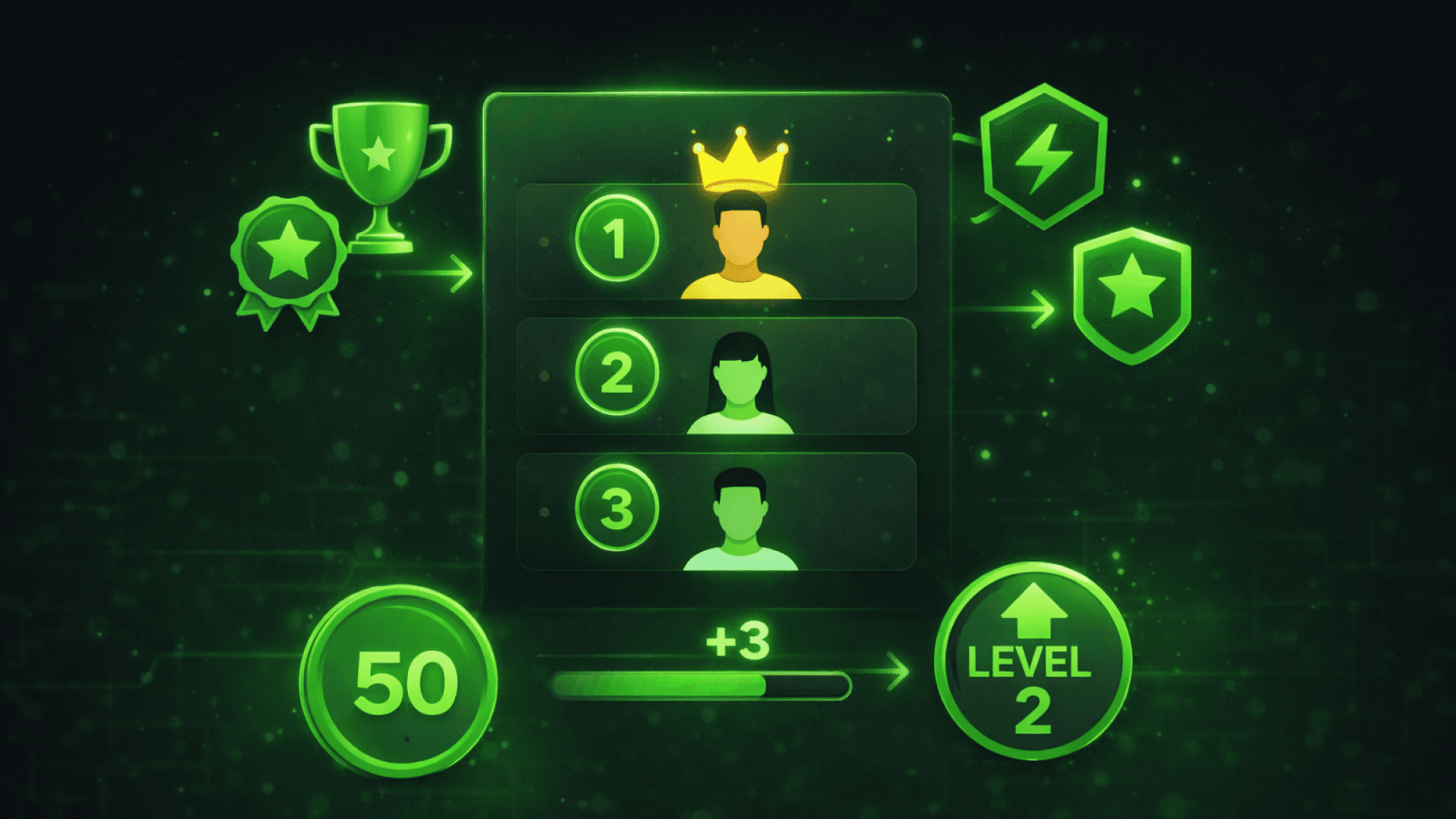
Points turn effort into visible steps. Levels give those steps a path forward. Every time a user refers to someone, shares a code, or hits a milestone, they earn points.
Levels take that one step further. They give users a frame for where they are and what’s ahead — whether it’s Bronze, Silver, Gold, or something uniquely branded.
Programs that highlight progress — how far someone has come, and what’s still ahead — tend to see higher repeat engagement. When value feels close, users stay involved.
Leaderboards and Rankings
Some users are motivated by progress. Others by visibility. That’s where leaderboards work.
They turn referral activity into something you can see and compare. Weekly or monthly resets help more people feel like they can participate, not just early adopters or power users.
When you show where people stand, you’re not just encouraging competition. You’re giving users a reason to check in, stay involved, and push a little further.
The best programs don’t make leaderboards feel exclusive. They make them feel alive.
Badges and Achievements
Badges give users visible proof of progress. Each badge points to a specific action — and to the person who made it. When users earn names like Top Referrer, it becomes part of how they’re seen within the gamified environment.
Unlike time-limited perks, badges stay. They build identity across the experience and help users track their role in its growth.
Each badge adds weight to the experience. Together, they create a sense of history and give users something to carry forward as they reach new levels.
Progress Bars and Milestones
Few visuals are more powerful than a progress bar. As HubSpot points out, people speed up as they approach completion — a behavioral pattern known as the goal-gradient effect.
Milestones (like “5 referrals = bonus reward” or “earn 100 points = next tier”) harness that momentum. Each milestone gives users a short-term win on the way to a bigger goal, keeping energy and attention high long after launch.
How to Build a Gamified Referral Program
You don’t need a dozen game mechanics. You need the right ones, in the right order, for the right people. A gamified referral program works best when built as a system, not a feature. It takes shape through clear intent, structured feedback, and mechanics that create repeatable momentum.
Here’s how to build one that works beyond launch.
Define what “working” looks like
Before you add points or badges, define the win. Is it user growth? Activation? Lifetime value of referred customers?
Pick the metric that actually matters to your business — then reverse-engineer the behavior that gets you there.
As,Harvard Business Review points out: “incentives work best when they reinforce actions people already value.” Without clarity, gamification just amplifies noise.
Design for behavior, not clicks
Your users aren’t all the same — and neither is what motivates them. Some want status, some want access, some just want a quick reward. Map your segments, then choose mechanics that meet them where they are.
At Enable3, we often recommend starting with three core motivators: progress, recognition, and urgency. If your referral program speaks to those, it’s speaking to behavior, not just vanity metrics.
Use mechanics that create forward motion
Levels create anticipation.
Milestones give short-term wins.
Leaderboards drive visibility.
Streaks keep the pattern consistent.”
But more is not better. Choose a few, use them well, and leave space for the rhythm to build naturally. Gamification that tries too hard often backfires.
Make rewards feel fair — and earned
Users don’t need huge rewards. They need rewards that feel right.
As HubSpot’s gamification research shows, small, timely rewards outperform larger ones delayed or gated behind complexity.
Use a mix: a quick bonus for the first referral, tiered perks for long-term engagement, something unexpected at a milestone.
People don’t just chase value — they chase surprise.
Choose a platform that doesn’t fight your flow
Tooling should work with your engagement rhythm, not against it.
Enable3’s gamification software supports complex referral logic, personalized triggers, and dynamic reward tiers — without adding friction to your CRM or UX.
You’re building a long-term behavior engine — shaping a journey that reinforces itself. Make sure your tools can evolve with it.
Measuring Program Performance
If you’re not learning, you’re guessing. And guessing doesn’t scale. Gamified referral programs produce motion. Measurement tells you if it’s meaningful.
Start with signals, not spreadsheets
What does progress look like in the first 7 days?
Where do users stall out?
Are they referring — or just collecting rewards?
The answers aren’t always in total numbers. They live in patterns.
If people refer once but not twice — check your reward pacing.
If they stop after a level-up — your system might be too front-loaded.
If they never start — your ask may not be visible or clear.
Numbers are feedback. Behavior is the story.
Track what matters
A few metrics worth watching:
Referral activation rate — how many invitees become real users.
Reward redemption lag — a proxy for perceived value.
Engagement after milestone — are users still in the game?
Time between actions — the heartbeat of your loop.
And don’t forget silence. Drop-off tells you as much as uptake.
Test, adjust, repeat
As ReferralCandy notes, the strongest referral programs evolve through micro-adjustments — not relaunches.
Change one thing at a time. Then watch what happens not in aggregate, but in flow:
Does it feel smoother? Faster? More natural? That’s where you start seeing real signals and useful change.
Common Mistakes to Avoid
Gamification fails quietly. Not with dramatic crashes, but with campaigns that fade, stall, or get ignored. Here’s where it usually goes wrong.
Too much, too soon
You don’t need seven layers of game logic. You need one clear behavioral cycle.
When users have to learn how to earn, they don’t.
Start simple. Expand later.
Forgetting the user experience
If progress feels hidden or rewards feel confusing, people stop caring.
Use language they understand. Show them where they are. Let them win early.
Gamification isn’t about making things fun. It’s about making things feel intuitive.
Weak rewards, weaker timing
An “okay” reward at the right time beats a big one that arrives too late.
As Growth.Design’s UX case studies show, delayed gratification with no feedback = no retention.
Letting the system go stale
What starts strong often ends in silence. If nothing changes, nothing grows.
Refresh copy. Rotate goals. Reboot the leaderboard. A referral journey that evolves reminds users they’re not forgotten.
Long-Term Success Tactics
A gamified referral program works best when it’s treated not as a one-off launch, but as a growing, adaptive experience. Here’s how to keep it alive.
Add new challenges regularly
Small updates go far. A weekly quest. A seasonal badge. A “surprise” double-points window.
These moments reset attention without rebuilding the whole thing. They say: “we’re still here and so are you.”
Refresh language, not just rewards
Even the strongest initiative gets ignored if it sounds repetitive. New tone = new energy.
Update headlines. Add personality. Speak in the voice of your users, not your platform.
Involve teams, not just individuals
Group goals create shared dynamics.
“Hit 100 combined referrals this month and unlock a team bonus.”
People stay longer when they feel like part of something.
Listen early. Adapt fast.
Send micro-polls. Test reward variants. Run A/Bs on invite copy.
Feedback builds trust — and better programs.
Loyalty isn’t static. Neither is your engagement system.
Future Trends in Referral Gamification
Gamified referrals are evolving toward simplicity, intelligence, and personalization. As the mechanics mature, relevance matters more than volume.
Personalized, AI-driven systems
Reward systems are becoming more adaptive. When a user slows down, the platform can respond. When they stay active, the behavior gets recognized and reinforced.
HubSpot highlights how real-time personalization has become a core element of behavioral marketing — helping experiences adjust to what users do, as they do it.
Blockchain for reward tracking
Referral rewards that live on-chain mean more trust, more transparency — and eventually, more portability. Expect early adoption in fintech, loyalty wallets, and crypto-integrated ecosystems.
Integration with real social behavior
Referrals don’t live in email anymore. They happen in DMs, Discords, TikToks, and voice chats.
Smart programs will meet users there, not force them back to a dashboard.
Ethical and Transparent Reward Design
Strong gamification is built on clarity. That means showing users what they’re earning, how, and why it matters.
Users stay longer when the rules are simple to follow. When they can see how rewards are tracked and how their data is handled, it’s easier to stay connected to the experience.
Clear programs don’t need explanation. They hold attention because the structure makes sense and the flow stays steady. That’s why trust isn't just a feature. It’s part of the experience.
How Enable3 Can Boost Your Gamified Referral Program
Referral programs don’t scale just because they’re a good idea. They scale because the system behind keeps the flow going.
At Enable3, we work with teams to turn intent into a real, working structure — one that users can engage with naturally, and businesses can measure without guesswork.
Whether you’re building your first gamified referral program, optimizing an existing one, or rebuilding something that’s gone flat, our platform provides:
Flexible mechanics like missions, streaks and badges
Real-time reward logic, with smart conditions and automatic delivery
CRM and app integration, so the referral system fits into your existing tools
Live analytics, built to show patterns, not just activity
Teams don’t need more complexity — they need fewer roadblocks.
Enable3’s gamification software is designed to reflect how users behave and how businesses operate. No rigid templates. No extra noise. Just tools that help support growth at the right pace.
When the structure works without friction, growth becomes more stable and easier to manage.
Key Takeaways
A gamified referral program turns sharing into a self-sustaining process — driven by motivation, visibility, and momentum.
Success doesn’t come from adding mechanics. It comes from choosing the ones that match your audience and goals.
Clarity, fairness, and progress are the foundation.
Data matters — but only when tied to behavior. Iterate often.
The future is personalized, ethical, and embedded in how people already connect.
Enable3’s gamification software helps you build a referral journey that grows on its own.