Loyalty

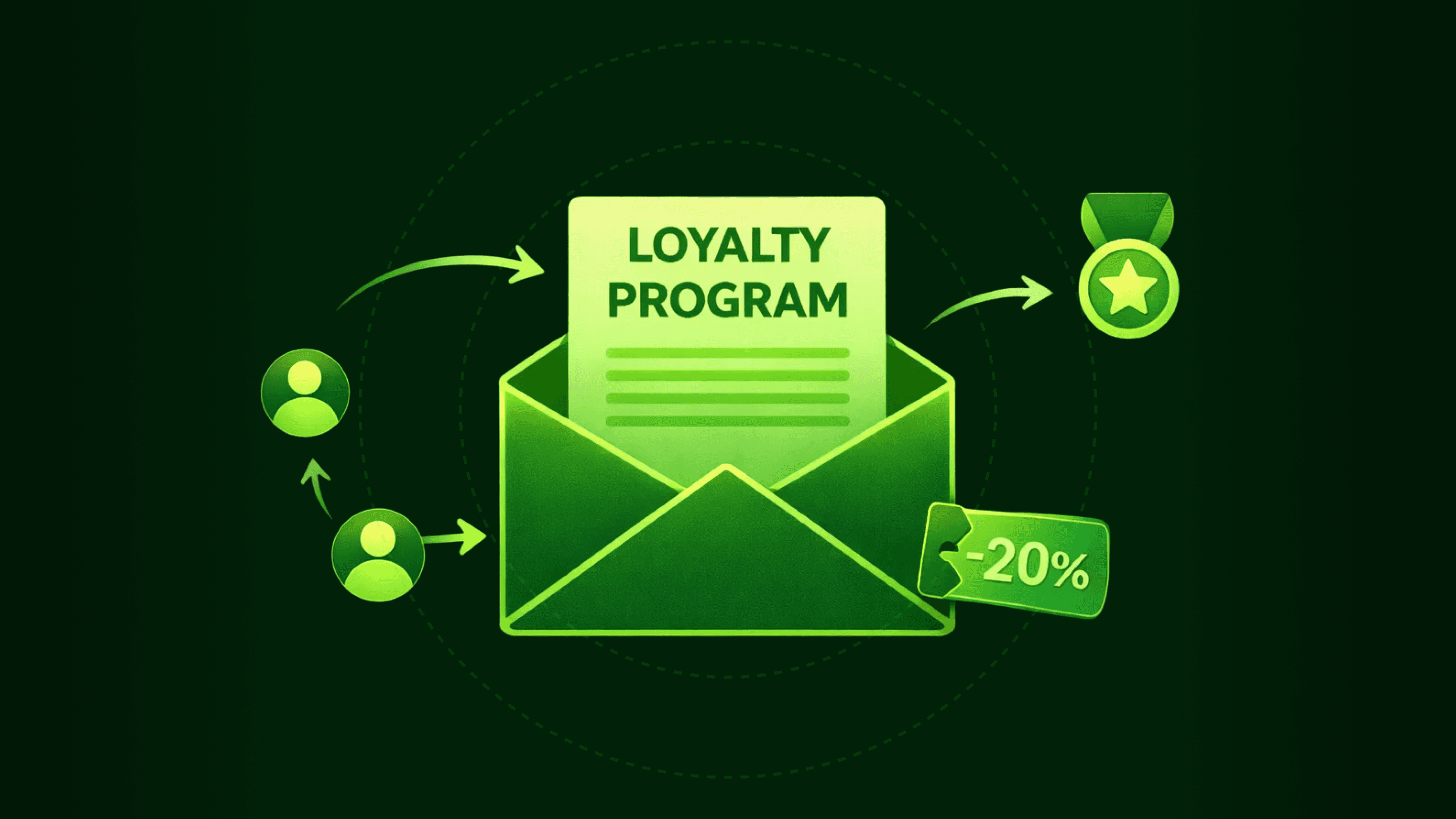
Loyalty program emails are one of the simplest and most effective ways to turn a first-time buyer into a repeat customer. Research from McKinsey shows just how powerful they can be. Members of high-performing loyalty programs are up to 80% more likely to stick with a brand and twice as likely to recommend it to others.
When done right, loyalty emails keep your brand top of mind, make rewards feel real, not abstract, and encourage customers to come back at exactly the right time. In this guide, we’ll walk through what email loyalty programs actually are, how they work in practice, and which types of loyalty emails consistently drive repeat purchases. You’ll also find clear loyalty program email examples and proven practices you can easily adapt.
What Is an Email Loyalty Program?
An email loyalty program is a structured way to reward customers for coming back. In this case, emails serve as the main way to stay in touch. The idea behind such a practice is to recognize repeat behavior, share motivating rewards, and keep customers engaged between purchases.
A strong email loyalty program consists of several key elements:
Clear value proposition. Customers should immediately understand what they’re getting, be it points, discounts, or exclusive perks, and why joining is worth their time.
Enrollment flow. This can happen at checkout, through on-site sign-up forms, or via a follow-up email after a purchase. The easier it is to join, the better your participation rates.
Data collection. As customers interact with your emails and shop more often, you capture preferences and behavior that let you send more relevant and personalized messages later on.
Solid points or rewards engine. This defines how customers earn rewards, e.g., per order/action/milestone, and how they can redeem them without friction.
Automated email flows. Welcome emails, milestone celebrations, reward reminders, and win-back messages are triggered automatically based on what the customer does.
Segmentation and personalization. Offers and messages should change depending on how often someone buys, how much they spend, or what they’re interested in.
Progress visibility. Showing customers their points balance, tier status, or how close they are to the next reward keeps motivation high and reduces drop-off.
Incentives for advocacy, such as rewards for referrals, reviews, or social sharing, turn loyal customers into brand promoters.
Measurement loop. By tracking metrics like open rates, click-through rates, reward redemptions, and incremental revenue, you can continuously refine the program and improve its performance over time.
Core Building Blocks of Effective Loyalty Emails
Effective loyalty emails work because they combine smart psychology, perfect timing, and clear rewards. At a basic level, they do three things:
remind customers what they’ve already earned;
show them how close they are to the next reward;
highlight what they’ll lose if they don’t take action.
The best-performing programs hinge heavily on personalization. The subject lines should be relevant and dynamic. For example, they should touch upon real-time points balances or tier status. Plus, they should hint at subtle urgency, such as rewards that are about to expire or limited-time bonus offers.
In terms of design, don’t chase flashy layouts and colors. A high-impact rewards program email is clean, mobile-first, and built around one clear call to action. It is paramount to explain to customers what they should do next.
Automation and segmentation tie everything together. Messages go out at moments that actually matter. For example, brands often send emails right after a purchase, just before a reward expires, or when a customer’s activity starts to drop. When all of these pieces work together, loyalty emails become a predictable, measurable driver of repeat revenue.
Clear value and simple next steps
The best loyalty emails work because they are to the point. A customer should instantly understand what they’ve earned and what to do next. Emails with a clear value proposition see higher open rates, and emails with a single call to action generate more clicks than those trying to do too much at once.
Start with a strong, straightforward headline that spells out the reward, like: “You’ve earned 200 points – get 20% off now.” Then reinforce it visually with a progress bar or points counter that shows exactly how close someone is to the next reward or tier. When it comes to redemption rules, keep the language simple and transparent. Steer clear of fine print and jargon.
The next step should be impossible to mess up:
One large, high-contrast “Redeem Now” button that takes users straight to a pre-filled cart.
A secondary option, like “View Rewards” for anyone who wants to browse.
No more than 2 or 3 short sentences explaining the offer.
Timing is no less important. It is highly recommended to send loyalty emails within 24 hours of a qualifying action. For instance, you can do that after a person made a big purchase, and the motivation is still high. Try direct subject lines such as “Your 150 points are ready” and compare how they work against urgency-based ones like “Don’t forget your rewards”. Monitor which emails people open more often. Skip vague phrases like “exclusive perks.” Customers want to see real value for them, like “$10 off” or “Free shipping”.
When loyalty emails are clear and timely, passive members turn into active buyers. Starbucks has some great loyalty rewards programs examples to be proud of. Its app-connected emails use simple “X stars = free drink” messaging, which helps drive massive repeat revenue year after year.
Consistent branding across all reward emails
Your loyalty emails should instantly remind recipients about your brand, regardless of the offer inside. By maintaining consistency, you can build trust and instant recognition. On average, branded emails drive about 15% higher engagement than generic, one-off templates.
To get there, lock in a few visual and structural basics across all loyalty emails:
Use the same color palette, fonts, and logo placement that you have in your main campaigns.
Repeat familiar design cues, e.g., maybe gold stars for rewards, a progress bar, or a thermometer-style meter that signals momentum.
Keep the tone of voice consistent, too, whether that’s friendly and playful like Glossier or polished and premium like Sephora.
Stick to a clear template structure: hero image, value statement, call to action, then a footer with terms.
Consistency doesn’t end with visuals. Verbal means should also be aligned. If your brand voice is empowering or friendly, don’t suddenly switch to hard-sell language. Use the same reward terminology everywhere. For example, don’t call “points” “credits” if customers are familiar with the first option. Plus, reuse the same icons and labels.
Expert tip: Make 3 to 5 reusable loyalty email templates based on lifecycle stage (new members, active customers, and lapsed users), but keep the same branding DNA across all of them. You can still A/B test things like header images or button colors within those boundaries.
Zappos loyalty email examples deserve special attention. They maintain pixel-perfect brand consistency across more than 100 automated email flows. This is one of the key reasons why their customer retention rate is roughly 75%.
If people instantly recognize your brand in their inbox, they’re already more likely to open, click, and engage.
Personalization based on behavior and lifecycle stage
Generic rewards emails aren’t effective. What’s more, they actively waste inbox space. When personalization is based on real customer behavior and lifecycle stage, it can lift revenue by 10–30%, according to McKinsey. And the good news is, you don’t need more data to do this well. You just need to use the first-party data you already have.
Start by segmenting around behavior:
High-value customers respond best to VIP-style messaging, like “Double points this weekend – just for our top spenders.”
Frequent buyers benefit from progress-based nudges such as “Only two more purchases to reach Gold status.”
Lapsed members need a clear reason to come back, for example, “We miss you! Here are 500 bonus points to get you started again.”
Next, layer in the lifecycle stage:
New members should receive a short welcome series that explains how the program works and how to earn and redeem rewards.
Active earners are perfect for milestone messages like “You just hit 1,000 points – keep going to get 40% off.”
At-risk customers respond to urgency, such as “Your points expire in seven days. Don’t lose them.”
On the execution side, dynamic content does the heavy lifting. Email blocks can automatically pull in a customer’s first name, current points balance, recent purchases, or personalized product recommendations.
Personalization should always be transparent. Make it clear how data is used and include easy opt-out options. Sephora is a strong example. Its Beauty Insider emails personalize content based on purchase history and skin type, helping loyalty members generate roughly 80% of the program’s total revenue.
If you’re just starting, keep it simple. Begin with basics like name, points balance, and last purchase date. As your data matures, you can layer in deeper insights like category preferences or product affinity.
10 Loyalty Program Email Examples by Use Case
Loyalty programs are proven to increase retention, and the numbers back it up. Recent Bond data shows that loyalty members spend about 12–18% more per visit, while Forrester reports that email drives roughly 40% of all loyalty program engagement. In other words, a reward email has a serious impact on how customers perceive your brand and whether they will return.
The 10 loyalty program email examples below show how effective programs combine personalization and urgency to achieve high open rates. Each one has a clear call to action, a visible reward, and a strong reason to act now. Take a look at the following rewards email examples to get inspired for your own messages.
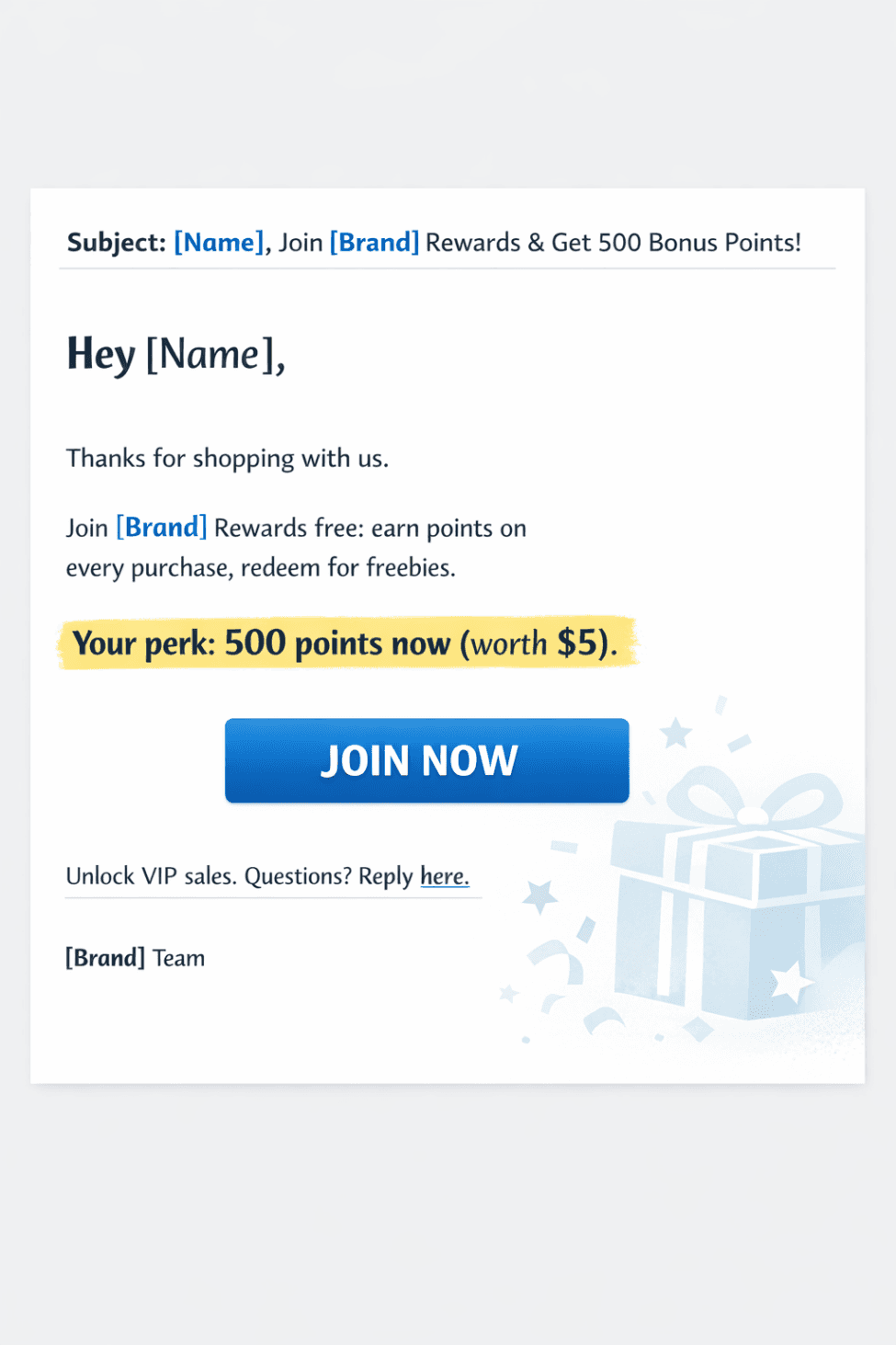
1. Invitation to join your email loyalty program
Loyalty programs typically start with invitation emails. When they’re sent to the right non-members with the right incentive, they can drive significant signup rates.
The key is removing friction and leading with immediate value. Make joining easy – ideally, one click straight from the email. Clearly define what awaits the customer, whether that’s bonus points, free shipping, or an instant discount. Segmentation makes these invites far more effective, too. For example, someone who abandoned a cart may see “Get 10% off your next purchase when you join.”
Remember personalization. Use the customer’s name and reference past behavior when possible, like “Loved that coffee? Earn free cups with every order.” It makes the invite feel relevant instead of promotional.
Subject lines are worth testing carefully. Compare options like “Unlock VIP Perks Just for You” versus “Join & Save 20% Today” to see what drives more opens. Timing also matters. It is better to send invites right after a purchase or on a birthday.
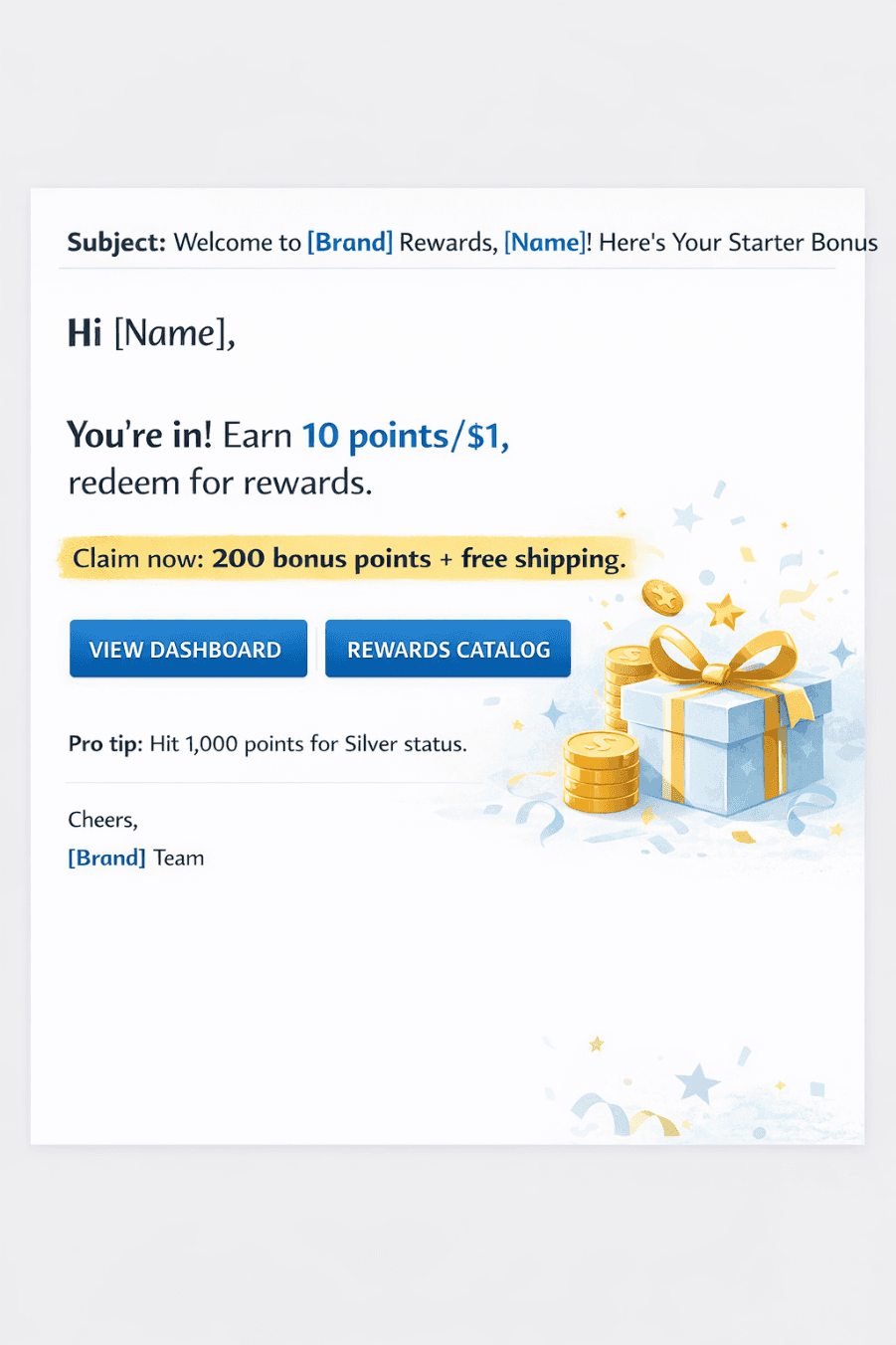
2. Welcome loyalty email for new members
Welcome emails set the tone for the entire loyalty relationship. Usually, they perform exceptionally well and can generate more engagement than standard promotional emails.
Send the welcome email within the first hour after signup, while interest is still high. Use it to clearly reinforce the value of joining: explain how points are earned (for example, 1 point for every $1 spent), how tiers work, and what quick wins are available, like a bonus on the first purchase.
This is your chance to build excitement. Show visuals of the rewards customers can earn and include a simple link to their rewards dashboard so they can see everything at a glance. Personalization helps here, too. Reference the signup trigger when possible, such as “Into gym gear? Earn double points on fitness items.”
Add a small gamification element, like a progress bar toward the first reward, to keep potential customers interested from day one.
Expert tip: Skip the hard sales pitch. Focus on education, clarity, and a sense of delight. Your main goal is to make new members feel excited and confident about being part of the program.
3. Points balance update and progress reminder email
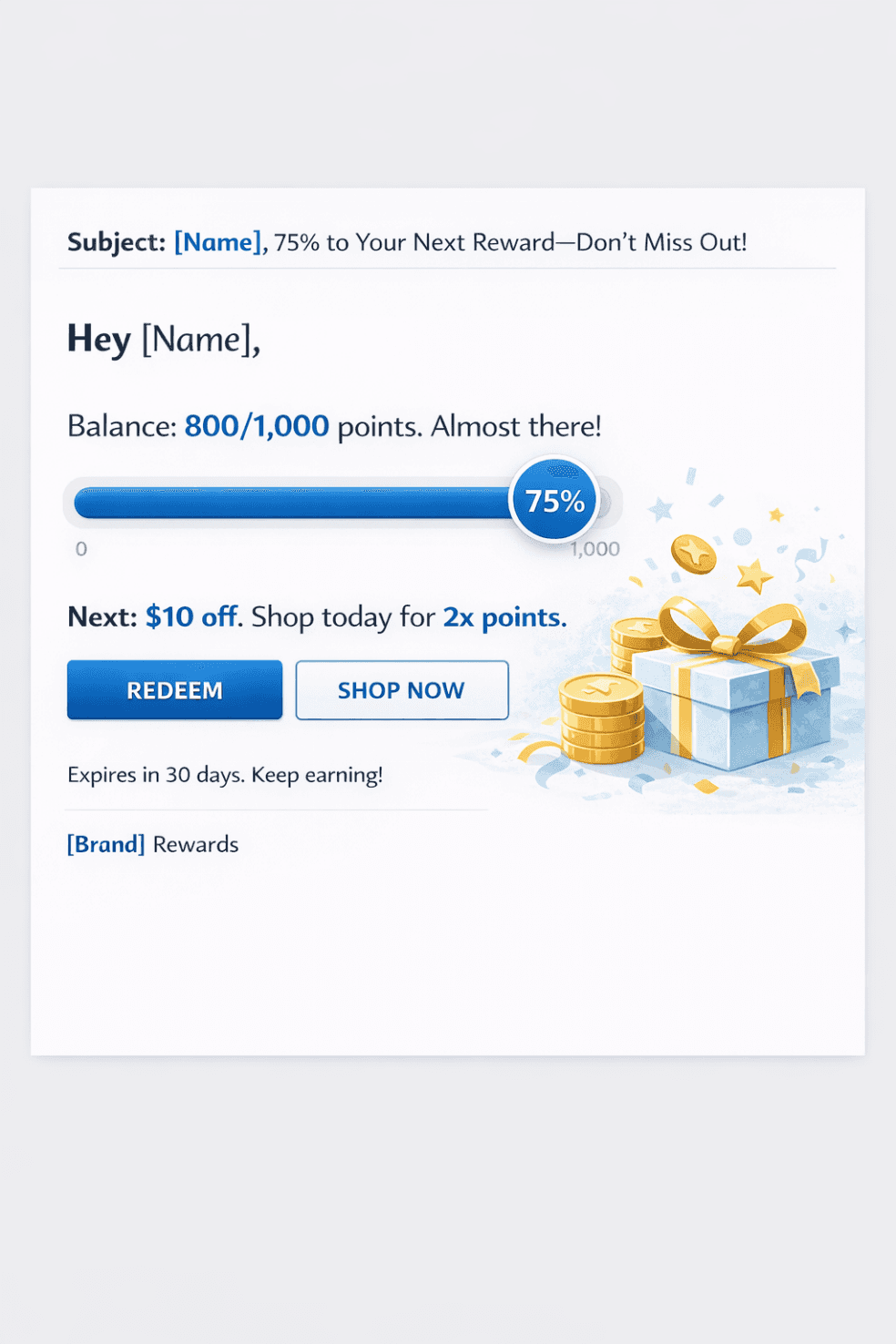
Such a loyalty program email is used to gently nudge inactive members back into action.
The best triggers are simple and behavior-based. Send a reminder when someone is about 75% of the way to their next reward, or run a monthly check-in for members with low balances, such as fewer than 50 points. The message should instantly show where they stand. A visual progress bar works especially well, paired with copy like “You’re just 200 points away from a $10 reward.”
Reinforce momentum by highlighting past earnings and offering an easy next step, such as “Shop now and earn double points.” Segmentation plays a role for you; for example, VIP members may receive early access or exclusive previews instead of standard offers.
Subject lines matter here. Direct lines can increase open rates by up to 30%. For timing, mid-week sends tend to perform best when inboxes are calmer than on Mondays or weekends.
Finally, use urgency carefully. A gentle expiration reminder can motivate action without making the email feel pushy. The goal is encouragement, not pressure.
4. Reward email when a member unlocks a perk
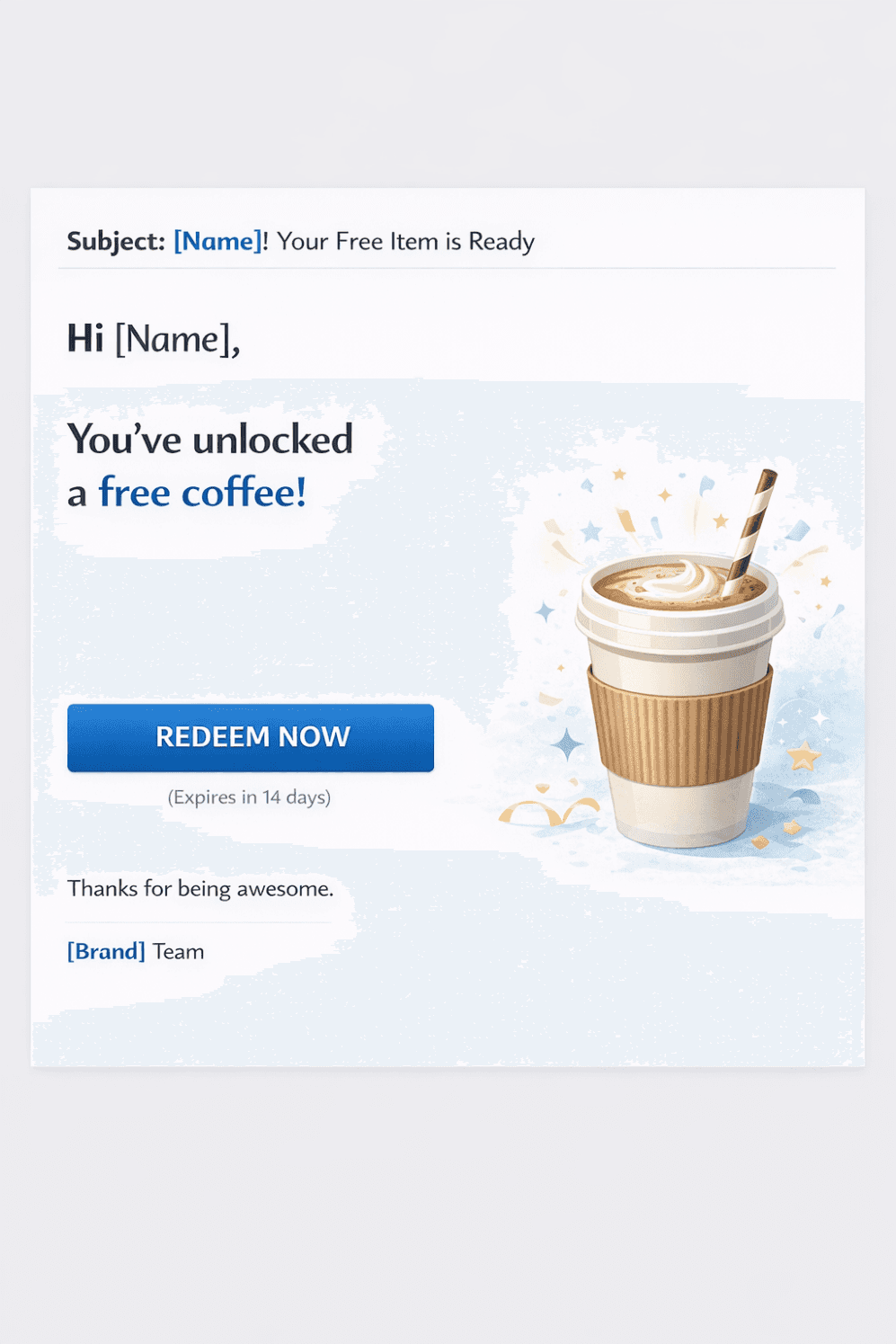
Reward emails are pure motivation, and customers respond to them very actively.
These emails should go out instantly through automation the moment a reward is earned. Lead with bold, celebratory visuals that make the perk feel exciting and tangible, like “Free Coffee Unlocked!” Pair that with a one-click redemption button to remove friction between excitement and action.
Personalization makes such messages more impactful. A simple line such as “You earned this with your last three orders” reinforces the value of the customer’s loyalty and makes the reward feel deserved.
Adding a clear expiration window (between 7 and 30 days) creates healthy urgency and can increase reward usage by up to 40%.
5. Birthday or anniversary loyalty email with a special treat
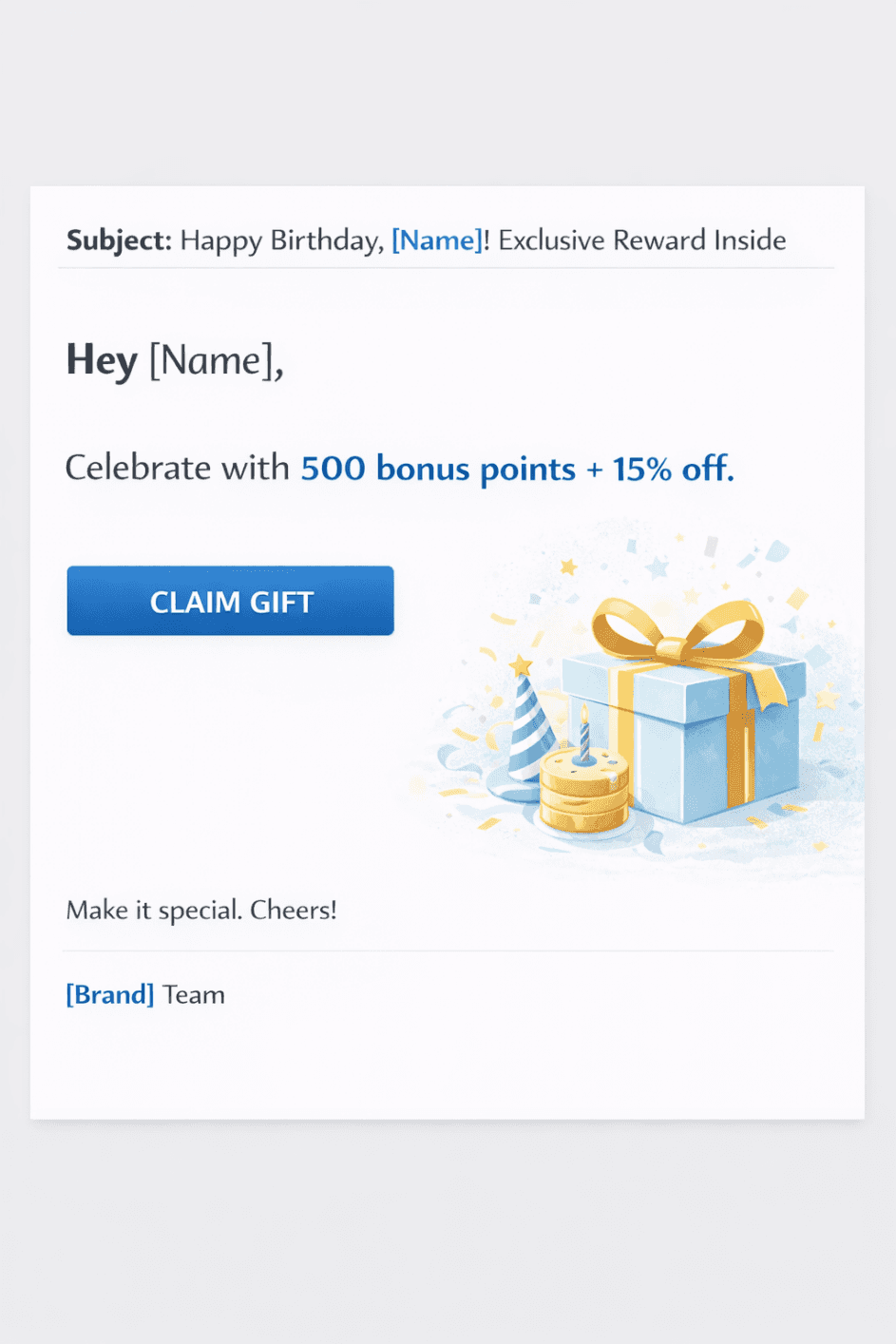
Personalized birthday and anniversary emails are one of the easiest ways to build an emotional connection with your customers. Experian’s research shows these emails generate about 2.5× higher open rates, and 92% of recipients say they make them feel genuinely valued, not marketed to.
The key is making the message feel thoughtful. Use first-party data to ensure dates are accurate, and send the email one or two days early, so customers have time to enjoy the reward. Tiered incentives work especially well here. For example, Gold members might receive a $20 voucher, while Silver members get bonus points or free shipping.
To increase impact even further, pair the reward with a short-term incentive like double points on their next purchase.
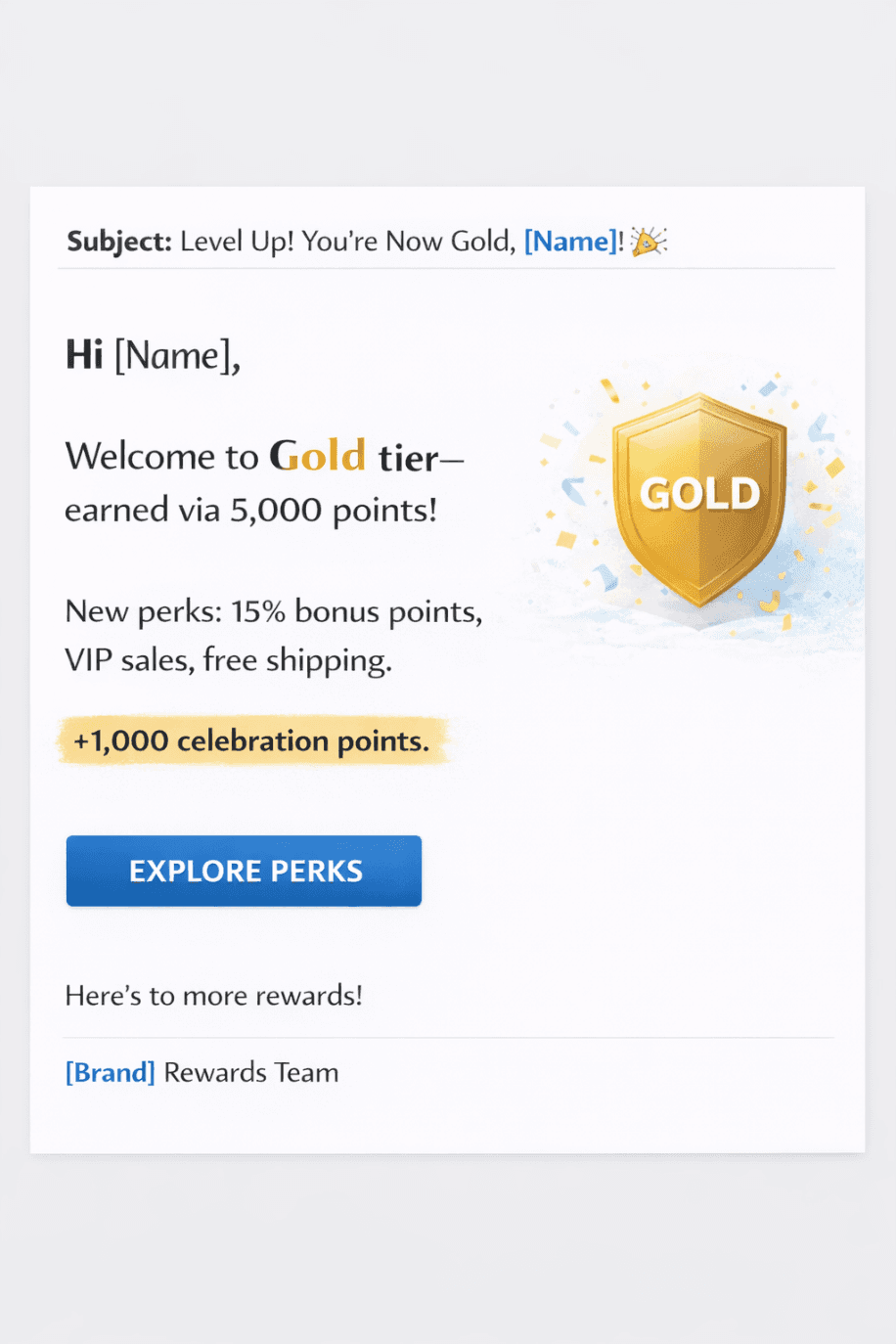
6. Tier upgrade rewards email to celebrate milestones
Tier upgrade loyalty emails are a powerful retention driver when done right. These emails should feel celebratory. Use light, fun visuals like confetti, clearly highlight the new status, and preview the perks that come with it, such as priority support, early access, or exclusive offers. Add a small bonus, for example, extra points, to make the upgrade feel even more rewarding.
Clarity matters just as much as excitement. Explain the benefits in simple terms and personalize the content, especially when tied to shopping habits, like exclusive fitness gear for active buyers. Generally, celebratory “fanfare” emails drive about 35% more engagement than subtle announcements. Send them in the evening and follow up a month later with tips on using new perks.
7. Win-back loyalty email for inactive members
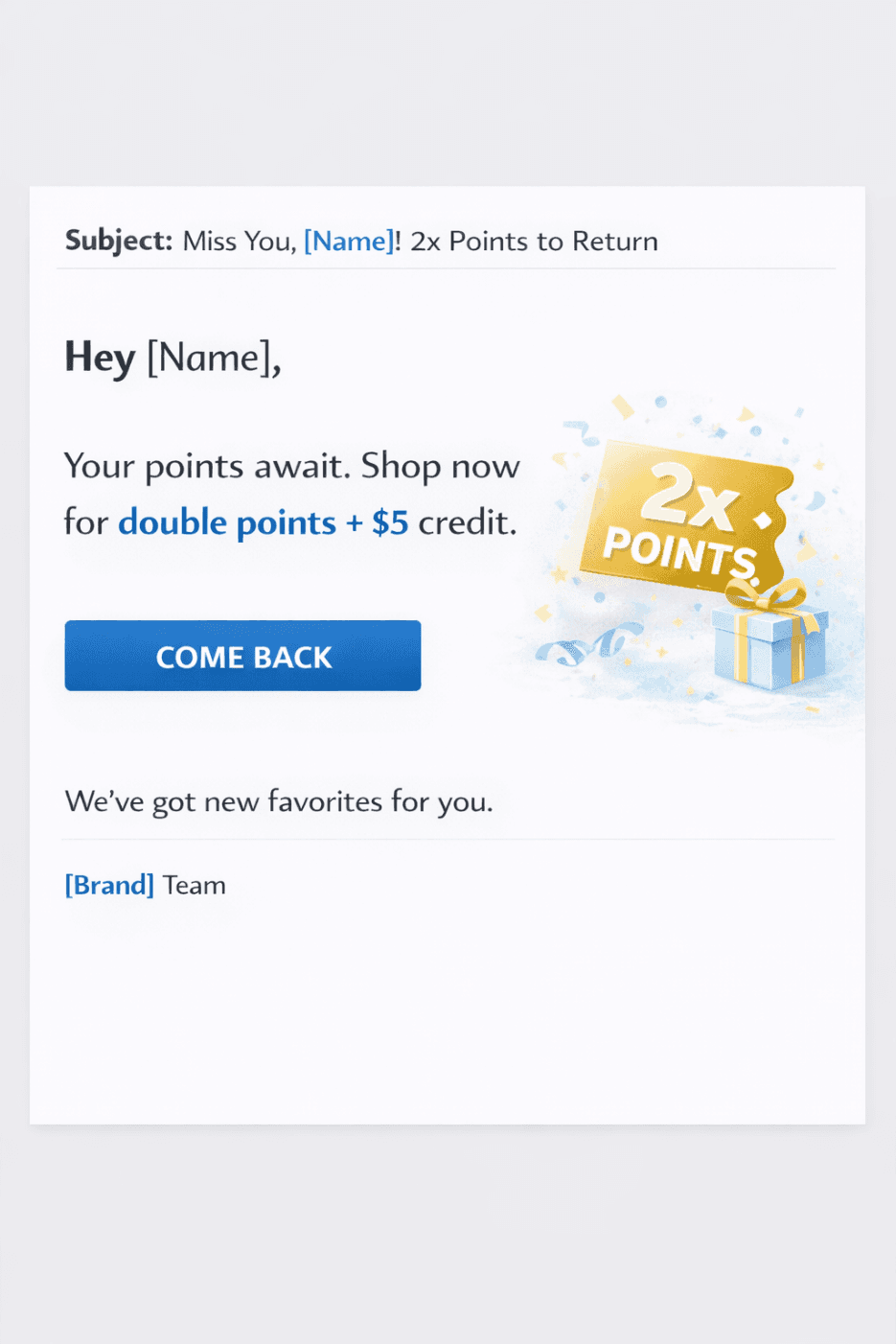
Win-back loyalty emails are suitable for reconnecting with customers who’ve gone quiet. The main thing is to give them a real reason to come back.
Segmentation matters a lot here. Your most valuable customers should get messages that feel personal, like product suggestions based on what they’ve bought before, rather than a generic offer.
A touch of urgency helps turn curiosity into action. Limited-time rewards or expiring bonuses can lift reactivation rates by as much as 35% without feeling pushy. Keep the tone warm and inviting.
These emails gently remind people why they liked your brand in the first place, and make it easy for them to start shopping again.
8. Referral rewards email to encourage sharing
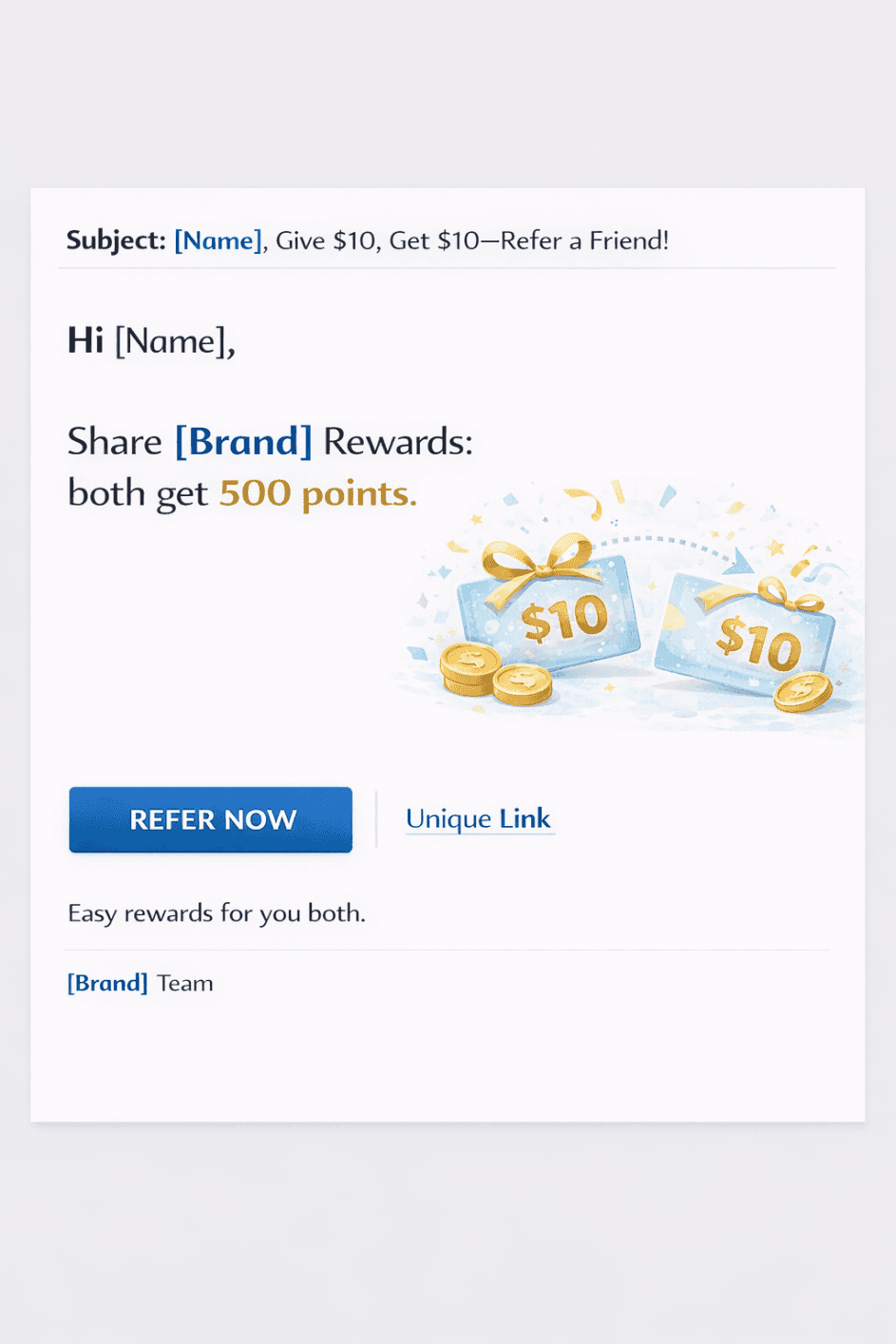
Referral loyalty emails are one of the fastest ways to grow a customer base organically. ReferralCandy data shows that roughly 25% of referral emails convert.
Timing is very important. Referral emails perform best when sent right after a positive moment, e.g., a completed purchase. The offer should be fair and motivating for both sides. Dual rewards work especially well, for instance, give both the referrer and their friend 500 points.
Make sharing easy by including one-click referral links and clear calls to action. Add social proof, such as “Join thousands of happy members,” to increase participation rates. When referral emails are simple and well-timed, they turn loyal customers into your most effective growth channel.
9. Points expiration reminder email
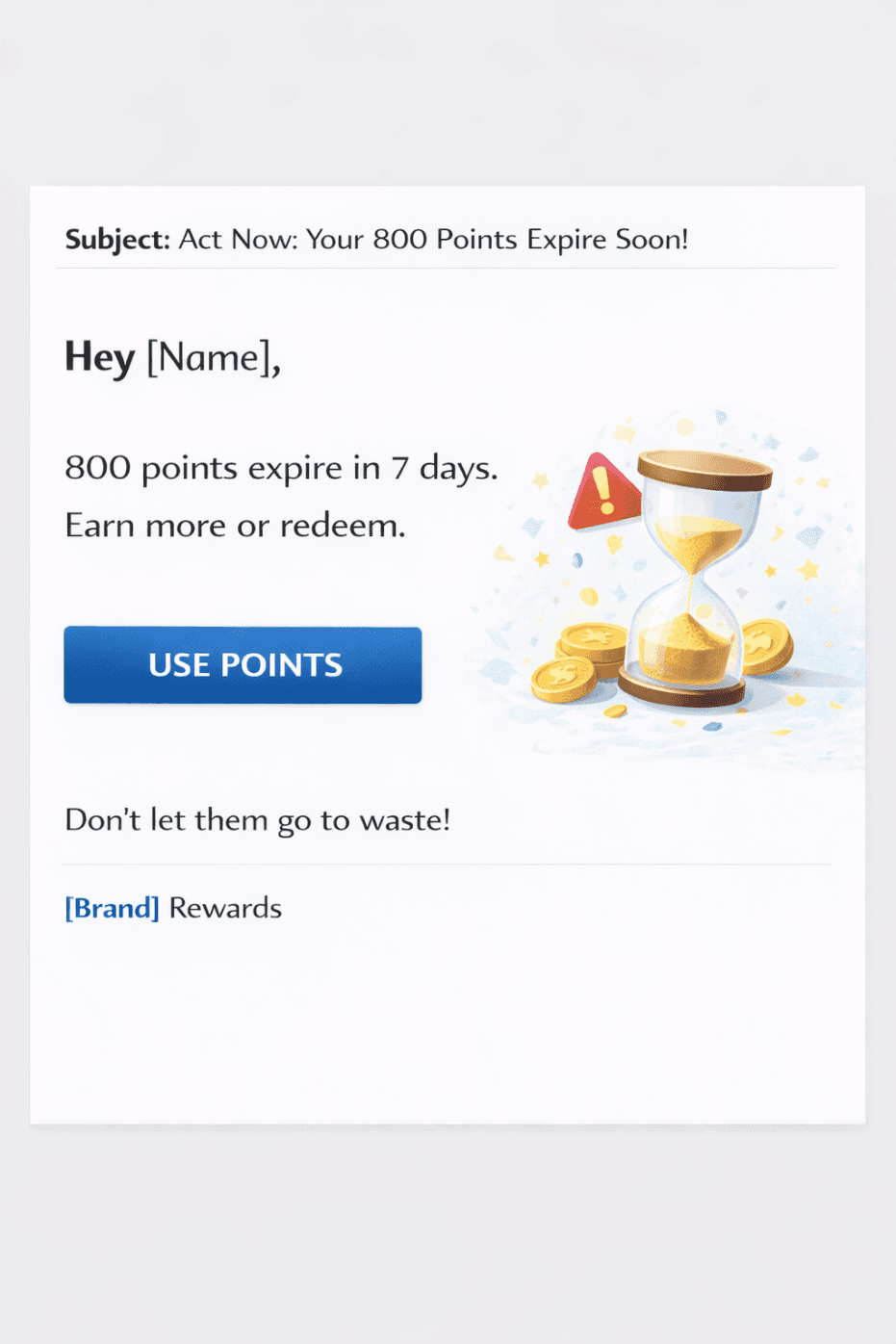
Don’t let rewards disappear unnoticed. A couple of friendly reminder emails can make a big difference. Send one about 30 days before expiration, and a follow-up – 7 days out.
Keep the focus on value, not urgency or pressure. Let customers clearly see what they’re about to lose and how close they are to saving it. Visual hints like progress bars work great, particularly when paired with a concrete next step, such as “Spend $20 to keep your points.” Thus, customers will see that everything is doable.
Expiration reminders can boost redemptions by up to 50% while keeping the tone helpful, supportive, and customer-friendly.
10. New feature or benefit announcement loyalty email
Announcement emails are needed to keep loyalty members engaged, especially when exclusivity is front and center.
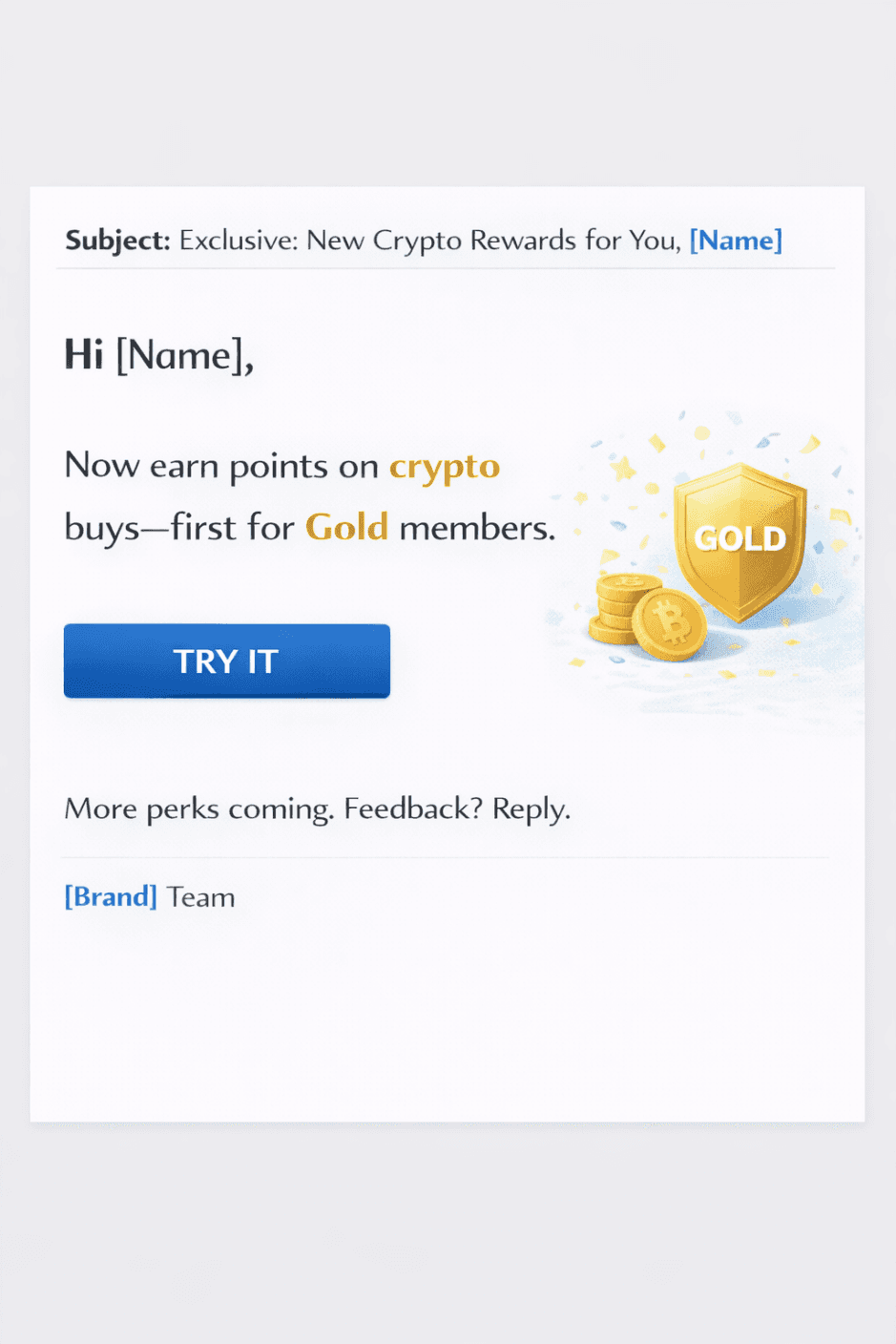
The most effective announcements tease something new or exciting – “Crypto payments are here” or “New features just dropped.” Give loyalty members a preview before the general public to reinforce their status and make membership feel worthwhile. Personalization makes these emails even stronger, whether that’s highlighting features based on past behavior or showing what’s most relevant to each customer.
Clear calls to action are essential in a rewards email. A simple “Try it now” or “Get early access” can drive up to 28% trial rates. Over time, these insider-style announcements turn loyal customers into vocal advocates for your brand.
How to Design High-Performing Reward Emails
Top-notch loyalty emails inform and motivate. They combine a clear benefit, a sense of urgency, and a personal touch. While making an email, you should spotlight what the member wins, like bonus points, early access, etc. Below, you’ll learn in detail how to come up with a reward email that won’t go unnoticed.
Best Practices for Loyalty Program Emails
Strong loyalty emails should be bespoke. Messages need to arrive at the right moment and speak directly to the member. Lead with value by clearly showing points earned, upcoming rewards, or a perk that’s available for a short time. Keep layouts simple and recognizable, and guide action with a clear CTA. By including names, past purchases, or browsing behavior, you can noticeably lift open rates. To convert better, focus on one compelling offer per email and monitor click-to-purchase rates around 2–5%.
Find the right cadence, so members don’t tune out
Email frequency matters more than most teams think. Sending one or two loyalty emails a month helps retain more members, while over-sending quickly leads to unsubscribes. Weekly updates can work for your most active users, but a bi-weekly cadence is safer for everyone else. Watch your data closely. If open rates drop below 20%, it’s time to pause. Trigger-based emails, like a bonus offer after inactivity, usually outperform fixed schedules. Stay visible without becoming noise.
Segment loyalty emails by tier, activity, and preferences
Segmentation is indispensable for a successful email loyalty program. Group members by status, activity, or interests so they feel each message truly matches their needs. VIPs respond well to exclusive perks, while inactive users need a clear reason to come back. Using preferences from past purchases or surveys helps you show rewards people actually care about.
Test subject lines, layouts, and offers regularly
A/B testing isn’t optional if you want results. Small tweaks, be it layouts or CTA,s can make a big difference in open and conversion rates. Try different messages, visuals, or offers to see what truly resonates with your audience. Mobile-friendly, single-column designs usually perform best, but even button colors and wording can shift behavior. Test on a small audience first, then scale what wins.
Automation and Triggers for an Email Loyalty Program
Automation takes loyalty program emails to the next level by sending the right message at exactly the right time. Instead of relying on manual campaigns, triggered emails react to what members actually do, while always-on flows quietly build engagement in the background. Welcome rewards, points reminders, or follow-ups after inactivity become helpful, not pushy.
Always-on flows: welcome, purchase, reward, and reminder emails
Always-on flows are the engine behind a great loyalty program. They work in the background, guiding members through each stage without any extra effort from your side. New subscribers are greeted with instant rewards, shoppers get helpful follow-ups after they buy, and loyal members are reminded when perks become available or when points are about to expire. Because everything is automated, engagement stays strong, and fewer rewards go unused.
Event-based triggers for loyalty program emails
Event-based triggers send emails exactly when members take action. Birthday offers, milestones, and anniversaries feel personal and are more likely to be redeemed. Inactivity triggers help bring quiet users back with a clear incentive, while post-purchase messages encourage the next order faster. When you use real customer data for these reward emails and send them at the right moment, they help you keep customers engaged without annoying them with marketing stuff.
Aligning email, SMS, and in-app notifications
Take advantage of all available communication means to spread your message. Each channel plays a special role. For instance, email explains the details, SMS delivers time-sensitive nudges, and in-app messages reward users right when they’re active. When everything is synced through one customer profile, messages don’t overlap or feel repetitive.
How Enable3 Can Reduce Churn and Improve User Retention
Enable3 rethinks loyalty by making it interactive, flexible, and rewarding. The platform lets brands build gamified experiences to complement their email loyalty campaigns without grappling with code, which motivates users to stay with a brand. Enable3 offers simple missions like completing onboarding or making a purchase that instantly unlock rewards. There are also tiered perks that keep users’ motivation high without drops.
Just like with email loyalty programs, Enable 3 helps brands segment their customers and launch personalized engagement missions. This means more effective campaigns at every stage of a customer journey, which is exceptionally valuable for today’s tough market.
Businesses across multiple industries, including finance, e-commerce, and wellness, can get noticeable benefits from Enable3 when it comes to launching products, scaling them, and turning casual users into loyal fans.
Conclusion: Turning Loyalty Emails into a Revenue Channel
Loyalty emails work best when they feel like a thank-you, not a sales pitch. When offers are personalized and the benefits are clear, customers are more likely to come back on their own. Post-purchase reward emails help reinforce that they made the right choice, while win-back messages can gently pull inactive users back in. Adding urgency with limited-time bonuses or double points gives people a reason to act now, especially when emails are smartly segmented. When it’s all put together thoughtfully, a loyalty email program can drive solid ROI, make your brand more appealing, and help you build long-term relationships with both current and future customers.
Frequently Asked Questions
What is a loyalty program email, and when should I send one?
A loyalty email is a message you send to customers in order to update them on rewards, points, new releases, special offers, and the like. The best moments to send these are right after a purchase, when points are about to expire, when someone hits a milestone, or during limited-time promos. Mid-week mornings usually perform well, but timing should always follow your audience’s behavior.
Which loyalty emails have the highest impact on repeat purchases?
Point balance updates, expiry alerts, special treat notifications, and milestone celebration emails work especially well because they create urgency. Post-purchase thank-you emails with a small bonus and win-back messages for inactive members are also strong performers.
How many reward emails are too many for one customer?
For most users, 2–4 per month is a safe range. Highly engaged members can handle more, but quieter users shouldn’t receive more than one a week.
What subject lines work best for rewards email campaigns?
Strong subject lines speak directly to the reader and hint at urgency. Lead with something personal and reinforce it with cues such as “limited bonus” or “ending soon.” The shorter it is, the faster the value comes across.
How do I start an email loyalty program with a small list?
Right after checkout is the perfect moment to invite customers in. They’re already confident in their purchase and paying attention. Sweeten the deal with a quick reward, like a small discount, to make joining feel worthwhile. Follow up with an automated welcome sequence that clearly walks them through the loyalty program and calls out the benefits early. From there, offer simple referral rewards, letting your members bring in new subscribers on their own.