News


You have a product to launch, a deadline in eight weeks, and a team that is already stretched. What do you actually do – this week, next week, and every week after that – to give your launch the best possible chance?
Most launch guides answer that question with abstractions: “define your positioning,” “align your teams,” “choose channels.” That is not a plan. That is a wish list disguised as strategy. A plan tells you what to deliver by Friday.
This guide is different. It is a working playbook – week by week, deliverable by deliverable – that answers the question every product team eventually faces: how to launch a product in a way that generates lasting traction, not just a one-day spike?
I built it around the launches I have helped plan at Enable3 and the patterns I have studied across hundreds of product launches in SaaS, consumer apps, and digital products. Whether you need a marketing plan for new product launch or you are refining an existing product release strategy, every section includes the specific output you should produce, the decisions you need to make, and the tools that make execution faster.
The data makes the case for why this matters: according to Forbes, roughly 95% of new products fail to meet their commercial targets. But the cause is rarely the product itself. It is almost always a planning failure – unclear positioning, misaligned teams, no structured engagement after day one, and a timeline that exists in someone’s head but not on paper.
Let’s fix that.
What Is a Product Launch Marketing Plan (and What It Is Not)
A product launch marketing plan is the operational document that coordinates every marketing activity required to bring a product to market – from positioning and messaging through channel activation, content creation, internal alignment, and post-launch engagement. It structures the entire product launch process into a sequence of concrete steps with clear owners and deadlines.
It is not a go-to-market plan (that is the high-level “why” and “where”). It is not your annual product marketing plan (that covers everything, not just one launch). And it is not a launch day checklist (that is one page inside this plan, not the plan itself).
Here is the simplest way I think about the distinction:
Launch Marketing Plan | Go-To-Market Plan | Annual Marketing Plan | |
Answers | “What do we do each week to make launch day succeed?” | “How do we enter this market and win?” | “How do we grow marketing this year?” |
Timeframe | 8–12 weeks | Months to years | 6–12 months |
Owner | Product marketing + launch team | Product + Marketing + Sales leadership | CMO / Head of Marketing |
The launch plan sits inside the GTM strategy. Both sit inside the annual plan. You need all three, but this article is about the first one – the one with deadlines.
Before You Start: Nail Your Positioning in 48 Hours
Everything in your launch plan flows from positioning. Your messaging, your landing page, your email sequences, your sales deck, your social content – all of it is an expression of one set of decisions: who is this for, what does it replace, and why should they switch?
Most teams spend weeks debating positioning. You can do it in 48 hours if you follow a structured process.
The Fill-in-the-Blank Positioning Statement
Copy this template. Fill in every blank. If you cannot fill one in clearly, that is the gap you need to resolve before anything else.
For [target customer – be specific: role, company size, situation]
who [describe their current problem or underserved need]
our product is a [category – what shelf does this sit on in the buyer’s mind?]
that [key benefit – the single most important outcome they get].
Unlike [primary alternative they use today]
we [key differentiator – the one thing you do that the alternative cannot].
Here is one of the real product launch examples. When Calendly launched, their positioning could be distilled to: “For professionals who waste time on email back-and-forth scheduling, Calendly is a scheduling tool that lets anyone book time with you in one click. Unlike manual email scheduling, we eliminate the entire coordination process.”
That clarity – one problem, one category, one differentiator – is what makes every downstream piece of marketing easier to write and easier for the audience to understand.
How to Validate Positioning in 48 Hours
Do not spend 3 weeks in a conference room arguing about positioning. Test it.
Day 1 (4 hours): Write 3 distinct positioning variants using the template above. Each one should frame the product differently – different category, different competitor, different primary benefit.
Day 2 (4 hours): Show all 3 to 5 target users (existing beta users, prospects, or people who match your persona). Ask two questions: “Which of these descriptions makes you most want to try this product?” and “In your own words, what does this product do?” If they cannot play it back accurately, the positioning is not clear enough.
End of Day 2: Pick the winner. Write the final positioning statement. Distribute to the entire launch team. Done.
Extractable tactic from Superhuman: Rahul Vohra, CEO of Superhuman, described in First Round Review how he tested positioning with a single survey question: “How would you feel if you could no longer use this product?” The percentage who answered “very disappointed” became their core metric for product-market fit. If it was under 40%, they kept iterating. Above 40%, they had permission to launch. You can replicate this with a 3-minute survey to your beta users – it costs nothing and gives you a quantitative signal for launch readiness. 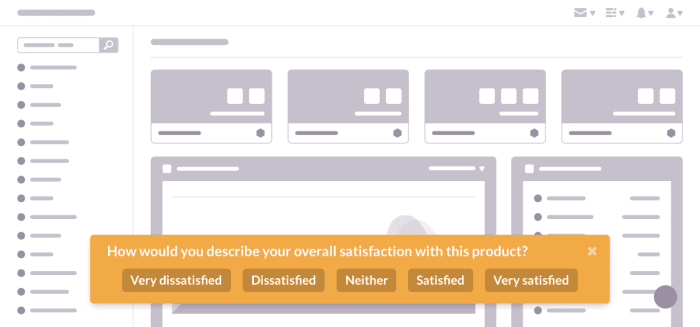 | |
Sean Ellis’s PMF survey (or the "would miss" test) |
The Messaging Matrix
Once positioning is locked, translate it into messaging for different audiences and stages. Here is the template I recommend to use:
Awareness (first touch) | Consideration (evaluating) | Decision (ready to act) | |
Primary persona | [Problem-focused headline] | [Solution + differentiator] | [Proof + CTA] |
Secondary persona | [Their version of the problem] | [How your product fits their context] | [Relevant social proof + CTA] |
Internal (sales/CS) | [One-sentence product description] | [Top 3 objections and responses] | [Pricing / packaging summary] |
Fill this matrix before you write a single email or ad. It ensures every piece of content you create maps to a specific audience at a specific stage – not generic messaging for everyone simultaneously.
The 8-Week Launch Plan: Week by Week
This is the core of this guide – the product launch framework that turns abstract strategy into a concrete product launch timeline with specific deliverables for each of the 3 product launch phases: pre-launch (Weeks 1–6), launch (Weeks 7–8), and post-launch (Weeks 9–12). The entire product launch process is broken into weekly outputs – the actual things your team should produce, not vague strategic directives.
I present two versions: a full launch (for teams with dedicated resources and budget) and a minimal launch (for lean teams doing this with 2–3 people and limited spend). Skip to the comparison table at the end of this section if you want to see both side by side.
Weeks 1–2: Foundation
Goal: Lock positioning, define audience, set measurable goals, assign roles.
Deliverables:
☐ Final positioning statement (use the template above, validated with 5 target users)
☐ 2–3 user personas with behavioral detail – not demographics, but: what triggers them to search for a solution? What are they using today? What would make them switch? What makes them churn?
☐ Launch KPI dashboard with targets for 3 timeframes:
Timeframe | Metric | Your Target |
Launch day | Signups / installs | _____ |
Week 1 | Activation rate (% who complete meaningful first action) | _____ |
Month 1 | Day-7 retention / trial-to-paid conversion | _____ |
☐ RACI matrix: who is Responsible, Accountable, Consulted, and Informed for each workstream (marketing, product, sales, CS, engineering).
☐ Competitive landscape map: top 5 alternatives, their positioning, their pricing, their weakest points (from reading their 1-star and 3-star reviews).
Pro Tip: Setting a Day-7 retention target before launch might sound premature, but it forces you to design for engagement from day one – not as an afterthought after the spike fades. If you know your target is 20% Day-7 retention, every decision about onboarding, messaging, and early engagement works backward from that number.
Weeks 3–4: Content & Asset Creation
Goal: Build every asset you will need for launch – before you need it.
Deliverables:
☐ Landing page – live, with tracking pixels installed. Structure: headline (from positioning statement) → problem statement → solution → 3 key benefits → social proof → CTA. A/B test the headline if traffic allows.
☐ Email sequences (3 sequences):
- Pre-launch sequence (for waitlist): 3–4 emails building anticipation
- Launch day sequence: announcement email + follow-up 24 hours later
- Post-launch onboarding sequence: day-1, day-3, day-7 emails guiding new users to activation.
☐ Social media content calendar: 2 weeks of pre-launch teasers + launch day posts + 2 weeks of post-launch content. Platform-specific (not the same post copied everywhere).
☐ Product demo or walkthrough video (60–90 seconds). Show the product solving the problem, not a feature tour.
☐ Sales enablement one-pager: product description, positioning, top 3 use cases, top 3 objections with responses, pricing summary. Fits on one page. Sales can use it in conversations tomorrow.
☐ Internal launch brief (one page): what is launching, who it is for, when, key messages, what each team should do. Distribute at start of Week 5.
Extractable tactic from Loom: When Loom launched, their most effective marketing asset was not a polished commercial – it was a screen recording of someone using Loom to explain something to a colleague. The product was the demo. According to Loom’s published growth data, this approach contributed to reaching over 21 million users. How to steal this: Record a 60-second video of yourself using your product to solve a real problem. No script. No editing. Share it as your primary social launch content. Authenticity outperforms production value for product launches.  |
Pro Tip: Your post-launch onboarding email sequence is the single most underleveraged asset in most launch plans. According to Statista, email delivers an average return of $36 for every $1 spent – the highest ROI of any digital channel. An automated 3-email onboarding sequence that guides new users to their first “aha moment” will recover more launch-week signups than any amount of social media activity.
If your product supports engagement mechanics, this is the moment to configure them. With Enable3’s Missions, you can set up a “Welcome Quest” – a structured sequence of first-week tasks rewarded with points or gifts – before launch day arrives.
“Complete your profile → 50 points. Try Feature X → 100 points. Invite a teammate → 200 points.” This is not a post-launch addition. It is an onboarding asset you build now and activate on launch day, so every new user hits a structured engagement path from their first session.
Weeks 5–6: Pre-Launch Activation
Goal: Build an audience that is waiting for you. Your pre-launch marketing strategy is what creates momentum before the starting gun fires.
Deliverables:
☐ Waitlist or early access program – live and collecting signups. Include a referral mechanic: “Move up the list by inviting friends.” This single mechanic generates organic growth before your product exists.
Extractable tactic from Robinhood: Before their public launch, Robinhood built a waitlist with a referral queue – users could jump ahead by inviting friends. The result: over one million signups before the product was available, according to its co-founder Vlad Tenev. How to steal this: You do not need Robinhood’s brand. You need a clear value proposition and a referral mechanic. Build a simple landing page with a signup form and “Your position: #847. Share to move up.” 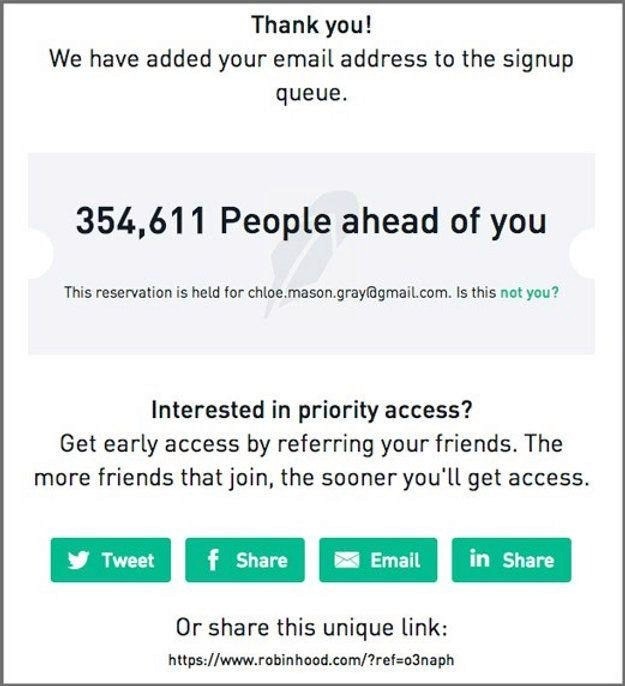 |
☐ Beta program or early access group – invite 50–200 users from your waitlist. Their job: use the product and provide feedback. Your job: watch what confuses them, what delights them, and what they ignore. This is your final positioning validation.
☐ Press and creator outreach – personalized pitches to 10–20 relevant journalists, bloggers, and creators. Not a mass press release. A personal email that explains why their specific audience would care about your product. Include early access so they can experience it before launch.
☐ Internal alignment – distribute the one-page launch brief (created in Week 4) to all teams. Run a 30-minute launch readiness meeting: walk through the timeline, confirm every team knows their role, surface blockers.
☐ Social teaser campaign begins – behind-the-scenes content, countdown posts, “something is coming” teasers. The goal is not to reach – it is priming your audience to pay attention on launch day.
Pro Tip for the Minimal Launch: Skip press outreach and paid teasers. Focus on waitlist, beta, internal alignment, and organic social. These cost nothing but time.
Weeks 7–8: Launch Prep + Launch Day + First Week
Goal: Execute a coordinated spike across all channels. Then immediately shift to activation and retention.
Week 7 – Final Preparation:
☐ All email sequences loaded and tested (check links, images, tracking).
☐ All social posts scheduled (platform-specific, not duplicated).
☐ Landing page final review – headline, CTA, tracking, mobile experience.
☐ Paid campaign assets ready (if applicable) – creatives, targeting, budget allocated.
☐ App store listing finalized (if launching a mobile app) – title, screenshots, description, keywords.
☐ Internal “dress rehearsal” – walk through the launch day checklist end to end. Identify the one thing most likely to break and prepare a backup plan.
Week 8 – Launch Day:
Morning (before public launch):
Confirm all assets live, all tracking working, all team members in position
Final QA of signup/purchase flow on mobile and desktop
Launch moment (coordinated – your product launch campaign fires across all channels within the same hour):
Send product launch announcement email to waitlist
Publish all social posts across product launch social media channels
Activate paid campaigns
Send personalized press outreach follow-ups (“It’s live – here’s the link”)
Publish launch blog post
Post on Product Hunt, Hacker News, or relevant community platforms
First 4 hours:
Monitor social mentions, respond to every comment and question
Track real-time metrics: signups, traffic sources, activation rate
Flag and fix any technical issues immediately
End of launch day:
Internal debrief: what worked, what broke, initial numbers vs. targets
Send “thank you” email to early adopters and beta testers
Why a coordinated spike matters: App store algorithms, social media algorithms, and press cycles all reward velocity – concentrated attention in a short window triggers organic amplification that a slow drip never generates.
When Threads by Meta launched in July 2023, the coordinated activation across Instagram integration, press (for instance, mentions in The Hollywood Reporter), and social media produced 100 million signups in five days, according to BBC.
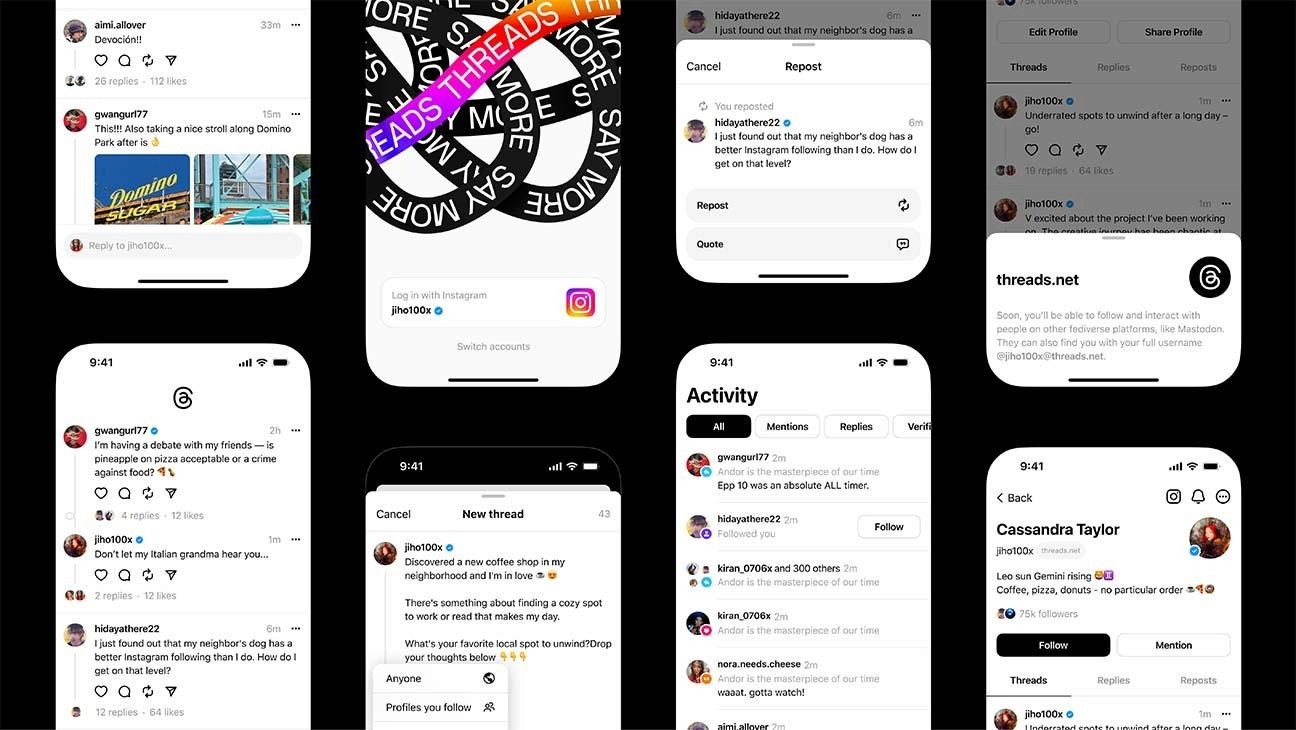
You will not hit 100 million. But the principle scales down: a coordinated push across your available channels in a single morning generates disproportionately more impact than spreading the same activities across a week.
Week 8, Days 2–7 – The Critical First Week:
This is where most launches fall apart. The spike is over. The adrenaline fades. And the 70% of users who signed up but have not activated are silently drifting away.
☐ Activate your onboarding email sequence – day-1, day-3, day-7 emails guiding users to their first meaningful action.
☐ Activate in-product engagement mechanics – if you set up an Enable3 Welcome Quest in Week 3, it is now live: new users see structured missions guiding them through key actions with rewards. “Complete your profile → Try the core feature → Invite a teammate.” Users who complete three missions in their first week retain at dramatically higher rates than those who do not.
☐ Monitor activation rate daily. If the percentage of signups completing a meaningful first action is below your target, intervene immediately – adjust onboarding copy, reduce friction in the first flow, add a progress indicator.
☐ Identify your top 10 most engaged early users. Reach out personally. Ask what they love. Ask what is confusing. Their feedback in Week 1 is worth more than a survey of 1,000 users in Month 3.
Weeks 9–12: Post-Launch Optimization
Goal: Turn the launch spike into sustained traction. Scale what works. Fix what does not.
Week 9–10: Analyze and iterate
☐ Channel performance review: Which channels drove the most signups? Which had the highest activation rate (not just the most volume)? Cut the worst performer. Reallocate to the best.
☐ Messaging iteration: Which email subject lines had the highest open rates? Which social posts drove the most clicks? Update your messaging matrix (from Week 1) with real data.
☐ Onboarding funnel analysis: Where do users drop off? If 60% complete step 1 but only 20% complete step 3, step 3 has a problem. Fix it before doing anything else.
Week 11–12: Retention and growth
☐ Launch a re-engagement campaign for users who signed up but went dormant. Not “We miss you!” – that converts at near-zero. Instead: a specific, value-driven reason to return. “You have 200 welcome points expiring in 5 days – complete your first mission to use them.”
With Enable3’s Segments, you can target dormant users specifically – grouped by days since last session, onboarding completion status, or any behavioral dimension – and send them a tailored re-engagement Mission, not a generic email blast.
☐ Launch a referral program (if you did not activate one pre-launch). Post-launch is actually the optimal time: your early adopters have experienced the product, and the ones who love it are your best advocates. Conditional rewards – “Invite a friend who completes onboarding → both earn 200 points” – ensure referral quality stays high.
☐ Plan your first post-launch engagement campaign. A “30-Day Challenge” or seasonal quest gives existing users a structured reason to stay engaged beyond the initial novelty.
With Enable3’s Quests, you can launch time-limited engagement campaigns – “Complete 5 key actions this month → earn a Netflix gift card” – without engineering resources, so the growth team can move at the speed they need.
☐ Write your first post-launch case study. Interview a happy early user. Document the before/after. Publish it. This becomes your strongest sales and marketing asset for the next phase of growth.
Minimal Launch vs. Full Launch: What to Cut and What to Keep
If you are figuring out how to market a new product with limited resources, the good news is: some of the best launches I have seen were executed by two people with zero ad spend. A strong new product marketing strategy does not require an 8-person team or a PR agency. It requires focus.
Here is what to prioritize at each budget level:
Activity | Minimal Launch (2–3 people, <$1K) | Full Launch (dedicated team, $10K+ budget) |
Positioning & messaging | ✅ Do this – it costs nothing and changes everything | ✅ Do this with formal testing (survey + interviews) |
Landing page | ✅ One page, built in an afternoon (Carrd, Webflow, Framer) | ✅ Custom page with A/B testing |
Email sequences | ✅ 3 emails (pre-launch, launch, day-3 onboarding) | ✅ Full 7-email sequence with segmentation |
Waitlist with referral | ✅ Use a free tool or Enable3’s referral program | ✅ Custom waitlist with branded referral experience |
Social media | ✅ Organic posts on 1–2 platforms where your audience lives | ✅ Multi-platform calendar with paid amplification |
Press outreach | ⚠️ Optional – 5 personalized emails to niche journalists | ✅ 20+ personalized pitches + press kit + embargo strategy |
Paid advertising | ❌ Skip – invest the budget in product and content | ✅ Targeted campaigns on 1–2 platforms (Google, Meta, or Apple Search Ads) |
Sales enablement | ⚠️ One-page cheat sheet for anyone selling | ✅ Full sales deck, objection guide, demo script |
Beta program | ✅ 20–50 users, recruited from your network | ✅ 100–500 users with structured feedback program |
Post-launch engagement | ✅ Manual follow-ups + basic email automation | ✅ Enable3 Missions, Streaks, and Quests for structured engagement |
Analytics & measurement | ✅ Free tools (GA4, Mixpanel free tier) | ✅ Full analytics stack with cohort analysis and Enable3 dashboard |
The non-negotiables, regardless of budget:
Positioning statement
Landing page
Email sequence
Waitlist
Post-launch onboarding follow-up
If you do only these 5 things well, you will outperform most launches that throw money at channels without a foundation.
Extractable tactic from Linear: Linear, a project management tool, launched in 2019 with no paid marketing budget and a team of fewer than 10. Their entire launch strategy consisted of three things: a beautifully designed landing page with a clear positioning statement (“The issue tracker you’ll enjoy using”), an invite-only beta that created exclusivity, and organic posts in design and engineering communities where their target users already spent time. They reached profitability and raised a $35 million Series B at a $400 million valuation largely on the strength of product quality and word-of-mouth – no paid channels, no PR agency, no launch event. 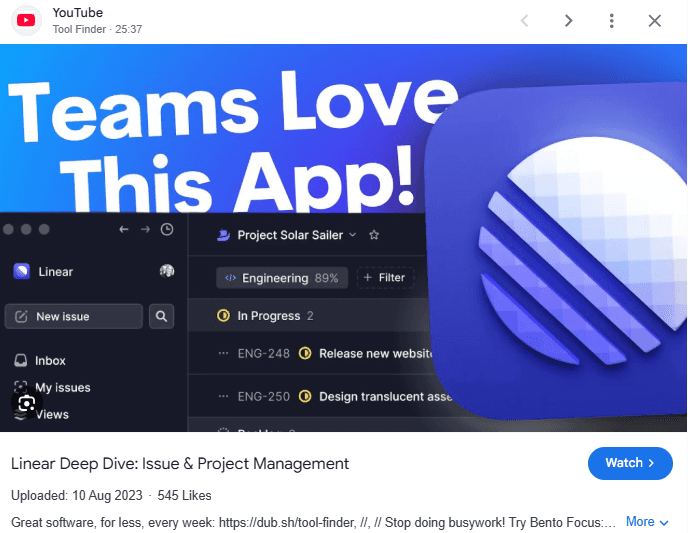 How to steal this: Your minimal launch does not need to be less effective than a funded one. It needs to be more focused. Pick one community where your target users gather. Show up authentically. Let the product speak. |
Measuring Launch Success: The KPIs That Actually Tell the Story
Not all metrics deserve your attention. Here is the framework I recommend – three timeframes, each with specific metrics and what they actually tell you:
Timeframe | Metric | What It Tells You | Healthy Benchmark |
Launch day | Signup / install volume | Did your channels reach the right audience? | Depends on audience size – track against your target |
Launch day | Traffic sources breakdown | Which channels actually drove signups? | Aim for 30%+ from owned channels (email, waitlist) |
Week 1 | Activation rate | Are signups becoming real users? | 30–60% (varies by product complexity) |
Week 1 | Onboarding completion rate | Is the first experience clear and valuable? | 50%+ for simple products, 30%+ for complex ones |
Week 1 | Email open rate (launch sequence) | Is your messaging resonating? | 40%+ for launch emails (higher than standard marketing) |
Month 1 | Day-7 retention | Are users forming an initial habit? | 15–25% for apps, 40–60% for SaaS product launch |
Month 1 | Day-30 retention | Is the product creating lasting value? | 8–15% for apps, 30–50% for SaaS |
Month 1 | Trial-to-paid conversion | Is the product worth paying for? | 3–8% for freemium, 15–30% for free trial |
Month 1 | NPS (Net Promoter Score) | Would users recommend you? | 30+ is good, 50+ is excellent |
Month 1 | Referral rate | Are users actively advocating? | 5–15% of active users referring others |
Benchmarks are drawn from industry data published by Mixpanel, Adjust, and Lenny Rachitsky’s benchmarks research. They vary significantly by category – always benchmark against your own vertical, not a cross-industry average.
The metric most teams overlook: Activation rate. Most launch dashboards track signups (top of funnel) and revenue (bottom of funnel), but skip the middle – the percentage of signups who complete a meaningful first action. This is the metric that determines whether your launch investment compounds or evaporates. If activation is low, no amount of additional marketing spend will fix it – the problem is in the product experience, not the channel strategy.
Pro Tip: If you are using Enable3, your analytics dashboard shows mission completion rates, streak participation, and reward redemption patterns from day one. This gives you activation data tied to specific in-product behaviors – not just “user logged in” but “user completed onboarding mission, tried core feature, and earned first reward.” That granularity tells you exactly where the first-week experience is working and where it breaks.
What to Do When Things Go Wrong (Because They Will)
No launch goes perfectly. The question is not whether something breaks – it is whether you are prepared to respond. Here are the 5 most common launch-day problems and the response I recommend:
Signups are below target
Do not panic on day one. Check your channel attribution: is traffic arriving but not converting (landing page problem) or not arriving at all (distribution problem)? If conversion is low, A/B test your headline immediately. If traffic is low, send a second email to your waitlist with a different subject line, and increase paid spend on your best-performing creative.
Signups are strong, but activation is weak
The gap between “signed up” and “used the product meaningfully” is where most launch value is lost. Simplify your first experience. Remove every step that is not absolutely necessary before the user reaches their first moment of value. If your onboarding has 8 steps, cut it to 4 and collect the rest later.
Press did not cover you
This is normal. Most product launches receive zero press coverage. Do not let it derail your plan. Double down on owned channels (email, social, community) and earned channels (Product Hunt, Reddit, niche communities). Press is a nice-to-have, not a requirement.
A technical issue breaks the signup flow
This is the one scenario worth planning for specifically. Have an engineering resource on standby for the first 4 hours of launch. Test the full signup flow on mobile and desktop 30 minutes before launch. Have a status page or social media response ready if something breaks publicly.
Early feedback is negative
Separate signal from noise. Three users saying the same thing is a signal. One user with an edge case is noise. Respond personally to every piece of negative feedback – it builds trust and often converts critics into advocates. Document the patterns and address the biggest one within the first week.
How Enable3 Can Help You Launch and Grow from Day One
Most launch strategies stop at awareness – getting the app discovered, driving the first wave of installs, landing in the press. What they do not plan for is what happens to those first users in the 30 days after they install. In our experience, the teams that build their strongest growth curves are not the ones with the biggest launch budgets. They are the ones that arrive on day one with an engagement layer already in place – so the first cohort of users encounters a habit loop, not a blank screen.
Here is how Enable3 helps you build that layer before, during, and after launch.
Problem #1: You have no way to build anticipation before your app is live
Your app is not in stores yet. You have a landing page, a social presence, and a waitlist – but nothing that makes a prospective user feel genuinely invested in your launch before they have even installed. The result is a cold start: launch day installs from users with no prior connection to your product, no expectations set, and no reason to stay beyond curiosity.
If you want your first users to arrive already engaged 🡺 Enable3's Social Media Missions and dedicated loyalty landing page let you run a pre-launch campaign where prospective users complete real actions in exchange for early access or a day-one reward.
"Share our launch date on X → get early access."
"Join our Discord → unlock a welcome bonus on day one."
"Refer a friend to the waitlist → both of you get priority onboarding."
Users who arrive having already earned something from you are meaningfully more engaged in session one – and measurably less likely to churn in the first week – than a cold install from a paid ad. You are not just building a waitlist. You are building your first loyalty cohort before the app is live.
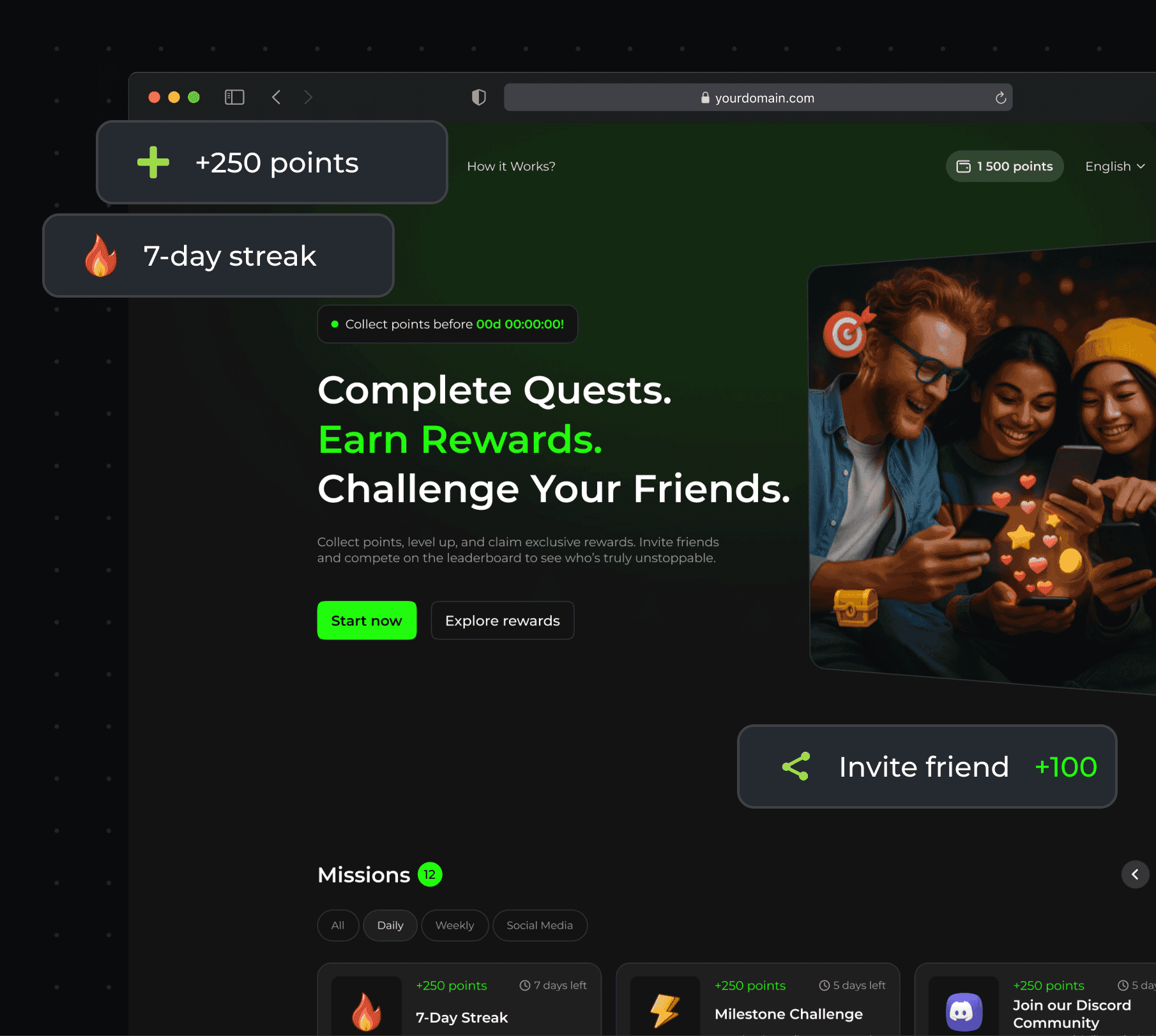
White-Label Loyalty Landing Page by Enable3
Problem #2: Your first cohort activates, then disappears
Launch week delivers your strongest install numbers. But activation is fragile: users who do not complete a meaningful action in the first session rarely return, and without a structured engagement layer in place from day one, your best opportunity to convert curious installers into retained users is gone within 72 hours.
If you want your onboarding to drive retention rather than just completion – Enable3's Event-Based Missions let you attach rewards to the specific in-app actions that predict long-term retention in your product.
"Complete your profile → earn 100 points."
"Make your first purchase → unlock a welcome reward."
"Invite a friend → both get a bonus on activation."
These are not generic nudges – you configure them around the two or three actions your early data shows are most predictive of a user staying. In our experience, products that integrate loyalty marketing strategy from launch day have lower baseline churn across their first cohorts than those that add them later, because the habit and switching cost are built in from session one rather than added onto users who already have no particular reason to stay.
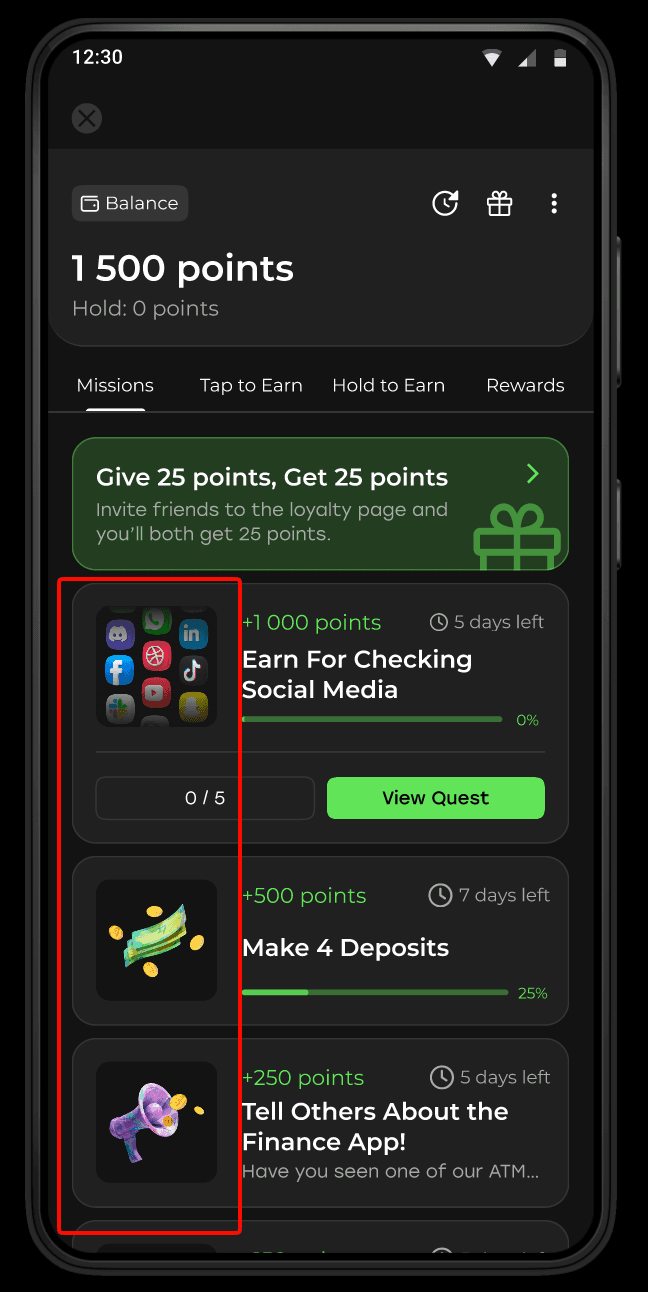
White-Label Event-Based Missions by Enable3
Problem #3: You have no structured way to turn early installers into advocates
Your first users are your most valuable marketing asset – they arrived early, they are likely enthusiastic, and their word of mouth carries credibility that paid acquisition never will. But most launch strategies have no mechanism to activate that advocacy. Users share occasionally when the product delights them; the majority never do without a structured prompt and incentive.
If you want referral to be a launch growth engine rather than a happy accident 🡺 Enable3's Referral Program lets you reward early adopters for bringing in qualified users from day one. Conditional, tiered rewards ensure that the quality filter is built into the program architecture: both parties only earn when the referred user completes a meaningful action, not just an install.
"Invite a friend who completes onboarding → 200 points each."
The users who arrive through this channel have demonstrated intent before they have been rewarded, which is why their downstream retention is consistently higher than installs from paid channels.
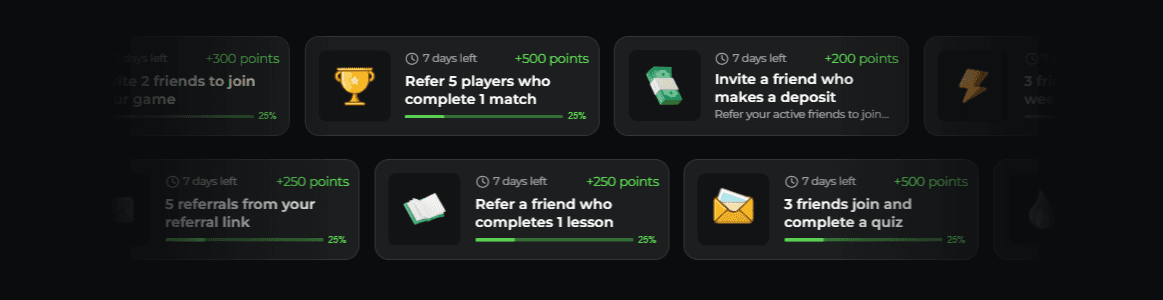
Types of Real-World Referral Scenarios to Engage Early Adopters
Problem #4: Your launch engagement is uniform – every user gets the same experience
Your first cohort is not one audience. It includes users who found you through press, users who came from your waitlist campaign, users who were referred by a friend, and users who found you through organic search. Each group arrived with different expectations and different levels of prior investment in your product. Sending them all the same onboarding sequence and the same first-week campaign ignores the information you already have about them.
If you want your launch campaigns to reflect what you already know about each user 🡺 Enable3's Segments let you group your first cohort by customer acquisition source, activation status, referral history, or any behavioral dimension from day one. Waitlist users who completed a pre-launch Social Media Mission get a different onboarding Mission sequence than cold installs. Users who came through referral get a different first-week Quest than users who came through paid search. The right message to the right user at the right moment – automated, with no manual list-building and no campaign management overhead.
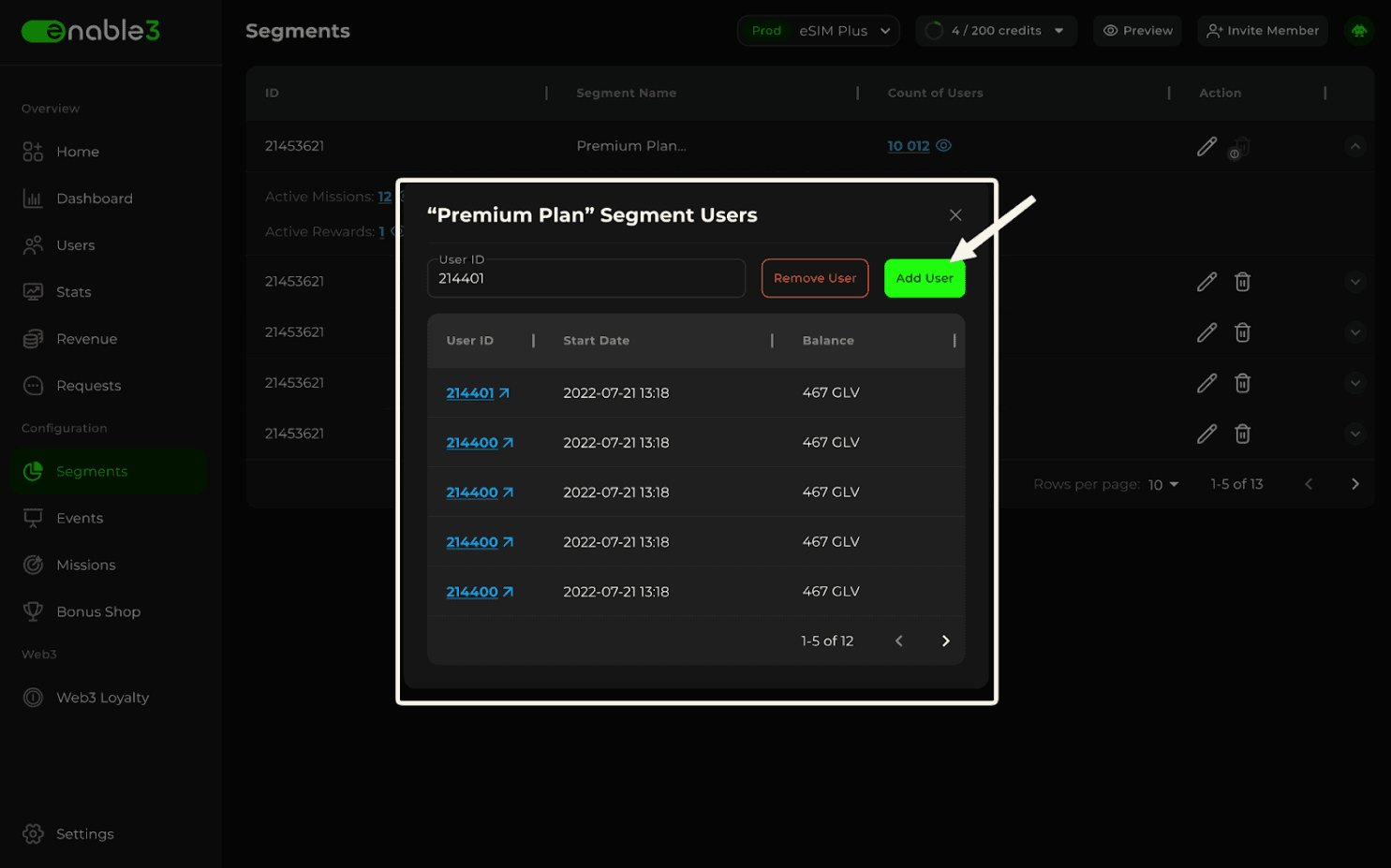
Problem #5: You need to build daily engagement habits in the first two weeks
The window between Day 1 and Day 14 is where most launches are won or lost. Users who do not return within a week of installing almost never become retained users. But without a structured daily engagement mechanic, your only lever is push notifications – and push notifications without a reason to return are noise, not retention.
If you want users to open your app every day in the first two weeks 🡺 Enable3's Streaks create daily habits from session one. A Streak started on day one – "Check in daily to earn points," "Maintain your streak for 7 days to unlock a launch bonus" – gives users a concrete, accumulating reason to return that is entirely independent of whether they have a transactional need that day.
The psychological mechanism is loss aversion: a streak that has built value over several days is genuinely painful to break.
That is a retention force that no push notification campaign can replicate at the same cost, and it is available from the first session without an engineering sprint.

Problem #6: Your launch creates no long-term status or progression
Launch day is high-energy. Week two is ordinary. Most apps see a significant drop-off in engagement between the launch spike and the baseline because the launch itself provided novelty that the product, on its own, cannot sustain. There is no escalating stake, no status to work toward, and no visible proof of the user's investment in the product accumulating over time.
If you want your launch cohort to remain engaged at month two and month three 🡺 Enable3's Tiers give users a progression system to work toward from day one. Configure Bronze, Silver, and Gold tiers with conditions set to your specific launch behaviors – first purchase, referral, product adoption, streak completion – and each level unlocks better rewards, exclusive missions, and higher-value perks.
A user who reaches Silver tier in their first month has accumulated status they would lose by churning. A user approaching Gold tier makes decisions specifically to reach it – sessions they would not have opened, purchases they would not have made – and that threshold effect compounds through your retention curve from the very first cohort onwards.

Problem #7: You cannot measure which launch mechanics are actually driving retention
Your launch week metrics look strong: installs, activations, social shares. But two weeks later, you cannot tell whether your onboarding mission or your referral program drove the cohort that is actually staying. The engagement mechanics are running, but the attribution is not, which means you cannot double down on what is working and you cannot defend the investment to anyone who asks.
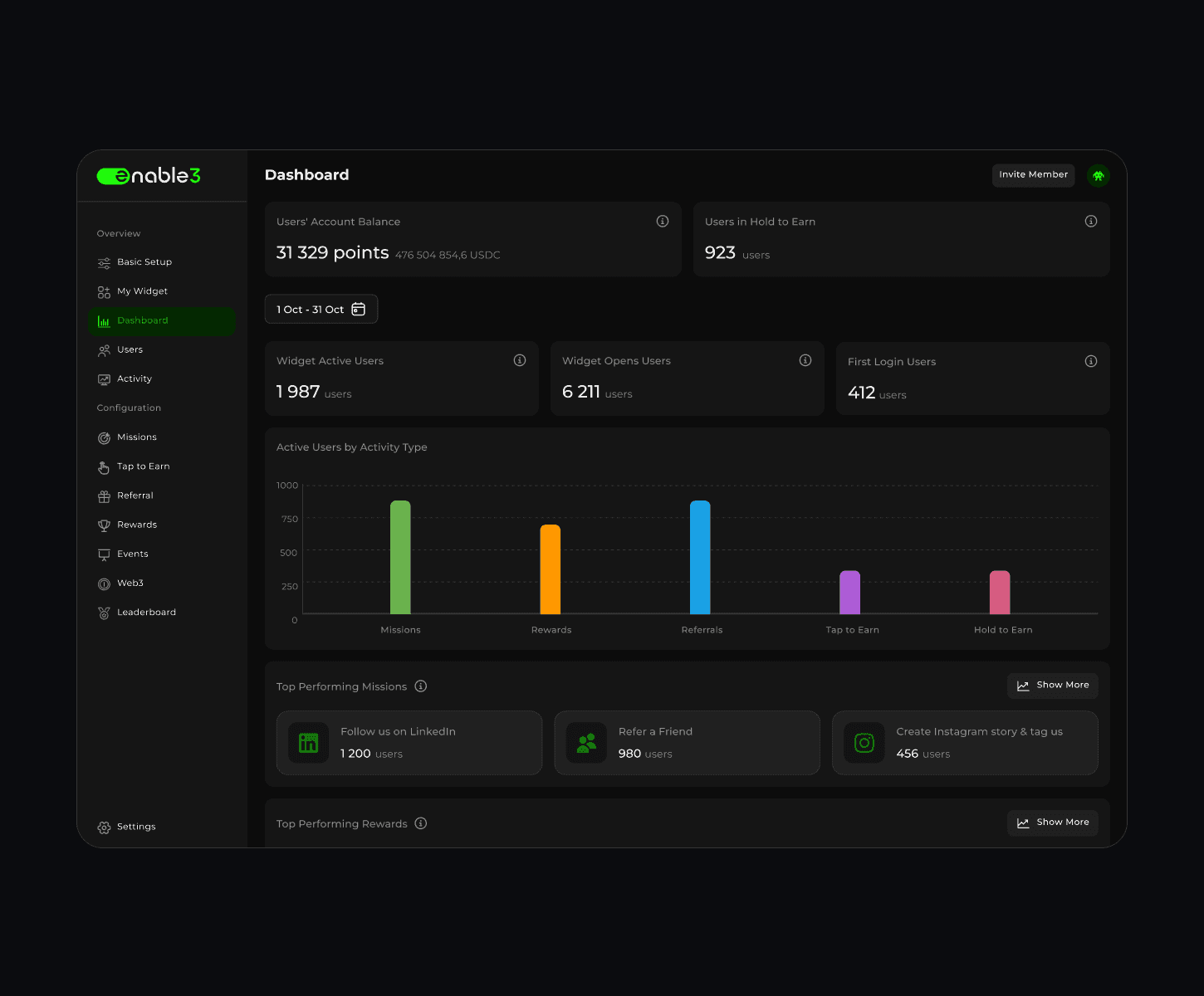
If you want clean attribution between your launch mechanics and your retention outcomes 🡺 Enable3's analytics dashboard shows mission completion rates, reward redemption patterns, segment performance, and the downstream revenue correlation of each engagement mechanic in real time.
You can see which launch missions drove return sessions in week two, which Streak cohorts have the strongest D30 retention, and which referral sources are producing users who actually stay. That is the data to iterate your launch playbook continuously – and the data to show, clearly and specifically, what your engagement infrastructure is worth.
The difference between a launch that compounds and one that flatlines is not awareness. It is what you have built for users to walk into, thanks to proven product launch best practices. An engaged first cohort – one that arrived with expectations set, encountered a structured reason to stay, and had a referral mechanic that activated their network – is worth more than ten times the number of cold installs from a paid campaign that has no engagement layer waiting on the other side.
If you want to build that engagement layer before your launch date – not after churn becomes a problem – talk to our team. We will configure your program around the specific behaviors that matter for your product and make sure your first cohort is your strongest.
FAQ
What is an app launch marketing plan?
An app launch marketing plan is the operational document that coordinates every marketing activity required to bring an app to market – from positioning and messaging, through content creation and channel activation, to post-launch engagement and measurement. It is a time-bound plan (typically 8–12 weeks) with specific deliverables, owners, and KPIs for each phase: pre-launch, launch day, and post-launch. Every app launch needs one because launches are coordination problems – without a shared plan, teams work in silos and the post-launch experience is left to chance.
What is the difference between a launch plan and a go-to-market strategy?
A go-to-market (GTM) strategy is the high-level framework that defines how a product enters a market – pricing, competitive positioning, market selection, distribution model. A product launch plan is the tactical execution document that sits inside the GTM strategy – it defines the specific activities, timelines, channels, content, and team coordination required to execute the actual launch. The GTM tells you what to do and why. The launch plan tells you how, when, and who.
What should I do if I have no budget for a product launch?
Focus on the 5 non-negotiables that cost nothing but time: (1) a clear positioning statement validated with 5 target users, (2) a landing page with a signup form, (3) a 3-email sequence (pre-launch, launch, onboarding), (4) a waitlist with a referral mechanic, and (5) a structured first-week engagement program for new users. Many of the most successful product launches in tech history – including Linear, Dropbox’s initial beta, and early-stage Superhuman – were executed with minimal or zero paid marketing budget. What they had instead was a clear message, an engaged early community, and a product experience worth talking about.
How do I keep users engaged after the initial launch spike?
The launch spike is temporary by nature – what matters is the engagement system that follows it. Three tactics that consistently work: (1) a structured first-week mission sequence that guides users to their “aha moment” with clear steps and rewards, (2) a daily engagement mechanic like streaks or check-in rewards that creates a reason to return beyond the initial novelty, and (3) a conditional referral program that turns your happiest users into advocates. Platforms like Enable3 let you configure all three without engineering resources – so they launch alongside your product on day one, not as an afterthought three months later.
How do loyalty programs help with a product launch?
Loyalty and engagement mechanics – missions, streaks, quests, referral rewards – serve 3 functions during a launch. First, they provide a structured onboarding path that guides new users through key actions with rewards, increasing activation rates. Second, they create daily return habits through streak mechanics and progressive challenges, extending the retention curve past the initial novelty period. Third, they build switching costs through accumulated value (points, badges, tier status) that users would lose by leaving. A well-designed engagement program turns a launch-day signup into a user with something to lose – and that is the foundation of sustainable growth.