Loyalty

Here is a pattern I keep seeing in ecommerce: a brand runs a solid paid acquisition strategy, conversion rates look fine, the first-order numbers are healthy – and then the repeat purchase rate is stuck at 18%. New customers come in, look around, buy once, and leave. The customer acquisition cost (CAC) climbs every quarter. The business feels like it is running on a treadmill.
Most teams respond by testing more ad creatives, optimizing their landing pages, or launching another discount. In our experience, that is almost always the wrong lever. The problem is not at the top of the funnel – it is at the bottom. You are not giving customers a strong enough reason to come back.
A well-designed ecommerce loyalty rewards program is, in my view, the single highest-leverage element of any customer retention strategy available to an online store. Not because it magically creates loyalty – it does not – but because it engineers specific, repeatable reasons to return at far lower cost than paid acquisition.
In this guide, I am going to break down 8 mechanics that genuinely move repeat purchase rate, give you a framework for choosing the right mechanic, and close with a section on how Enable3 – a dedicated low-code customer engagement platform and customer loyalty software – can help you implement this without months of custom development.
Why Repeat Purchase Rate is the Real Ecommerce Loyalty Metric
The Retention Math Most Teams Underestimate
According to Bain and Company, a 5% increase in customer retention can increase revenue by 25 to 95%. That number has been quoted so many times it has lost its power – so let me make it concrete.
Take a store with a 20% repeat purchase rate. If you increase that to 27% over 12 months – a realistic outcome from a well-configured online loyalty program – every additional repeat purchase arrives at near-zero marginal acquisition cost. Your existing infrastructure (email, SMS, loyalty platform) handles the re-engagement. Compare that to paying $40 to $80 in customer acquisition cost for the equivalent new customer in a competitive ecommerce category, and the return on retention investment becomes obvious.
The asymmetry is the point: acquisition cost is fixed per new customer. Retention benefit compounds across every subsequent purchase from the same person.
What Repeat Purchase Rate Actually Tells You
Repeat purchase rate (RPR) measures a percentage of customers who made more than 1 purchase in a defined time period. A single purchase is a trial. The second purchase is the first real data point. Everything before it is the acquisition.
The formula: (customers with 2+ purchases) ÷ (total unique customers) × 100.
Benchmarks vary significantly by category:
Category | Healthy RPR Range | Key Driver | Best Mechanic Match |
|---|---|---|---|
Consumables (coffee, supplements, pet food) | 50–70% | Natural depletion cycle | Subscription / auto-replenish + points |
Beauty and personal care | 30–50% | Product rotation and discovery | Points + tiers + experiential |
Apparel and fashion | 25–40% | Seasonal purchasing, identity | Tiers + exclusive access + referrals |
Home and lifestyle | 15–25% | Considered, infrequent purchase | Cashback + paid membership |
Electronics and tech | 10–20% | Long replacement cycles | Experiential + referrals |
Outdoor and sporting goods | 25–40% | Activity-based, community | Experiential + gamification + tiers |
Before designing any loyalty program, know where your store sits relative to your category benchmark. The right mechanic for a coffee brand is not the right mechanic for a sofa retailer.
Why CAC Is No Longer a Reliable Growth Lever
Customer acquisition costs across most ecommerce categories have been rising structurally since 2021 – driven by iOS privacy changes, higher competition on Meta and Google, and the fragmentation of attention across channels. For fashion and beauty brands in European markets, average CPAs on Meta now routinely sit above €50. That number doesn't come down by optimizing creatives. It comes down by making each acquired customer worth more over time.
That's not an argument against acquisition. It's an argument for building a customer retention strategy in ecommerce with the same rigor, budget allocation, and measurement discipline you apply to paid channels.
Bain & Company's research puts the cost of acquiring a new customer at 5 to 7 times more than retaining an existing one. The two are not in competition. But for most stores, the incremental return on the next €10,000 in retention investment is higher than the same spend added to an already saturated paid account.
But eCommerce Loyalty Programs Are Not Magic Either
I want to be direct about something before we go further: a badly designed customer loyalty program can perform worse than no program at all. Points that customers never redeem create expectations that go unfulfilled. Tiers with no meaningful benefit differences add complexity without incentive. Referral programs that pay out on signups attract deal-hunters rather than loyal buyers.
The mechanics in this guide are based on behavioral engineering. They work when the design is right and fail when it is not. I will cover the six most common loyalty program mistakes in a dedicated section – but keep the framing in mind as we go.
Before you choose a mechanic: Answer two questions first. How many times does your average customer purchase in a 12-month period? And what is your typical order value? Those two numbers determine which mechanics will actually move the repeat purchase rate in your category. Everything else flows from there. |
What Actually Counts as an Ecommerce Loyalty Program (and What Doesn’t)
An ecommerce loyalty program (also called an ecommerce rewards program or loyalty rewards program) is a structured system that rewards customers for specific, repeatable behaviors (purchase, referral, review, engagement) in ways that raise the cost of switching and create predictable reasons to return. The emphasis on "structured" and "repeatable" is everything.
What Is NOT a Customer Loyalty Program
A seasonal sale open to all customers equally
A blanket coupon code with no behavioral condition attached
A newsletter sign-up discount with no follow-up engagement structure
A third-party cashback portal the brand does not control or brand
A paper stamp card with no digital identity or tracking attached
A one-time "welcome" credit that expires before the customer has a reason to use it
The Four-Type Taxonomy – and Where It Falls Short
Most ecommerce loyalty program guides organize everything into four types: points-based, tiered, paid (VIP), and value-based. This taxonomy describes what programs look like structurally – it does not tell you which behavioral mechanic is driving repeat purchase, or why it works for one category and fails in another.
I prefer to think in terms of 8 behavioral mechanics. Each one has a specific psychological driver, a specific effect on repeat purchase rate, and specific conditions where it works and where it breaks. Many effective ecommerce customer loyalty programs layer two or three mechanics simultaneously in ways the four-type taxonomy cannot capture.
The 8 Ecommerce Loyalty Mechanics That Drive Repeat Purchases
Before going deep on each, here is a reference map I find useful when working through the mechanic decision with a new brand:
# | Mechanic | Core Psychological Driver | Primary Effect | Best Category Fit |
|---|---|---|---|---|
1 | Points-Based Earning | Habit formation through balance accumulation | Increases purchase frequency | High-frequency, broad commerce |
2 | Tiered Status | Status motivation + loss aversion | Raises AOV + reduces churn | Mid-high AOV, aspiration-driven |
3 | Paid Membership / VIP | Revenue lock-in via sunk-cost psychology | Consolidates share of wallet | High-frequency or bundled benefits |
4 | Cashback and Store Credit | Channel lock-in; concrete return-to-spend incentive | Drives second purchase | Value-focused, price-sensitive buyers |
5 | Referral Loops | Social proof + dual reward | Lowers blended CAC | High-NPS, community-driven brands |
6 | Gamified Missions and Streaks | Habit loops + achievement | Builds habitual return visits | Apps, subscriptions, high-frequency |
7 | Experiential and Exclusive Access | Emotional loyalty + identity | Generates advocacy + NPS lift | Brand-led, premium, lifestyle |
8 | Subscription and Auto-Replenish | Friction reduction + predictability | Eliminates churn as active decision | Consumables, replenishment categories |
Let’s get into each one in more detail.
Mechanic #1: Points-Based Earning
How It Works and Why It Drives Repeat Purchases
Points programs are the most widely deployed loyalty mechanic in ecommerce – and the most frequently broken. The core logic is straightforward: customers earn points for purchases (and increasingly for non-purchase actions like social shares, reviews, and profile completion), accumulate a balance, and redeem against future orders.
The behavioral mechanism that makes points work is the endowment effect: once a customer has accumulated a balance, they perceive it as something they own and would genuinely lose by switching. Combine that with a redemption threshold – a minimum balance before points unlock – and you've created a gravitational pull toward the next purchase that a discount code can't replicate, because a discount code doesn't exist before the customer returns. A points balance does.
Lush Fresh Handmade Cosmetics
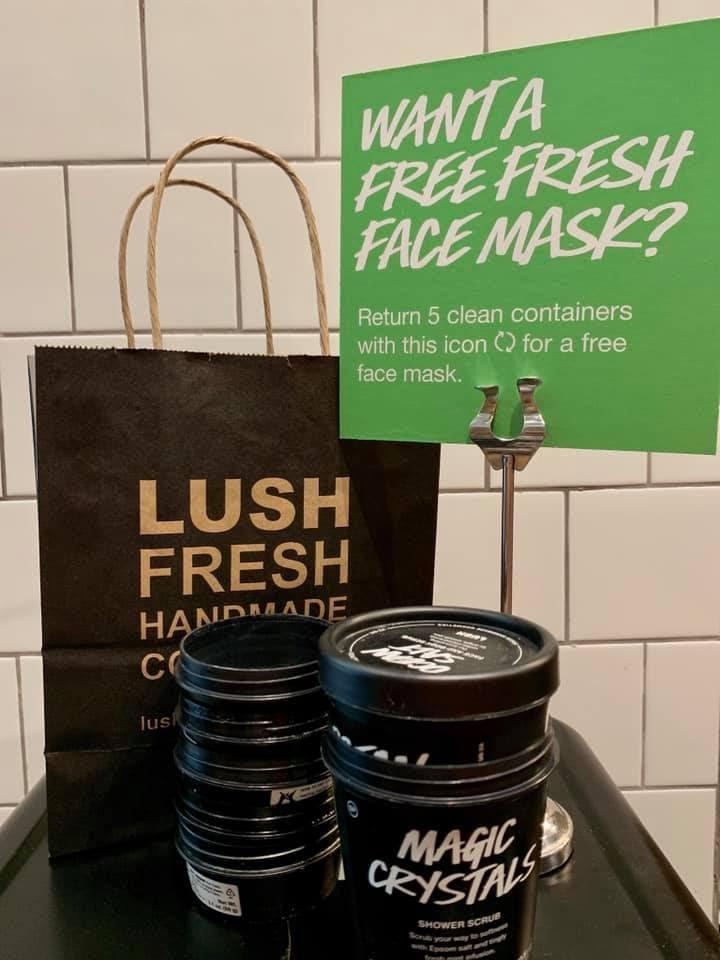
Lush gives customers a stamp per product purchased and rewards the return of five empty black pots with a free face mask. The mechanic is simple, but it combines accumulation with an environmental mission that fits the brand identity perfectly. Customers returning empty pots are physically back in-store, surrounded by product – predictably driving incremental purchases beyond the reward claim itself.
PetSmart Treats
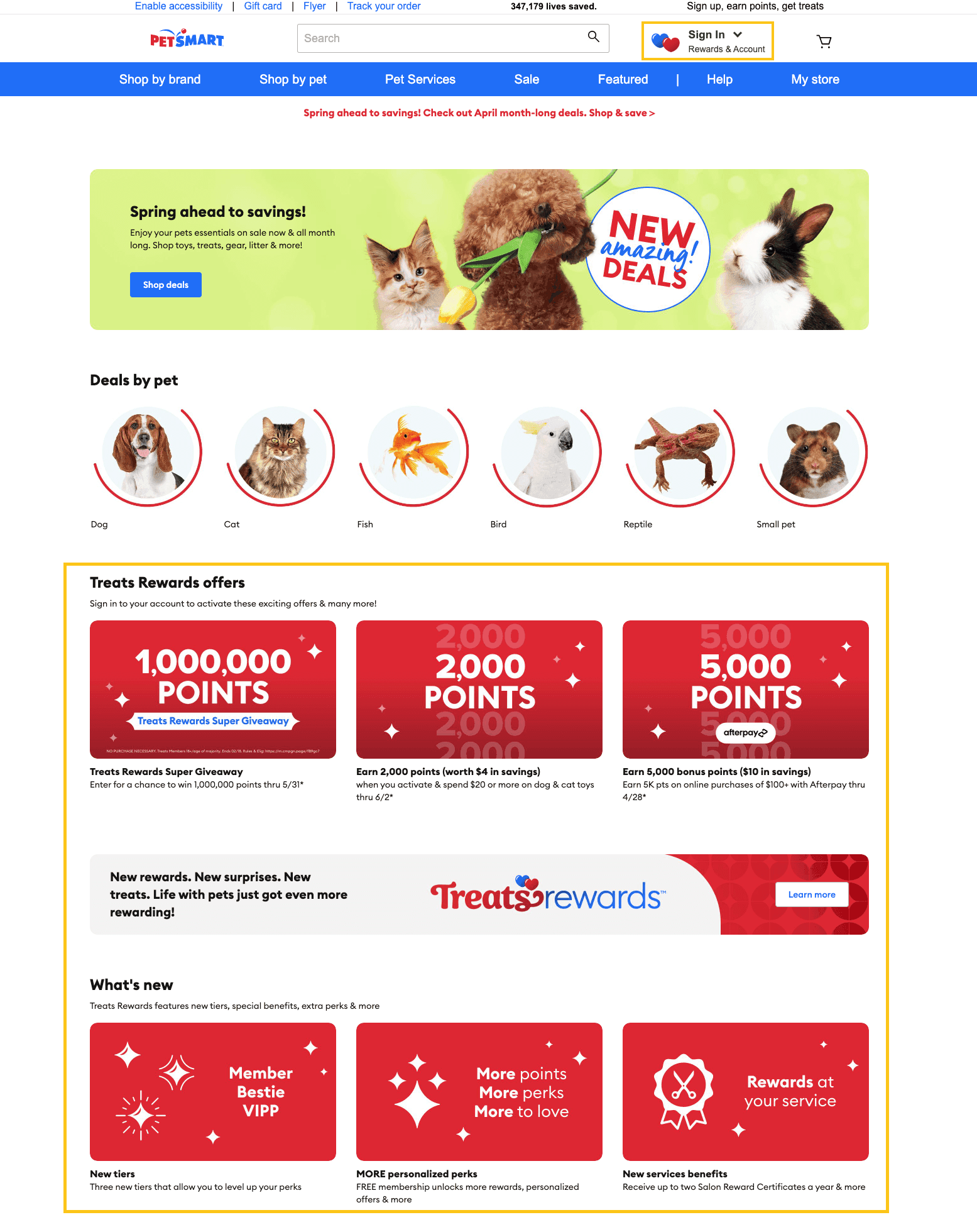
PetSmart links points earning across every category: grooming appointments, vet visits, training classes, and in-store purchases. This cross-category design means customers enrolled in Treats are more likely to consolidate their entire pet spending within PetSmart rather than splitting across Petco, Chewy, and a local vet – directly raising share of wallet as a consequence of loyalty program design, not promotion.
When Points Work in eCommerce – and When They Do Not
Works well: High purchase frequency, broad product range, price-conscious customer segments who respond to visible value accumulation.
Breaks down: Very low-frequency categories, such as furniture or mattresses, where accumulation takes too long to feel meaningful.
Common failure: Redemption thresholds set so high that customers disengage before earning their first reward.
Pro Tip: Set your first redemption threshold so a customer who purchases at a natural frequency reaches it within their first 3 or 4 purchases. That first redemption converts a passive enroller into an active loyalty participant. Without it, your customer loyalty program is a badge most members will forget they have.
Mechanic #2: Tiered Status Programs
How It Works and Why It Drives Repeat Purchases
Tiered loyalty programs add a status layer on top of basic accumulation mechanics. Customers progress through levels – Bronze, Silver, Gold, Platinum – by reaching spend or activity thresholds, and each tier unlocks incrementally better loyalty program benefits: higher earn rates, faster shipping, exclusive product access, priority service, or event invitations.
Two behavioral forces make tiers particularly powerful.
The first is status motivation: many customers will spend above their natural budget to reach the next tier, especially in aspiration-driven categories.
The second is loss aversion: a customer approaching the end of a qualifying period who risks downgrading will often make additional purchases specifically to protect their status – even without a particular product need driving that decision.
A well-configured tiered loyalty program also creates rich behavioral data that enables personalization, so you know exactly which customers are on the cusp of a tier change and can tailor communications accordingly.
Nordstrom Nordy Club
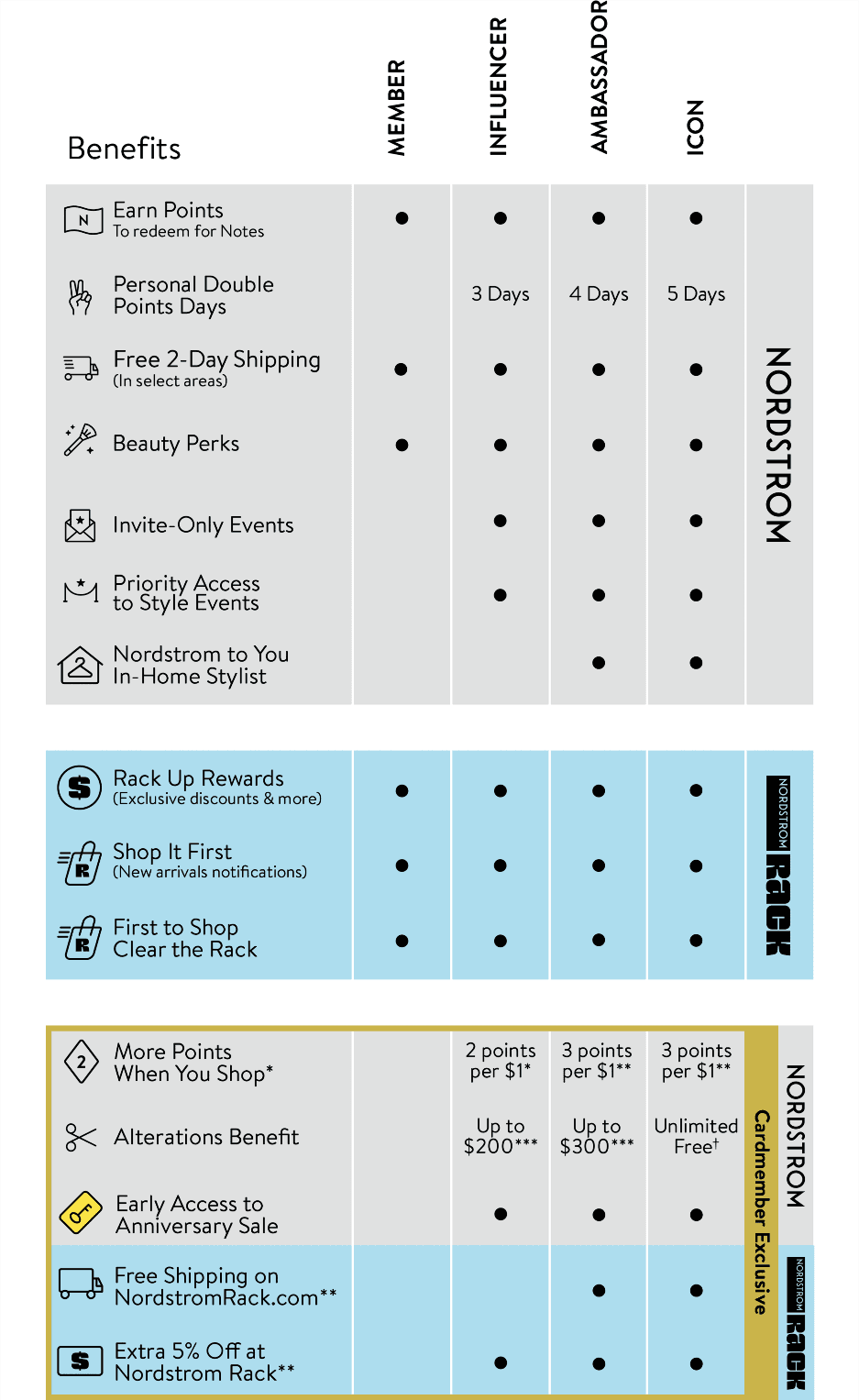
Four levels (Member, Insider, Influencer, Ambassador) with spend thresholds at $500, $2,000, and $5,000 annually. The key design insight here is that benefits escalate qualitatively – the top tier is not simply getting more points, they are getting dedicated personal stylist access and alterations services. That qualitative difference makes the tier genuinely aspirational rather than just a label.
Marriott Bonvoy:
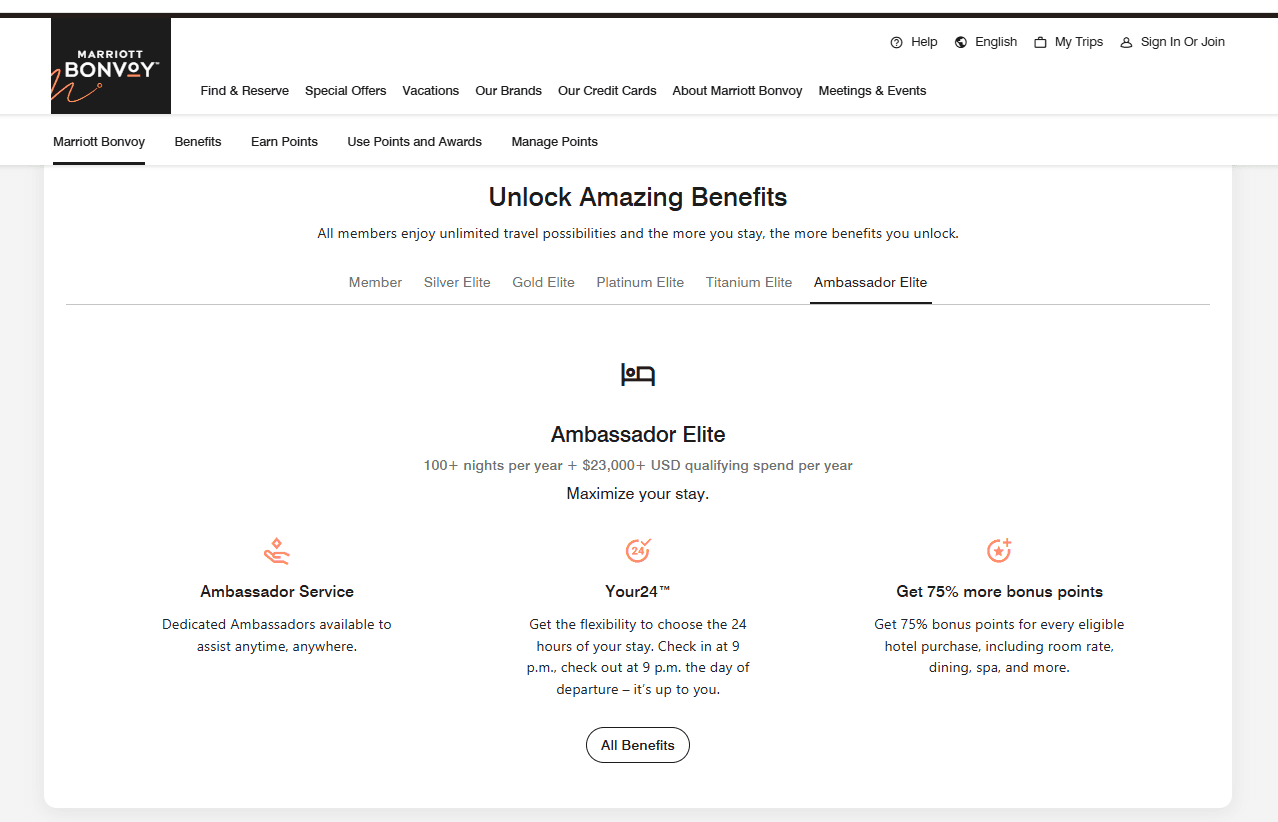
8 tiers from Member to Ambassador Elite, with the qualifying thresholds steep enough to feel genuinely aspirational. Their tiered loyalty program is instructive because it demonstrates tier design at scale across a massive product portfolio (35+ brands, 9,000+ properties). Each tier unlocks meaningfully different service levels – not just more points, but lounge access, suite upgrades, and dedicated reservation lines. The upper tiers carry real monetary value that frequent business travelers actively manage their stays around, which is the behavioral outcome any tier loyalty program should aspire to produce.
When Tiers Work in eCommerce – and When They Do Not
Works well: Categories where status recognition resonates with the buyer's identity – fashion, beauty, travel, premium food.
Breaks down: Very low AOV categories where reaching a meaningful spend threshold requires an impractical number of purchases.
Common failure: Top tier benefits that are not meaningfully different from the tier below, removing the aspirational pull entirely.
Pro Tip: Design at least one "surprise" benefit per tier – something a customer at the tier below would not expect. Expected discounts motivate purchase. Unexpected value creates emotional loyalty. Both matter, but only one creates brand advocates.
Mechanic #3: Paid Membership / VIP
How It Works and Why It Drives Repeat Purchases
Paid loyalty programs work through sunk-cost commitment. Once your customer has paid for a membership, their default shopping starting point shifts: they have already invested in your store, and shopping elsewhere means not recovering the value of that investment. This creates a powerful share-of-wallet effect that is difficult to displace with competitive promotions.
The economic logic is simple: a customer who pays $30 annually for a membership that delivers $60 in shipping savings will make every possible purchase within your ecosystem before going elsewhere – not because they particularly prefer you, but because the math demands it.
Thrive Market
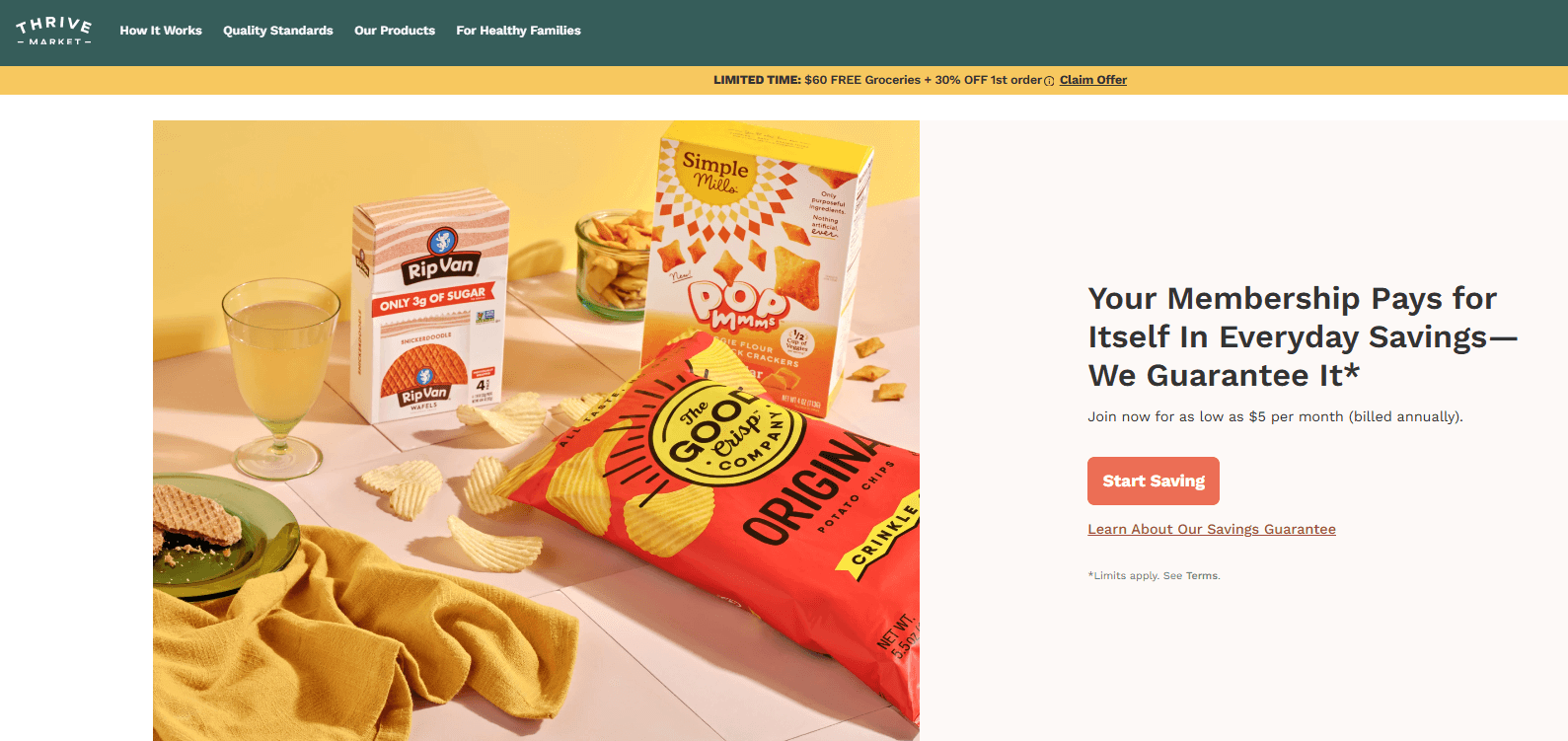
A leading US online retailer of organic and sustainable goods operates entirely on paid membership: $59.99 per year unlocks wholesale pricing across their catalogue. There are no points, no tiers, no earn-and-burn. The discount is the business model and the membership fee is simultaneously the revenue driver and the retention mechanism. Members who pay $60 annually have a direct financial incentive to reach the spend level that makes the membership worthwhile. Most do, quickly.
Restoration Hardware (RH) Members
RH charges an annual membership fee that unlocks 25% off all regular purchases plus further discounts on sale items. The program intentionally serves their core customer – design-conscious homeowners making high-value, semi-regular purchases. A single large furniture purchase offsets the membership cost immediately, making joining economically rational on the spot. The result is that RH becomes the default destination for any home category where the brand competes.

When Paid Membership Works in eCommerce – and When It Does Not
Works well: High-frequency stores where members can easily offset the fee through savings on their natural purchase behavior.
Breaks down: Low-frequency categories where customers cannot justify the annual fee against their expected purchase savings.
Common failure: Membership without enough bundled benefits to feel clearly worthwhile, producing low renewal rates and public criticism.
Mechanic #4: Cashback and Store Credit
How It Works and Why It Drives Repeat Purchases
Cashback and store credit mechanics return a percentage of purchase value to a store wallet. Unlike points, cashback requires no conversion math – "spend $100, get $5 back" is immediately understood by any customer. This simplicity makes it particularly effective with value-focused and price-sensitive segments.
Store credit is more powerful than pure cash refunds from a loyalty design perspective because it is explicitly earmarked for your store. A customer with $18 in store credit has a concrete financial reason to return – that credit functions as a partial prepayment on their next transaction, lowering the effective price of their next purchase and making your store the natural first stop.
REI Co-op Member Rewards
REI, the US outdoor retailer, returns 10% of eligible purchases annually as a dividend – a credit members can use against future purchases. The mechanic encourages consolidation: a customer spending $1,000 in a year receives $100 back.
That is materially better than any competitor promotion, and it compounds with volume. The dividend framing – profit-sharing rather than discount – also aligns with REI's cooperative ownership model, making it feel like a genuine financial relationship rather than a marketing tactic.

When Cashback Works in eCommerce – and When It Does Not
Works well: Brands with margin structures that can fund a 5 to 10% return without damaging profitability.
Breaks down: Premium positioning where price-led incentives undermine the brand's quality narrative.
Common failure: Store credit or cashback that expires before customers have a realistic reason to return – creating frustration rather than loyalty.
Mechanic #5: Referral Loops
How It Works and Why It Drives Repeat Purchases
Referral programs create a flywheel where existing customers bring in new ones and are rewarded for doing so. When designed correctly, they solve two problems simultaneously: acquisition (referred customers arrive with social proof and cost far less than paid media) and retention (the act of referring reinforces the referrer's own commitment to the brand).
The structural mistake I see most consistently is rewarding the wrong behavior. Loyalty programs that pay out when an invited friend creates an account attract incentive collectors – a predictable spike in low-quality signups, followed by near-zero activation, followed by a budget conversation about why the loyalty program "does not work." It worked exactly as designed; the design of the loyalty program was just wrong.
The fix is conditional reward design: the referrer earns only when their referred friend completes a meaningful action such as first purchase, first subscription activation, first order above a defined threshold. This simple structural change systematically selects for higher-quality referred users.
Allbirds
A leading American sustainable footwear brand, rewards both the referrer and the new customer with store credit toward their next purchase. The dual-sided structure aligns incentives well: the referrer wants their friend to genuinely use the credit, not just click a link, which means they are more likely to refer friends who are actual candidates for the product. The mechanic also sits naturally within Allbirds' brand positioning around conscious consumption – helping people discover better products is framed as a social good, not a commission.

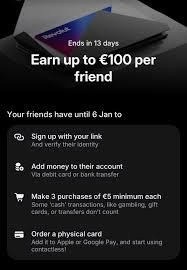
Revolut
Revolut didn't pay for signups. They paid for card activations – both parties earned only when the referred user had demonstrated enough intent to order and use the card.
Tying the reward to card activation rather than account creation was the structural decision that changed everything. Referred users who arrived through the conditional program had demonstrated genuine intent before receiving any reward, which is why their downstream retention and spending quality consistently exceeded users acquired through paid channels.
When Referrals Work in eCommerce – and When They Do Not
Works well: Products with clear "show-and-tell" quality that friends can evaluate easily before purchasing.
Breaks down: Products with strong category-switching incentives where referred users collect the signup bonus and leave.
Common failure: Flat signup bonuses with no activation condition – paying for account creation rather than engaged customers.
Pro Tip: Tie your referral reward condition to a meaningful action by the referred user – first purchase, first subscription activation, or profile completion. This single structural decision typically doubles the downstream quality of referred cohorts.
Mechanic #6: Gamified Missions and Streaks
How It Works and Why It Drives Repeat Purchases
Gamification applied to ecommerce loyalty borrows from game design: missions, challenges, progress indicators, time-limited campaigns, and streak mechanics. The behavioral driver is fundamentally different from pure points accumulation – rather than building toward a single distant reward, gamified mechanics create multiple near-term completion moments that generate regular engagement and return visits.
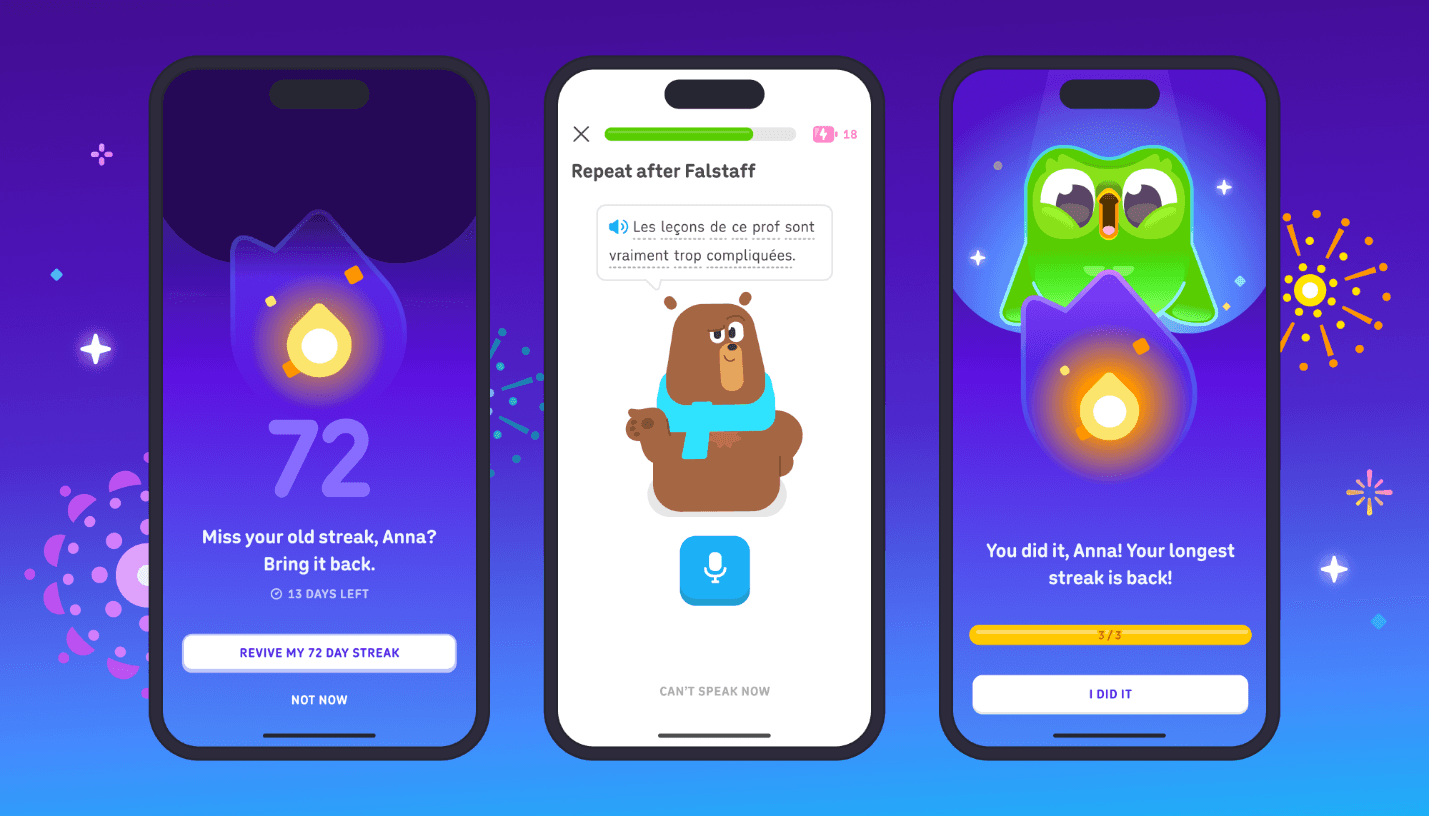
Missions are time-bound challenges with defined rewards: "Make three purchases this month to earn bonus points." Streaks reward consistency: "Log in daily for 7 days to unlock a tier multiplier." Both leverage the same psychological principle – loss aversion. A streak that's been building for 14 days is genuinely painful to break. A mission that's 80% complete exerts a pull toward completion regardless of immediate transactional need. These are not soft nudges. They're a behavioral design working at the architectural level.
Lego Ideas
Lego gamifies community participation – users submit set ideas, vote on others', earn recognition for contributions, and see winning designs reach production. This is not a traditional loyalty program, but it drives extraordinary engagement among the highest-value Lego segments – adult collectors and highly engaged families – who become brand advocates as a direct consequence of participation mechanics. The platform effectively turns product development into a loyalty mechanic.

Duolingo
While not ecommerce, Duolingo's streak mechanic is the most studied example of streak-based engagement design and the most instructive. Users who have no particular motivation to study that day open the app specifically to protect their streak – not because the content is pulling them, but because the accumulated streak value is.
Ecommerce brands running mission-based programs generate the same pattern: a customer who has 4 of 5 stamps will return specifically because the incomplete mission creates cognitive tension, not because they need to make a purchase.
When Gamification in Ecommerce Works – and When It Does Not
Works well: Categories with natural engagement beyond the purchase – learning, fitness, community participation, creative involvement.
Breaks down: Low-interest, purely transactional categories where customers have no desire to "engage" with the brand beyond receiving their product.
Common failure: Missions that reward trivial actions (social follows, video views) that have no correlation with long-term retention or purchasing behavior.
Mechanic #7: Experiential and Exclusive Access Rewards
How It Works and Why It Drives Repeat Purchases
Experiential rewards give customers access to things they can't buy: early product releases, members-only events, co-creation sessions, behind-the-scenes access, priority service, or exclusive product collaborations. Unlike transactional rewards, experiential rewards work through identity and belonging – they make customers feel like insiders rather than buyers who reached a spend threshold.
The repeat purchase mechanism is different from every other mechanic on this list. Customers return not to earn a discount, but to maintain access to something they value as part of their relationship with the brand. The switching cost is social and identity-based, not financial. That makes it far more durable – financial switching costs can be matched by a competitor's offer. Identity switching costs cannot.
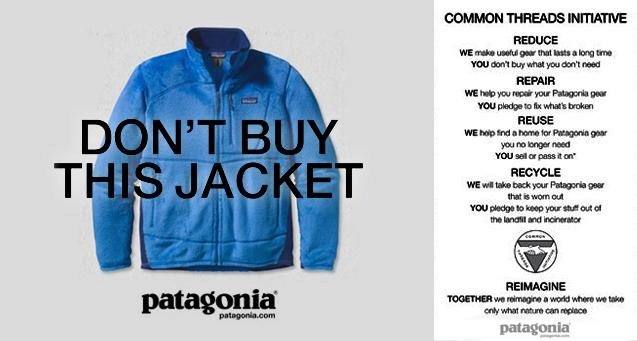
Patagonia
Patagonia's Worn Wear program takes experiential loyalty in a different direction entirely. Customers who bring in worn Patagonia garments for repair or trade-in earn credit and become part of a community built around the brand's environmental values. The experience – the repair event, the conversation about the garment's story – is the reward. It drives repeat purchase by deepening values alignment rather than offering financial incentives. You cannot replicate this with a points-per-purchase system.
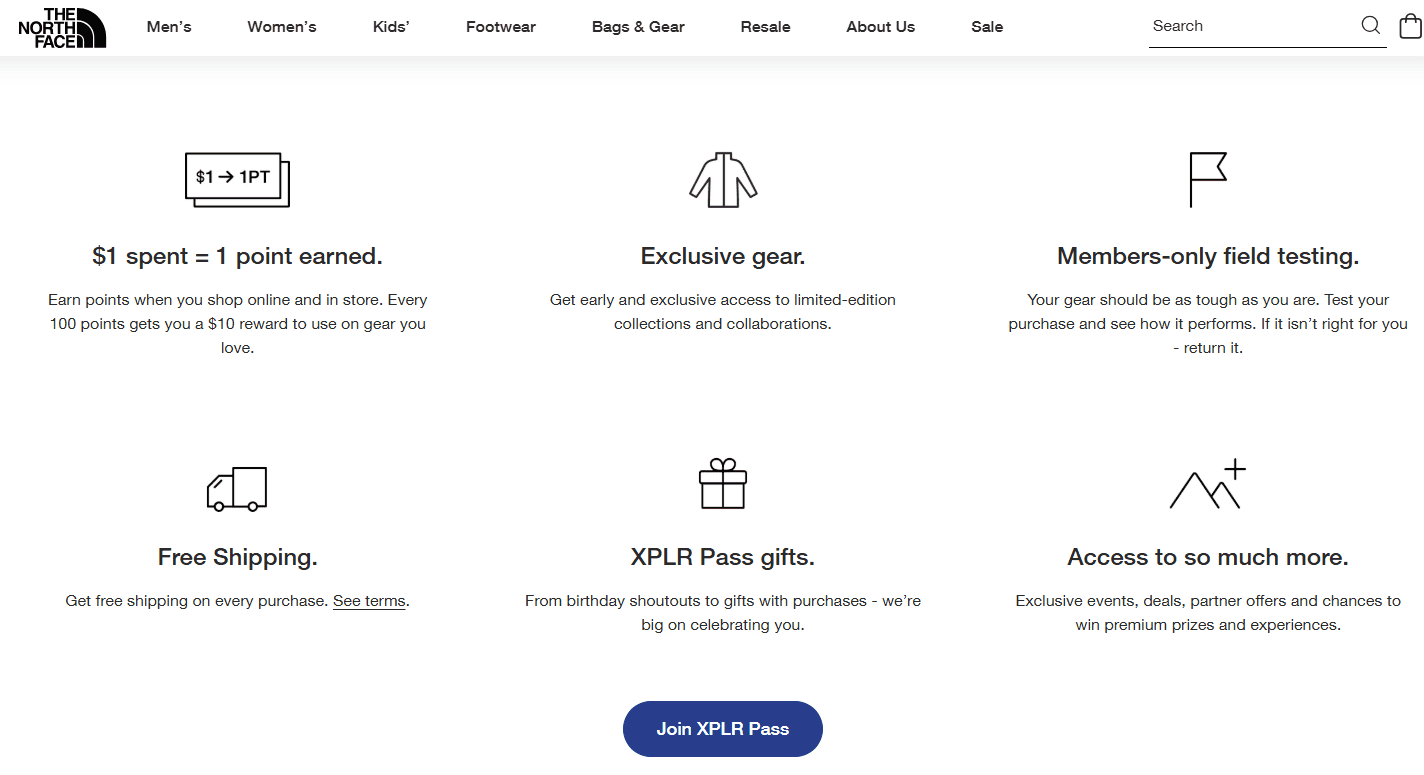
The North Face XPLR Pass
The North Face XPLR Pass allows loyalty members to redeem points for outdoor experiences – guided adventures, priority access to limited-edition drops, invitations to product design sessions – rather than simple discounts. The program is built for customers for whom the North Face brand is part of their outdoor identity. Those customers don't need a discount to return. They need the brand to keep demonstrating that it understands who they are.
When Experiential Access Works in eCommerce – and When It Does Not
Works well: Brand-led categories where identity and community are central to why customers choose you – outdoor, wellness, fashion, food.
Breaks down: Commodity categories where customers are motivated primarily by price and convenience.
Common failure: Experiences that feel low-effort or irrelevant to the customer's actual reason for buying from the brand.
Mechanic #8: Subscription and Auto-Replenish Loyalty
How It Works and Why It Drives Repeat Purchase
Subscription loyalty mechanics solve the repeat-purchase problem by removing it from the decision-making process entirely. A customer enrolled in an auto-replenish program does not need to remember to buy their coffee pods, protein powder, or pet food – the purchase happens automatically.
Retention becomes a passive default rather than an active choice, which changes the economics of churn significantly. The most sophisticated implementations extend this across omnichannel loyalty program touchpoints: in-store, online, and app purchases all feed the same subscription and loyalty record, so customers can manage and earn regardless of where they buy.
The loyalty component typically layers a savings incentive, usually 10 to 20%, on top of the subscription commitment. Convenience plus savings is a powerful combination. Customers on subscribe-and-save programs churn at rather lower rates than one-time buyers, not because the brand has done anything to earn their loyalty in any emotional sense, but because cancelling requires actively reconstructing a purchasing habit they no longer have to think about.
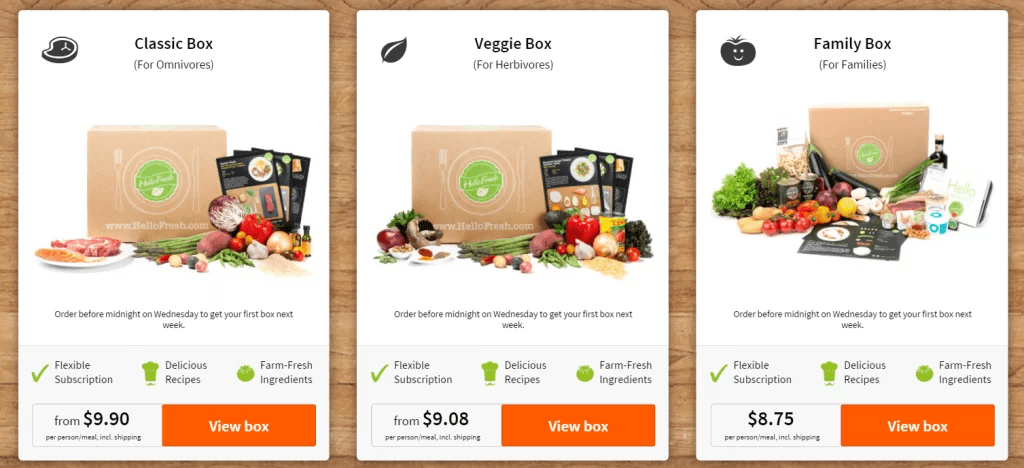
HelloFresh
HelloFresh built the world's largest meal kit subscription business on a model where the subscription mechanic is the entire retention strategy. There is no points program, no tiers, no referral loop as the primary driver – the weekly delivery itself is the loyalty mechanic.
Cancelling requires actively reconstructing a meal planning and grocery shopping habit that the subscription has made unnecessary. Their pause-instead-of-cancel feature further reduces churn by removing the binary choice entirely: customers who need a break do not have to leave to get one.
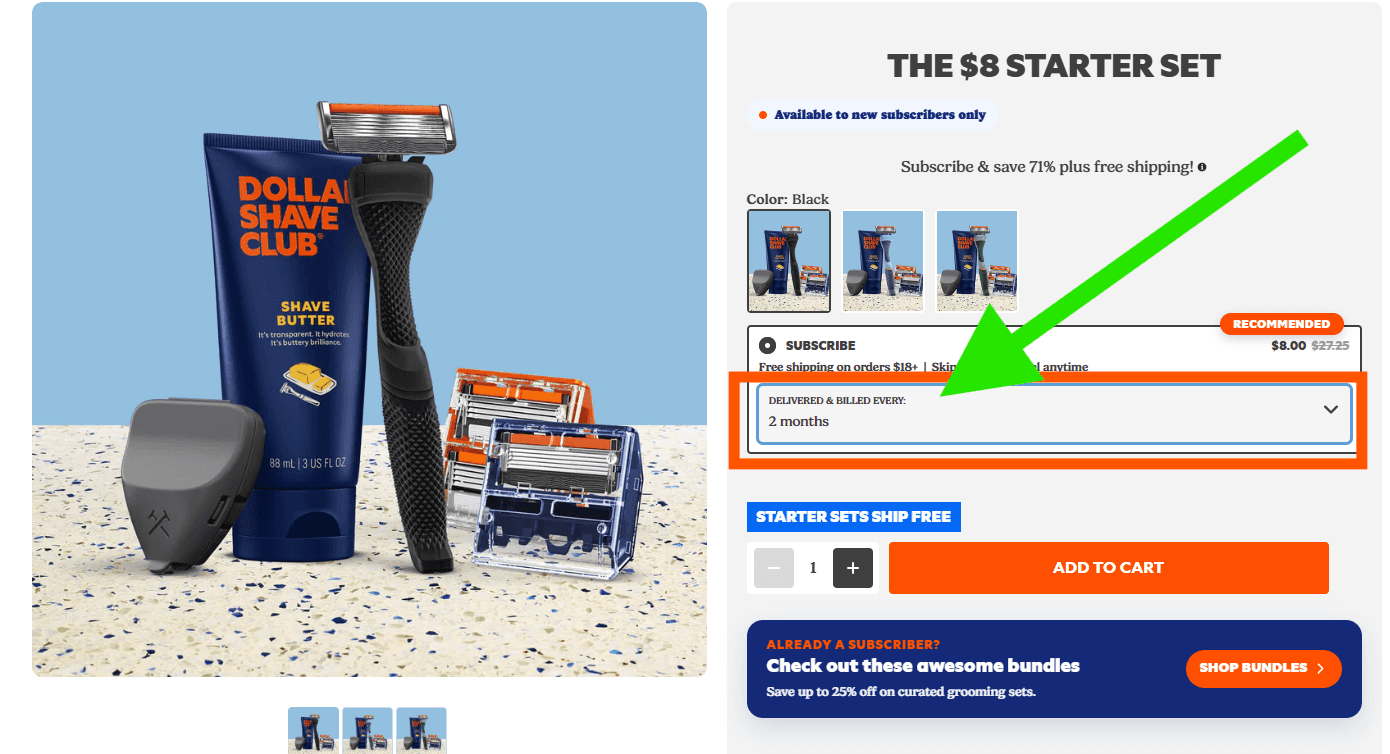
Dollar Shave Club
Built the subscription model as the core loyalty mechanic before "subscribe and save" was a standard ecommerce feature. The initial growth was driven by the viral launch video, but retention was driven by the auto-replenish subscription that made a commodity product (razors) into a recurring relationship. Customers who stayed enrolled for 12+ months had a higher LTV than one-time purchasers, which is the fundamental subscription economics case.
When Subscription Works in eCommerce – and When It Does Not
Works well: Consumables with predictable depletion rates – coffee, supplements, cosmetics, pet food, cleaning products, etc.
Breaks down: Categories with high variance in need timing, or strong preference for browsing and discovery before each purchase.
Common failure: Auto-replenish intervals that do not match actual consumption rates, creating inventory build-up for the customer and cancellations for the brand.
5 Ecommerce Loyalty Programs Worth Learning From – and Why They Work
Sephora Beauty Insider – Points x Tiers x Experiential
Sephora’s Beauty Insider is the most studied loyalty program in retail, and the loyalty architecture explains why. It layers 3 mechanics simultaneously:
a points-earn system (1 point per dollar spent)
a three-tier status structure (Insider, VIB, Rouge), and
an experiential reward layer such as exclusive events, early product access, or in-store beauty classes.
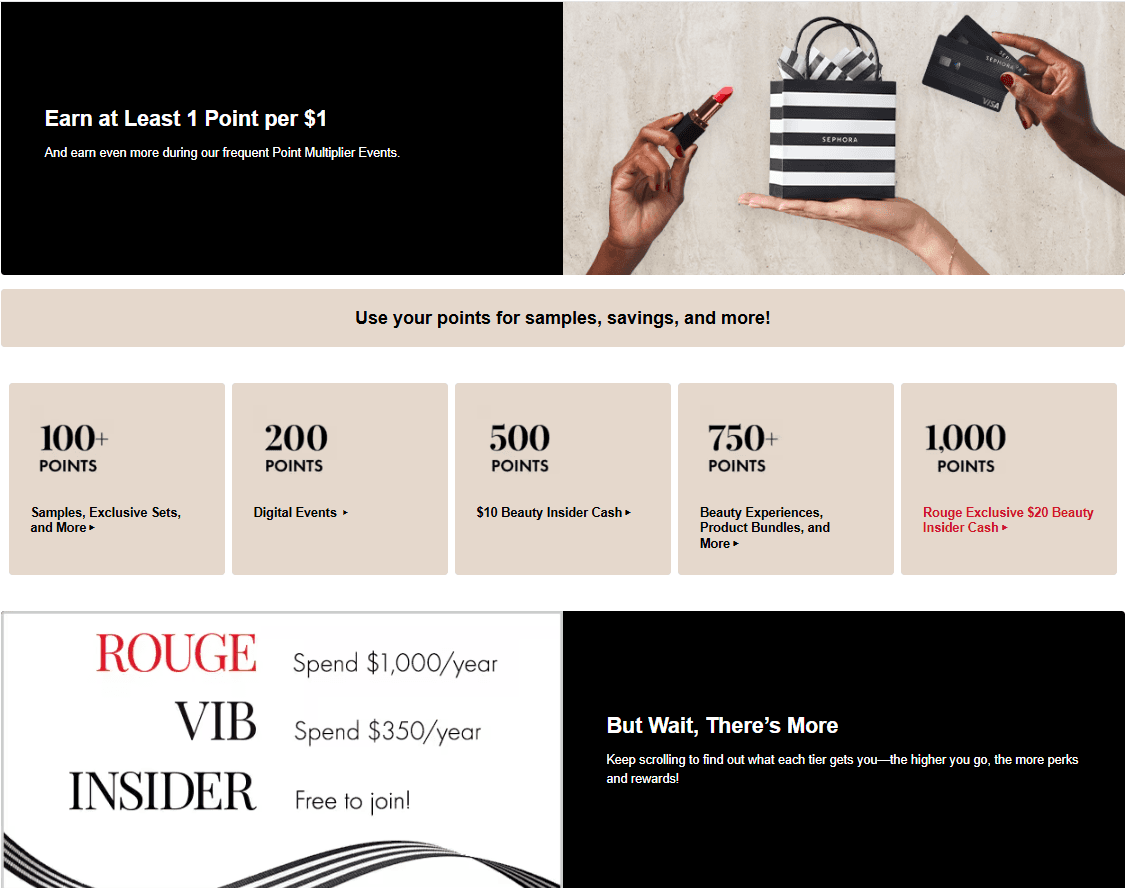
Rouge-tier members, those spending $1,000+ annually, account for 80% of Sephora's total company sales despite representing a small fraction of the member base. Each mechanic serves a distinct retention function: points drive frequency, tiers drive spend escalation, experiences drive identity lock-in. The combination is what makes this customer loyalty program compounding rather than linear.
Nike Membership – Experiential x Community x Identity
Nike loyalty program is not built around points or spend thresholds. It is built around access – exclusive drops on the SNKRS app, early invites to events, personalized training content through Nike Training Club. What makes it genuinely different from most programs is that the reward is the brand experience itself: access to content, products, and community that money alone cannot replicate without the membership.
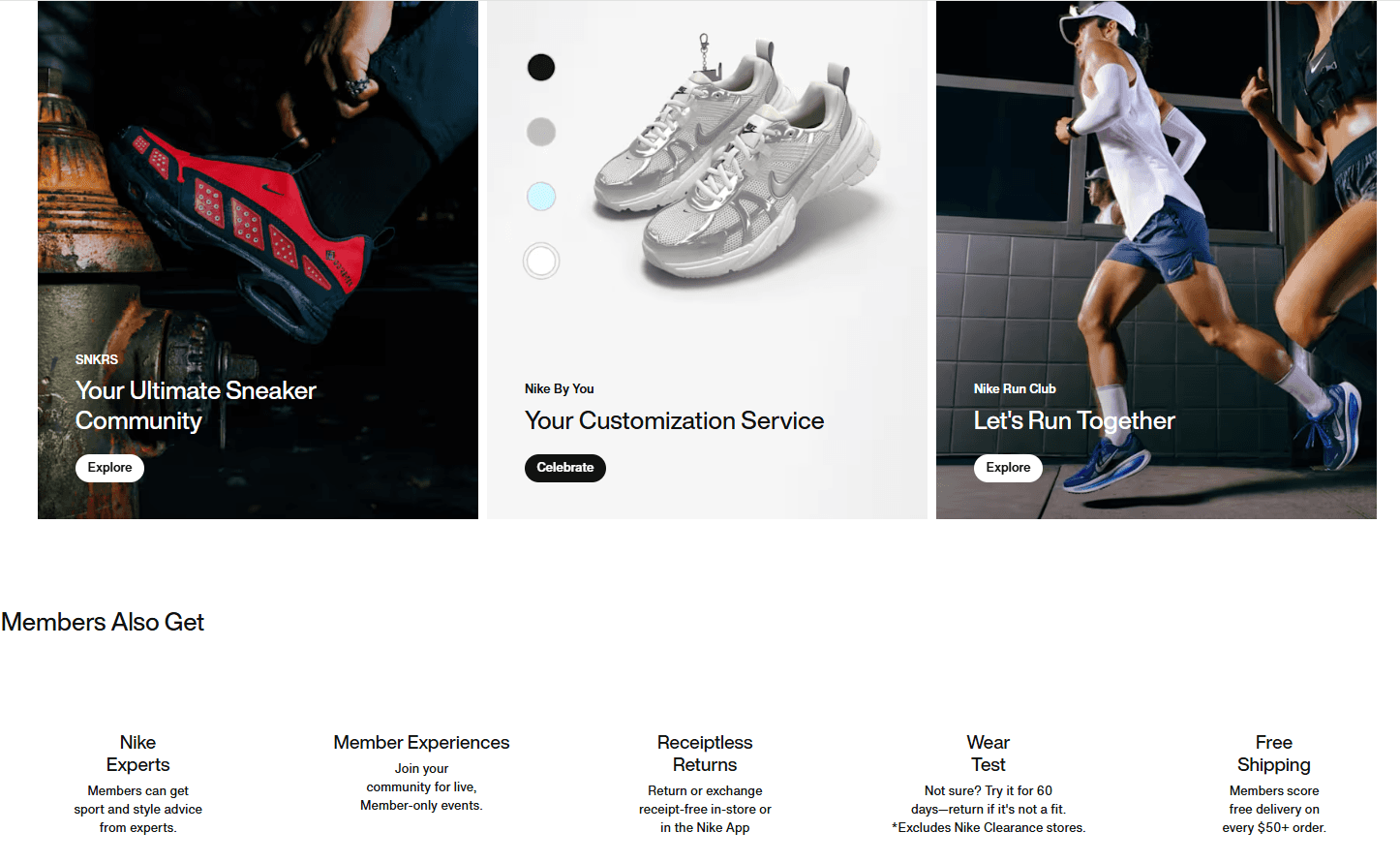
Customers join not primarily for perks but for the feeling of belonging to something. That identity-first design is what makes the program compound through word of mouth in a way that points programs rarely achieve.
IKEA Family – Free Tier x Instant Value x Everyday Relevance
IKEA Family solves a problem most retail loyalty programs ignore: furniture is a low-frequency, high-consideration category where points accumulation is meaningless. Nobody buys a sofa to earn points toward a subsequent sofa. So IKEA built a program around the things that matter between purchases: member-only pricing on food and drinks in-store, free tea and coffee, exclusive workshops on interior design and home assembly, and early access to seasonal sales.
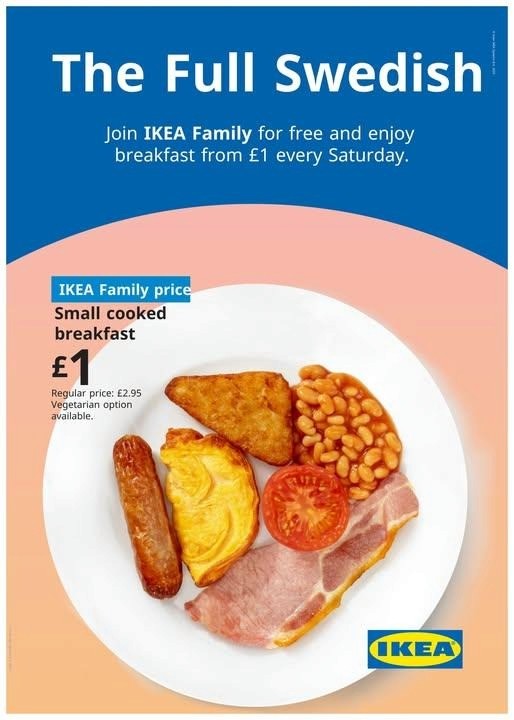
The structural insight is that IKEA Family is designed to keep customers coming to IKEA – not necessarily to buy furniture – so that when they are ready to buy, the brand relationship is warm rather than cold. The loyalty program extends the transactional relationship into a lifestyle one.
For any brand in a low-frequency category, this is the model worth examining: what can you offer between purchase events that keeps the relationship active? We dig into the full IKEA Family mechanics in our IKEA Family loyalty program guide.
Vans Family – Free Tier x Cultural Access x Community
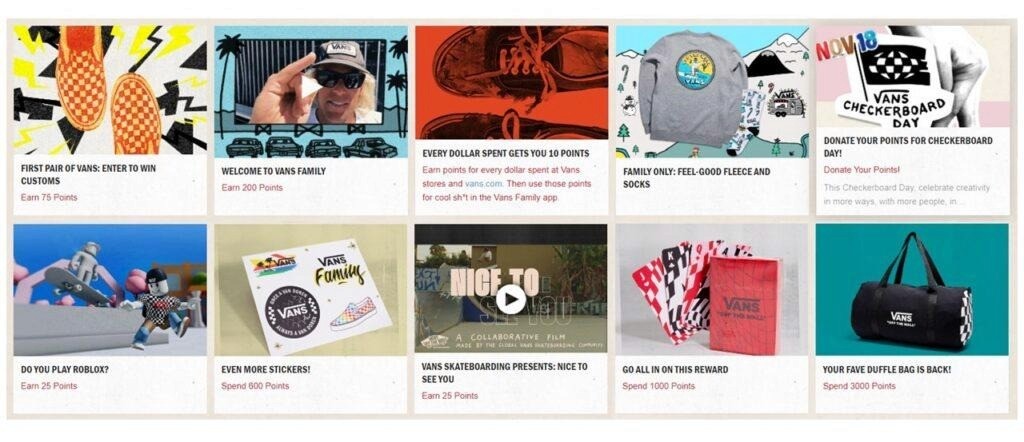
A free loyalty program that rewards purchase points alongside engagement: attending Vans-sponsored events, completing app challenges, participating in design contests. The program correctly identifies that Vans' most loyal customers – in the skate and youth culture communities – care far more about cultural access and exclusive colorway drops than about 10% off their next pair of slip-ons. Aligning rewards to what the customer actually values is the insight most brands miss.
Starbucks Rewards – Points x Gamification x Mobile-First
Starbucks Rewards is the most studied point-based loyalty program in retail for a reason. Stars earned per dollar, bonus star challenges, personalized offers, and seamless mobile ordering create a flywheel where the mobile app is both the reward delivery mechanism and the purchase channel.
Their Bonus Star Challenges – personalized missions offering extra Stars for trying specific products or visiting at specific times – drive measurable traffic during off-peak hours, not just during habitual visits. Over half of Starbucks sales now come from Rewards members.
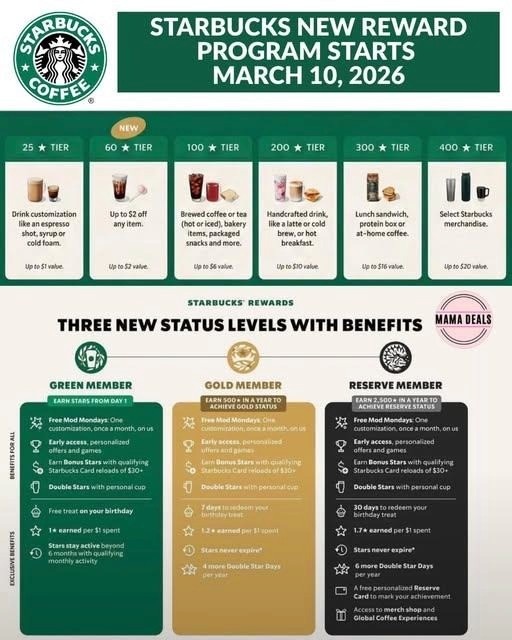
The lesson most brands miss: the mobile app is not a delivery mechanism for the loyalty program – the loyalty program is the engine that makes the mobile app indispensable.
For a broader set of successful ecommerce loyalty program examples across various categories, see our roundup: Top 10 Successful Loyalty Programs to Inspire Your Business.
The Metrics That Actually Tell You If Your Ecommerce Loyalty Program is Working
The two metrics I see used most commonly to evaluate customer loyalty programs in ecommerce are enrollment count and total points issued. Both are vanity metrics that tell you almost nothing about behavioral impact. Here are the metrics that actually tell the story – and what low numbers mean in practice.
Metric | How to measure it | Healthy benchmark | What low numbers mean operationally |
Repeat Purchase Rate | Customers with 2+ orders ÷ all customers (12M window) | 20–40% mid-AOV ecom | Weak post-purchase journey; first experience not creating habit |
Time to Second Purchase | Avg. days: order 1 to order 2 | Shorter than your pre-program avg. | No urgency or behavioral pull toward return visit |
Customer Lifetime Value (CLV) | Avg. revenue per customer × avg. retention period | 3× CAC or higher | Acquisition model doesn’t compound; loyalty investment not extending retention window |
CLV: members vs. non-members | Member CLV ÷ non-member CLV | Members 2–4× non-members | Program enrolled customers but hasn’t extended how long or how much they buy |
AOV Uplift — members vs. non | Member AOV ÷ non-member AOV | Members 20–40% higher | Program not changing cart behavior; pure enrollment metric |
Redemption Rate | Rewards redeemed ÷ rewards earned | 60–80% for points programs | Thresholds too high; rewards irrelevant; customers not engaged enough to redeem |
Member Spend Lift | Member annual spend ÷ non-member annual spend | 2–3× non-members | Enrolled customers spending no differently than non-enrolled |
Tier Distribution | % of active members in each tier | Pyramid shape (most at base tier) | All members at top tier = thresholds too easy; empty mid-tiers = gap too steep |
Two metrics deserve specific attention above the others.
Time to second purchase is the earliest actionable signal. If you run a post-purchase mission – "Earn double points on your second order within 30 days" – and time-to-second-purchase decreases for mission participants versus a control group, you have direct, attributable proof that the mechanic is changing behavior. That's the measurement to build around before layering in more complex loyalty program metrics.
Tier distribution (for tiered loyalty programs) is the structural diagnostic most teams ignore. A healthy tier loyalty program has its largest group at the base tier and progressively fewer members at each higher level. If you find a large cluster at your highest tier, entry criteria are too permissive – the aspiration effect won't fire because the status feels cheap. If your middle tier is nearly empty, the threshold gap is too steep and the program is effectively binary rather than progressive.
Pro tip: Build your cohort dashboard before you start running experiments. Segment cohorts by whether they enrolled in a specific mechanic – mission completion, streak participation, tier progression. If the enrolled cohort retains at 2× the rate of the non-enrolled cohort, you have a retention lever worth doubling down on. If retention is identical, the mechanic isn't doing the work you think it is. |
6 Mistakes That Kill Repeat Purchases Even with an Ecommerce Loyalty Program Running

Mistake 1. Redemption Threshold Set Too High
If fewer than 30% of enrolled members ever reach their first reward, your program is not a customer loyalty program – it is a data collection exercise dressed up as one. Customers who earn points for months without receiving any tangible return quickly learn to ignore the points balance entirely. The promise of future reward loses credibility, and re-establishing it is much harder than getting the threshold right in the first place.
Mistake 2. Tiers Without Meaningful Benefit Gaps
Tiered loyalty programs that are too easy to enter lose their aspirational function. If Gold status requires a single purchase, Gold is meaningless. If there is no re-qualification requirement, tiers are permanent labels with no behavioral implication. Design tier thresholds so reaching them requires meaningful intent, and design re-qualification periods that keep members actively purchasing to protect their status.
Mistake 3. Loyalty as Discount Theatre
The most common structural failure: a customer loyalty program that is functionally a 5 to 10% discount dressed up in points language. If your customers receive the same economic value they would from a coupon code, you have added complexity without adding any switching cost or engagement mechanic. Genuine e-commerce loyalty programs create value that competitors cannot trivially replicate with a promotional email.
Mistake 4. No Win-Back Sequence for Lapsed Members
Every customer loyalty program has a lapse pattern – members who enrolled, participated, and then went dormant. Without a triggered win-back sequence, those members churn silently. A well-designed lapse trigger – 30 days since last purchase, followed by "your 380 points expire in 14 days" – regularly recovers a meaningful percentage of customers who have not yet permanently churned. Skipping this is leaving revenue on the table.
Mistake 5. Mechanic Mismatch with Category
A streak mechanic on a brand with a six-month repurchase cycle creates no habit loop. A paid membership in a low-frequency, low-AOV category can't generate sufficient perceived value to justify the fee. Gamification that rewards arbitrary app interactions in a category with no daily-use case generates cynicism rather than engagement.
Choosing loyalty mechanics based on what other brands are doing – rather than your customer's actual purchase behavior – is consistently the most expensive loyalty program mistake, because it produces a program nobody engages with while still paying loyalty platform costs.
Mistake 6. Treating Loyalty as a Campaign Rather Than a Retention Marketing Product
The brands that fail at loyalty consistently treat it as a campaign: launched once, evaluated against a six-month sales target, and either left unchanged or cancelled when results are ambiguous. A customer retention strategy built on loyalty mechanics requires the same continuous improvement discipline as any other product feature. The brands that win treat their loyalty program as permanent infrastructure, not a seasonal initiative.
How to Choose the Right Loyalty Mechanic for Your Ecommerce Store
I get asked this question constantly, so I want to give you a practical framework rather than a theoretical answer. Start with these five questions:
What is the natural purchase frequency for my category?
How price-sensitive is my core customer segment?
Is my brand primarily functional or identity-driven?
Do I need enterprise-grade loyalty software with full API access, or a configurable no-code platform?
What is the one behavior I most need to drive – first repeat purchase, category consolidation, referrals, or reduced churn?
Map your answers to this decision framework:
Your Store Profile | Primary Mechanic to Build First | Layer Second | Watch Out For |
|---|---|---|---|
High-frequency, low AOV (coffee, supplements, beauty) | Points-based earning | Subscription / auto-replenish | Redemption threshold set too high |
Low-frequency, high AOV (furniture, luxury, tech) | Experiential / exclusive access | Paid VIP membership | Experiential that feels irrelevant to the buyer's identity |
Broad commerce (marketplace, multi-category) | Tiered status | Points-based earning | Top tier benefits too similar to the tier below |
High-NPS, community-driven (outdoor, fashion, wellness) | Experiential + referrals | Gamified missions | Missions that reward trivial actions unrelated to retention |
DTC brand, small team, limited dev resources | Points + referrals | Missions with conditional rewards | Custom development delay – use a configurable platform |
Consumable or subscription category | Auto-replenish subscription | Points on subscription spend | Replenish intervals mismatched to actual consumption |
One honest note: no framework substitutes for understanding your own customer data. If you have cohort data showing when customers lapse, what their second-purchase trigger looks like, and which product categories they consolidate – use it. The framework above is a starting point, not a replacement for that information.
How Enable3 Can Help You Build an Ecommerce Loyalty Program That Actually Drives Repeat Purchases
Enable3 is a customer retention platform and customer loyalty software built for digital products and ecommerce brands that need structured loyalty mechanics without the six-month custom development cycle.
Unlike lightweight loyalty software plugins that cover basic points-and-tiers, Enable3 is an infrastructure for designing behavioral mechanics – missions, streaks, tiers, referral programs, quest sequences – that encourage the specific repeat behaviors your business needs, configured around your product events rather than generic purchase actions.
Here is how Enable3 addresses the problems I see most often in ecommerce loyalty implementation:
Problem #1: You are losing customers after their first purchase
You sent the receipt. Maybe a review request. Then nothing pulled them back. The customer had an adequate experience – no particular reason to leave, and no structured reason to return.
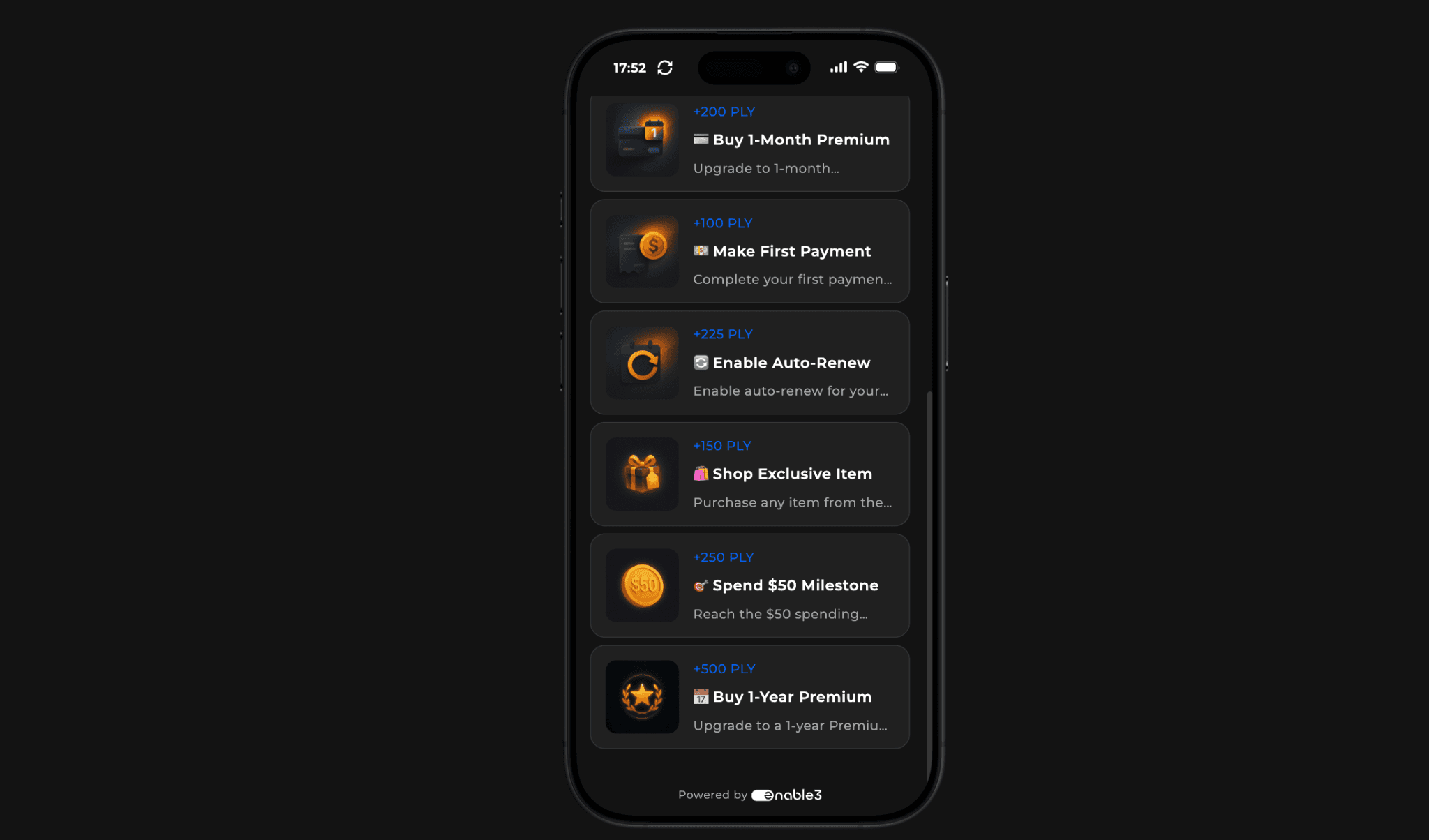
Enable3's Event-Based Missions for ecommerce let you create engagement loops tied to specific in-app or purchase behaviors.
"Make a second purchase within 30 days → earn 200 bonus points."
"Complete your profile → unlock early access to the next launch."
"Make three purchases in Q1 → get free shipping on your next order."
The mechanics are tied to actions that correlate with long-term retention in your specific app, not arbitrary activity.
Problem #2: Your customers open your app only when they need something
There is a meaningful difference between a customer who shops with you when they have a need and a customer who thinks of your brand first across every relevant category. The first relationship is transactional. The second is habitual – and habit is the retention mode that makes your business resilient to competitive pricing.
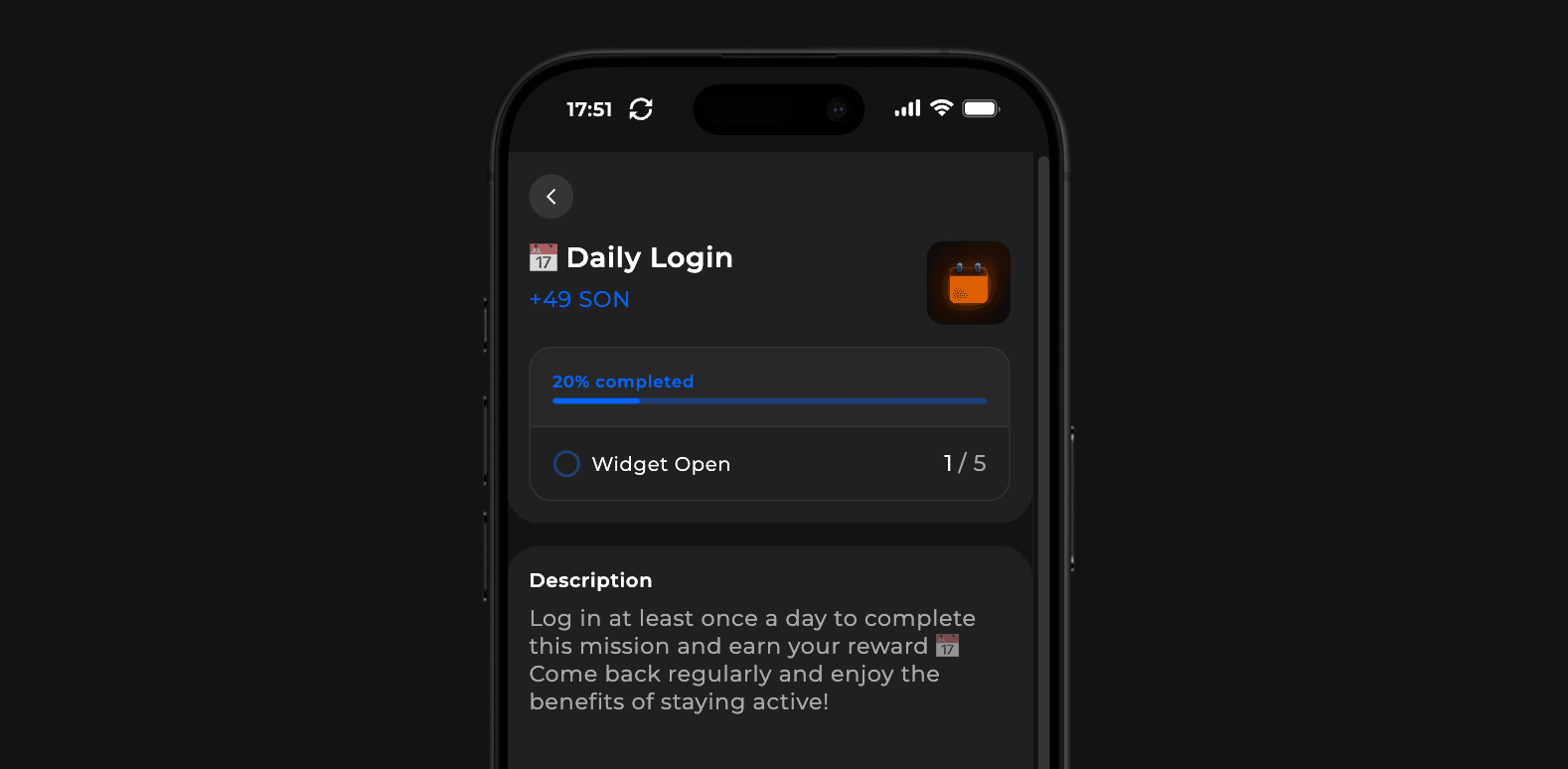
If you want users to return consistently without requiring a purchase trigger each time, Enable3's Streaks are exactly what you need in ecommerce. You configure streaks around any in-product behavior: regular logins, completing a review after each purchase, checking new arrivals weekly. The streak creates a visible progress indicator with escalating value, and the loss aversion of breaking a meaningful streak brings customers back on days they had no prior intent to visit.
Problem #3: Your referral program is generating low-quality sign-ups
You have a referral link. It generates a periodic trickle of signups. The referred users churn at the same rate as cold paid traffic. The loyalty program is a net cost, the referral-to-repeat-purchase conversion is invisible in your attribution, and the budget conversation at the end of the quarter is harder than it needs to be.
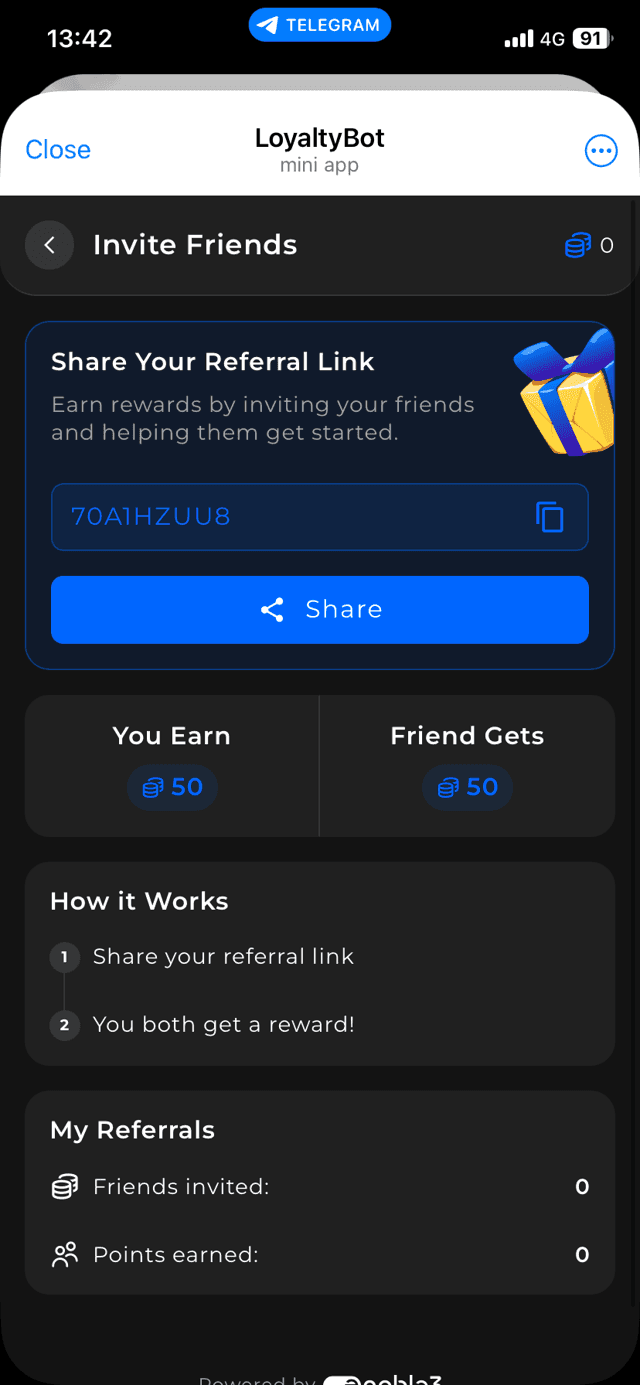
If you want your referral program to filter for quality rather than volume – Enable3's Referral Marketing Software supports conditional, tiered rewards in ecommerce loyalty programs that connect referral mechanics to your primary loyalty currency.
"Invite a friend who completes their first order → earn 200 points."
"Invite three friends who each spend €50 → unlock a Gold-tier reward."
The conditions ensure referred customers have demonstrated intent before either party earns. That's why their downstream retention consistently outperforms flat-bonus referral cohorts – the mechanic filters for quality by design.
Problem #4: You can't segment loyalty campaigns by behavioral stage
You want to run a win-back mission for dormant high-value members, an upgrade challenge for customers approaching a tier threshold, and a new-feature exploration quest for buyers who haven't tried your newest product category. But your current setup treats all customers identically, so the same generic campaign goes to all three groups.
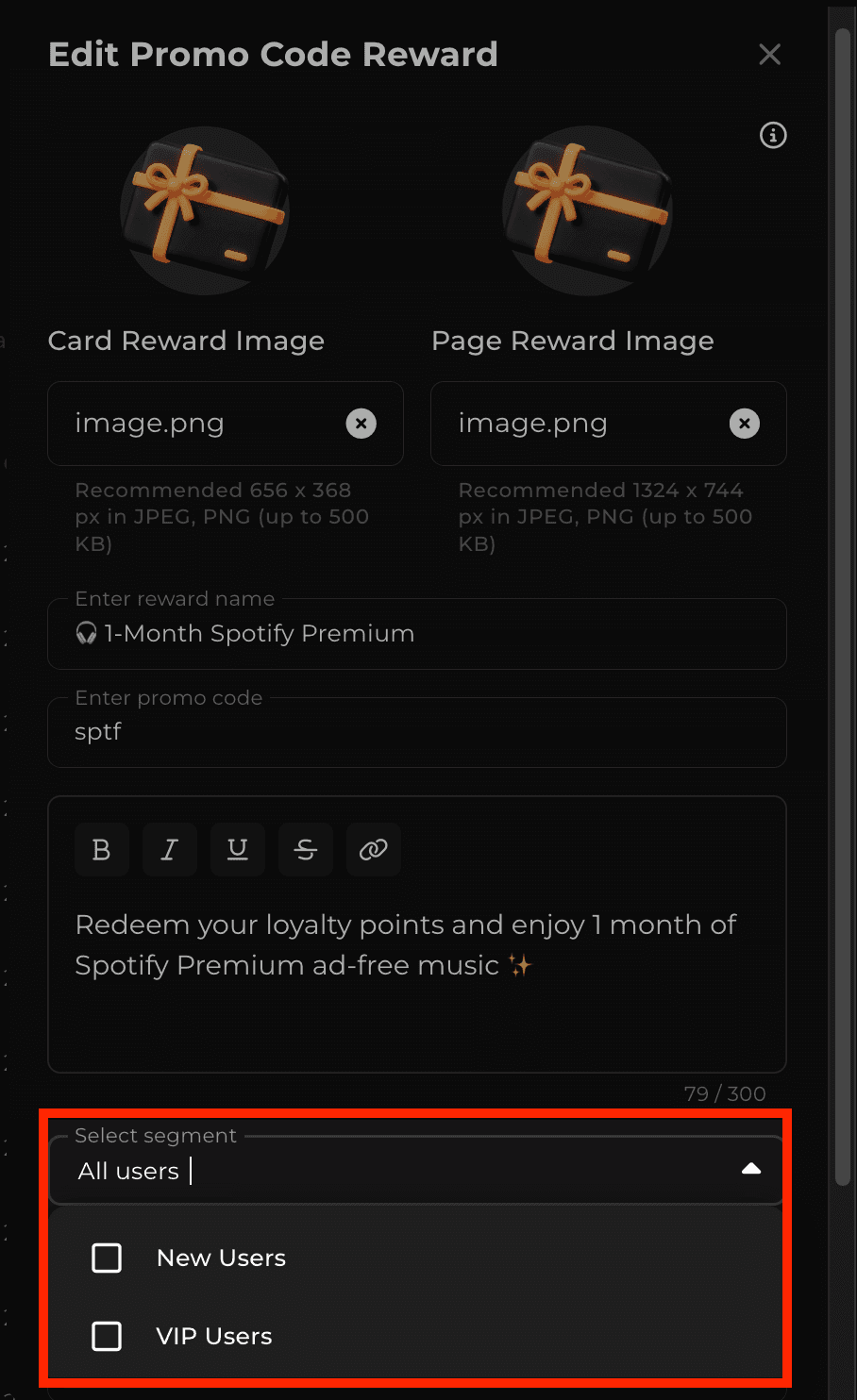
Enable3's Segments for ecommerce let you group customers by mission completion history, purchase patterns, session recency, current tier, or engagement score – and attach specific missions to each group automatically. No manual list-building. No CSV exports. The dormant high-value member gets the win-back campaign with the expiring balance prompt. The threshold-approaching member gets the upgrade challenge. The non-explorer gets the discovery quest. Different mechanics for different behavioral stages, running simultaneously, without campaign management overhead.
Problem #5: Your tiered loyalty program criteria are too rigid to test
You suspect that a tier based on purchase frequency rather than spend alone would better predict a high LTV behavior. But modifying your existing tier criteria requires a development sprint and a migration process. So the hypothesis stays in the backlog while your retention curve stays flat.
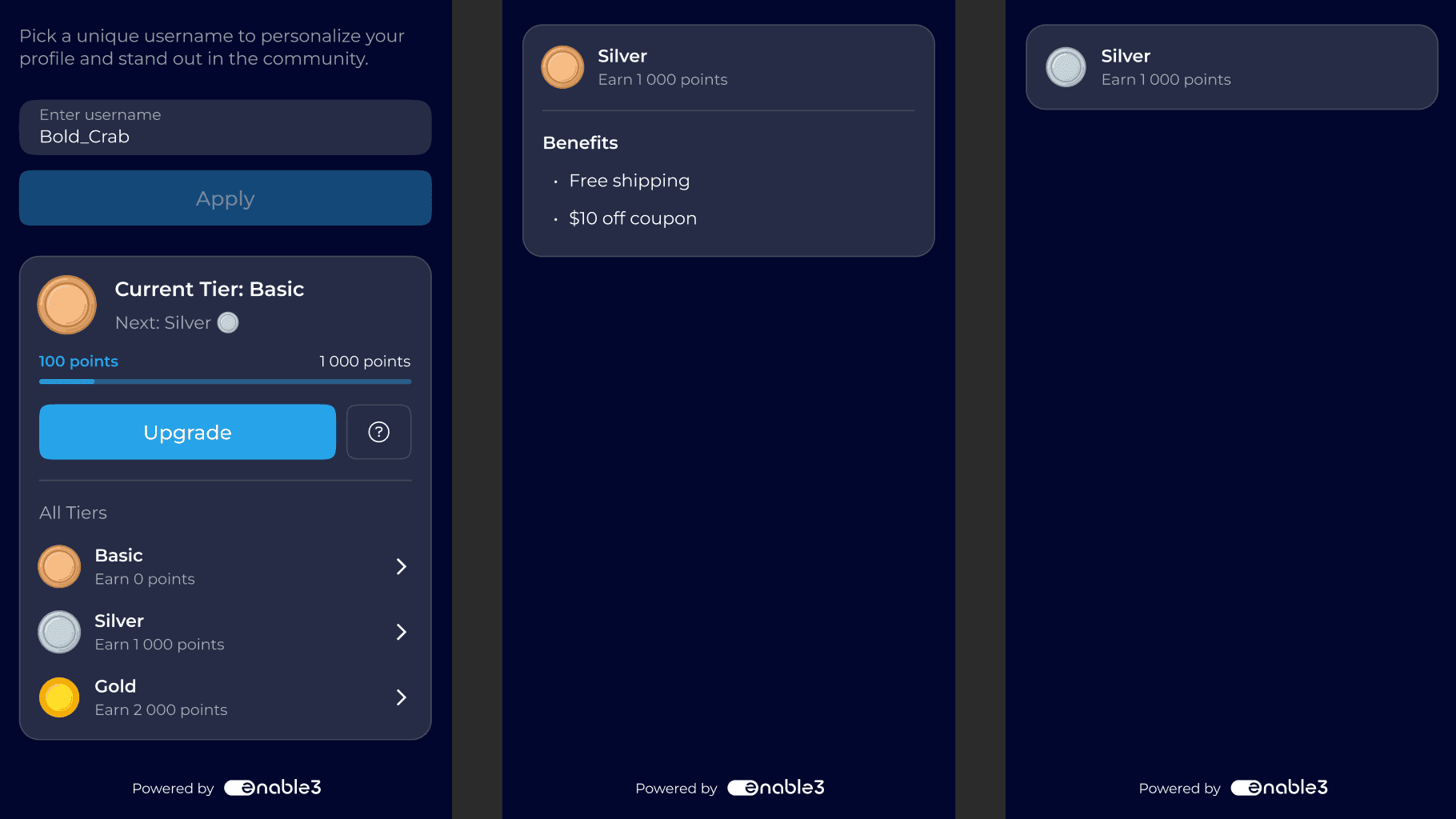
Enable3's Tiered Loyalty Software for e-commerce loyalty programs lets you define tier criteria around any product event – spend, visit frequency, mission completion, segment membership – and modify them without engineering. Configure a Bronze/Silver/Gold structure around the behavioral combination you want to test, run it against a specific cohort, measure the impact on 90-day repeat purchase rate, and iterate based on what the data actually shows.
Problem #6: You don't know which reward type is actually changing customer behavior
Your rewards catalogue exists. Customers are earning points and redeeming them. But you don't know whether an instant digital reward drives more repeat purchases than a discount code, or whether a manual prize requiring approval is worth the fulfilment overhead. You have a hypothesis, but no practical way to test it quickly enough to act on it.
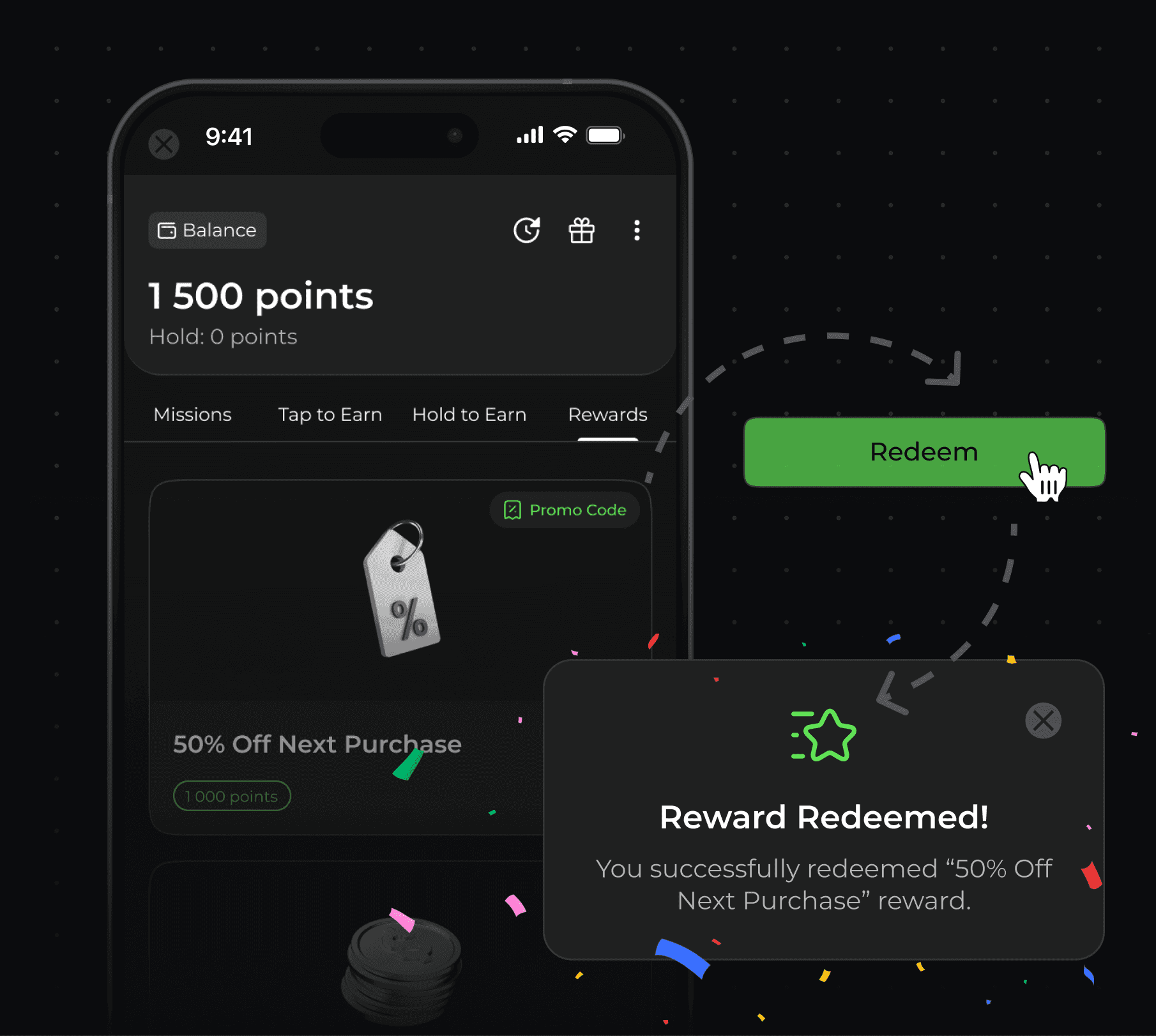
If you want to test which reward type produces the behavioral change you're after – Enable3's Rewards Program Software for eCommerce loyalty programs gives you three configurable reward types that can be swapped without engineering.
Automatic rewards fulfil instantly when a customer requests them – ideal for testing whether immediacy drives repeat engagement.
Promo code rewards issue a unique discount code at the moment of redemption – useful for testing whether a percentage-off incentive produces a higher second-purchase rate than a points-based one.
Manual rewards require an approval step, giving you control over high-value prizes while you validate whether premium tier rewards justify the fulfilment cost.
Run the same mission with a different reward type for each cohort and let the completion and return-visit data tell you which model your customers actually respond to – before you commit to a single reward architecture.
Problem #7: You can't connect loyalty mechanics to repeat purchase outcomes
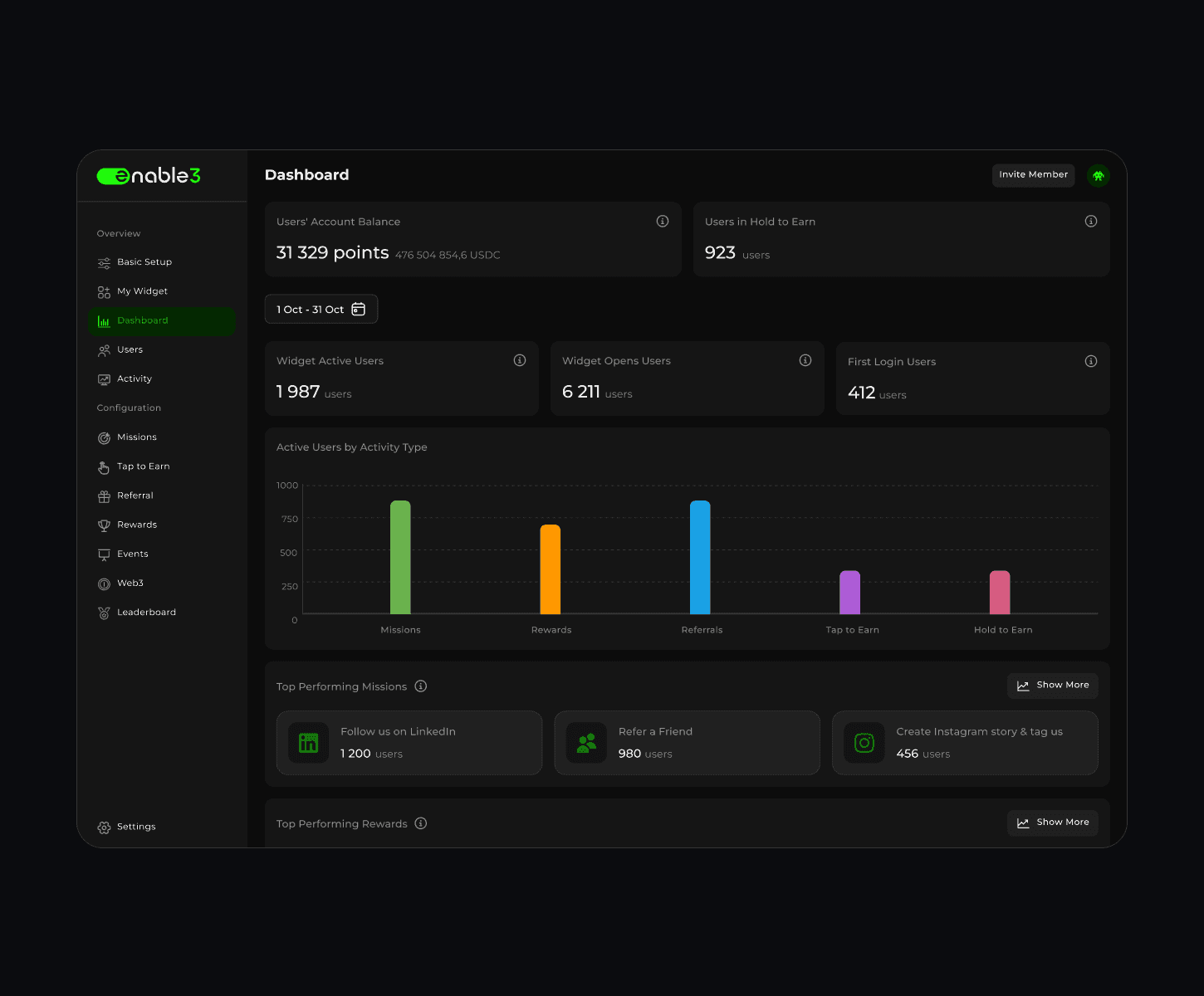
You ran a mission challenge. The completion rate was 31%. But did it shorten the time to the second purchase? Did participants spend more per order than the control group? Did the cohort that completed it retain at a measurably different rate at 90 days? Without this data, you can't prioritize the next experiment, justify the investment to stakeholders, or know whether the mechanic is actually doing the work you think it is.
Enable3's Analytics Dashboard shows mission completion rates, reward redemption patterns, segment performance, and downstream revenue correlation of each engagement mechanic in your ecommerce loyalty program. You can see which missions correlate with return sessions, which streak cohorts have stronger 30-day repeat purchase rates, and which reward types produce behavioral change versus those that are simply collected. That's the data to iterate continuously – and the data to make the business case with confidence rather than attribution assumptions.
Problem #8: Your loyalty program feels like a third-party tool rather than part of your product
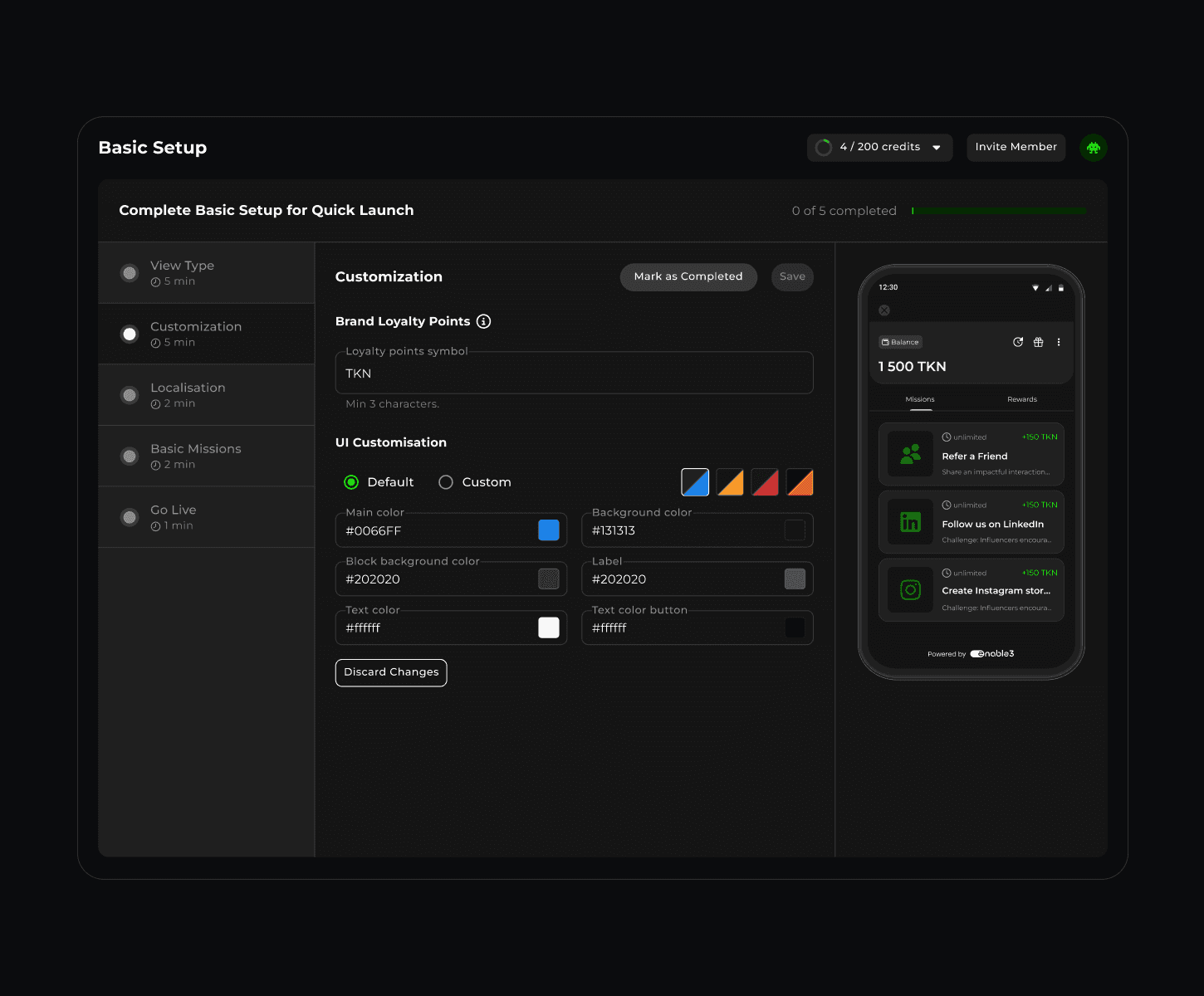
Users notice when something has been added to a product rather than designed into it. A loyalty widget that looks different from your store, opens in a separate tab, or requires a separate login is a friction point wearing loyalty clothing. Every context-switch between your core product experience and the rewards experience dilutes engagement – and dilutes your brand.
Enable3's White-Label Loyalty Platform for ecommerce means every element of the experience – the UI, the reward names, the mission logic, the onboarding flow – is customizable to match your brand. Your customers engage with loyalty inside your store, in your voice, with your visual design. The technical infrastructure – point calculations, mission triggers, reward fulfillment, analytics – runs silently. What your users see is an experience that feels like your loyalty program was designed by your team exactly for your brand and customers from day one.
Where to Go From Here
The brands winning at repeat purchase today did not arrive there by running better promotions. They built behavioral systems – a customer retention strategy grounded in e-commerce loyalty mechanics that create structured reasons to return, accumulate value that makes switching costly, and reward the specific actions that drive long-term revenue growth.
If your repeat purchase rate is not where it needs to be, the diagnostic is in this guide. The question that remains is which combination of mechanics fits your category and your customers – and how to build an ecommerce loyalty rewards program that actually reflects your brand rather than a generic template.
At Enable3, we work with ecommerce and digital product teams on exactly this: identifying the right loyalty mechanics for your specific retention problem, configuring them around your product behaviors as a customer engagement platform built for results, and measuring the impact in real time.
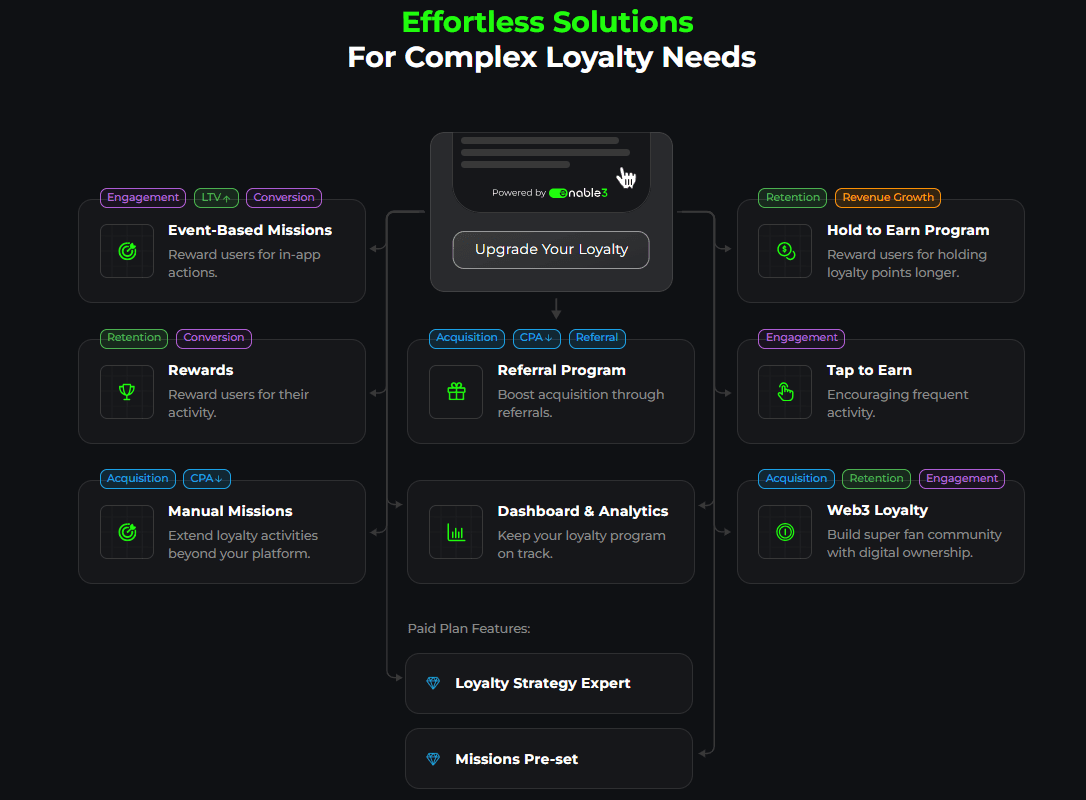
There is no self-onboarding – our highly-skilled team works with you directly through the design and launch process to give you the best we can do for the growth of your ecommerce business.
Book the demo here.
Frequently Asked Questions
What is an ecommerce loyalty program?
An ecommerce loyalty program (also called an ecommerce rewards program or loyalty rewards program) is a structured system that rewards customers for repeatable behaviors such as purchase, referral, review, engagement, etc., in ways that raise the cost of switching to a competitor and create predictable reasons to return. It is not a promotional discount, a seasonal coupon, or a one-off reward. It is a behavioral infrastructure designed to shift customers from single purchases to recurring purchasing habits.
How do ecommerce loyalty programs drive repeat purchases?
Each ecommerce loyalty mechanic drives repeat purchases through a different psychological mechanism. Points create deferred value and switching costs through accumulated balances. Tiers create status motivation and loss aversion at tier thresholds. Paid memberships create sunk-cost commitment and share-of-wallet consolidation. Gamified missions create habitual return visits through near-term completion loops. The right loyalty mechanic for your store depends on your category, purchase frequency, and customer motivation profile – not on which loyalty mechanic is most popular.
What is a good repeat purchase rate for ecommerce?
Benchmarks vary significantly by category. Consumables typically see 50 to 70%. Beauty and personal care 30 to 50%. Apparel and fashion 25 to 40%. Home and lifestyle 15 to 25%. Compare your rate to your specific category peer group, not to a generic ecommerce average – a 15% repeat rate might be excellent for a furniture retailer and a serious problem for a supplement brand.
Points vs. tiered loyalty – which is better for ecommerce?
Neither is categorically better. Points work best in high-frequency, broad-commerce contexts where customers shop regularly and benefit from accumulation over time. Tiers work best in categories with status drivers, where the aspiration of progression motivates incremental spending and the threat of tier loss drives retention. Many effective customer loyalty programs in eCommerce layer both: points per purchase, and tier status based on annual spend, with each tier unlocking higher earn rates and exclusive access. The choice should follow your category and customer motivation profile, not the format you find most intuitive.
How much does an ecommerce loyalty program cost to run?
Costs vary substantially depending on the loyalty software you choose. Simple plugin-based loyalty programs for smaller stores typically run $50 to $300 per month. Mid-market customer loyalty software platforms with full feature sets range from $500 to $2,000 per month. Enterprise loyalty implementations with custom development can run significantly higher. The more useful question is return on investment: a customer loyalty program that generates 5% more repeat purchases from your top customer cohort will typically offset its platform cost rapidly. The risk is not overspending on ecommerce loyalty software – it is underspending on the loyalty program design and ending up with retention mechanics that do not change behavior.
What are the most common mistakes in ecommerce loyalty program design?
Based on what we see at Enable3 consistently: redemption thresholds set too high for customers to realistically reach a first reward; tier benefit differences too small to feel aspirational; ecommerce loyalty programs that are structurally just a discount dressed in points language; no triggered win-back for lapsed members; loyalty mechanic mismatch with the category's natural purchase frequency; and treating loyalty as a campaign to launch rather than a product to iterate. Any one of these will meaningfully degrade customer loyalty program performance for any ecommerce brand.