News

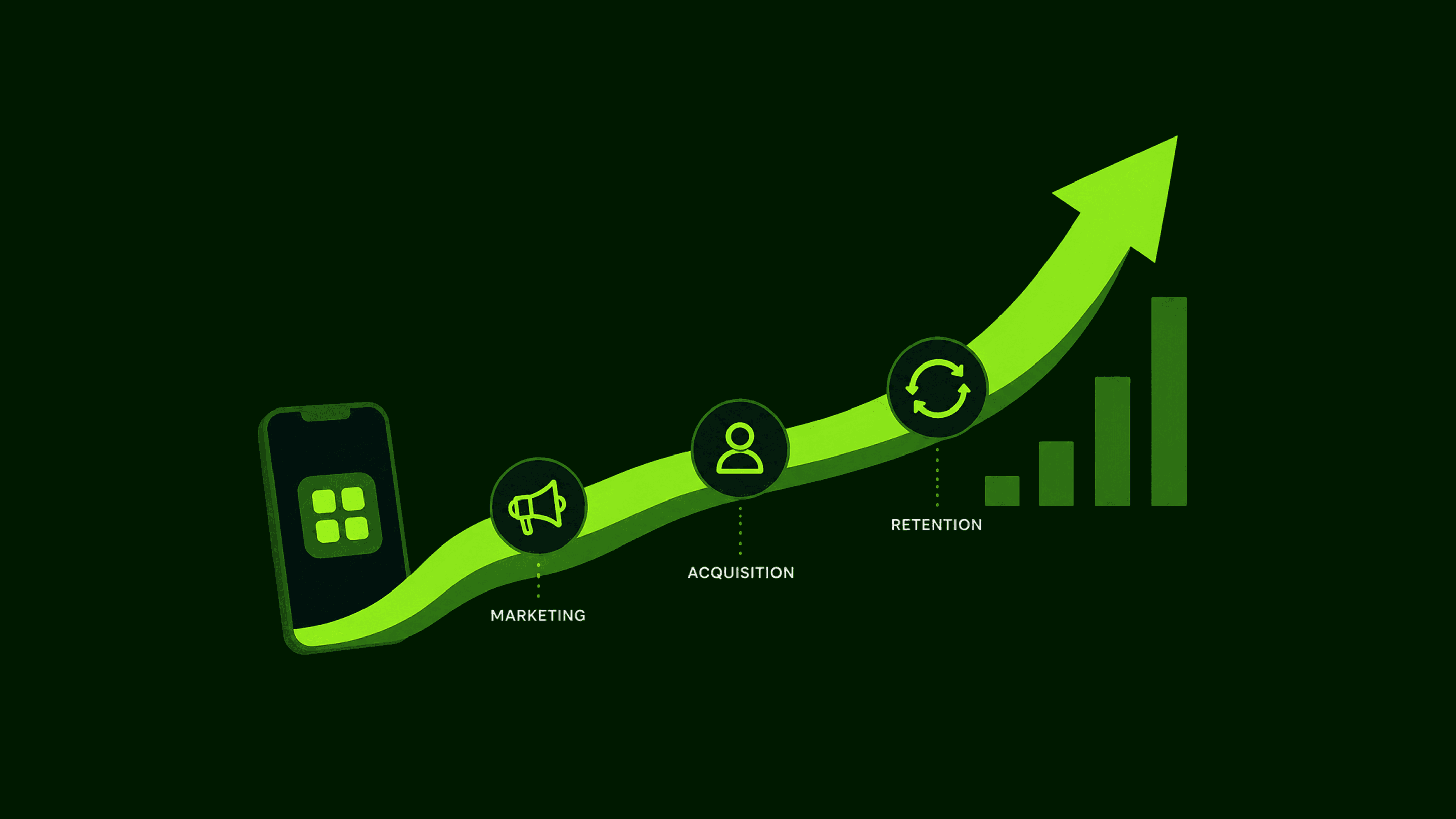
Getting an app into the App Store or Google Play is the easy part. Getting people to download your app, use it regularly, and tell their friends about it – that is where most app teams run out of road.
At Enable3, I have spent a lot of time looking at how the best-performing mobile apps grow, and the pattern I keep coming back to, whether when building an effective app marketing strategy from scratch or fixing one, is this: teams that treat acquisition and retention as equal disciplines consistently outperform those that pour budget into installs while leaving the product experience to fend for itself. That's really the difference-maker in how to market an app successfully in 2026.
Most app marketing guides focus on channels and ad spend. This one focuses on the full picture – from building brand awareness and driving app installs, to onboarding users effectively and keeping them engaged long after the honeymoon period ends.
Almost 77% of users never return to an app after the first 72 hours following installation, according to Business of Apps. And most apps are opened only once after downloading. Acquisition without retention is expensive, like water leaking from a bucket. Every dollar you spend on ads is partially wasted if the experience that greets new users fails to create a habit.
The mobile apps that beat this pattern – Duolingo, Spotify, Monzo, Nike Run Club – are not necessarily the ones with the biggest marketing budgets. They are the ones that have thought through what brings users back to an app the next day, the day after that, and six months from now.
That is what I want to help you build here + give you really working app marketing tips to improve ROI of your app.
What is App Marketing (and Why It Matters)?
App marketing is the end-to-end discipline of attracting users to a mobile application, converting them into active users, and keeping them engaged long enough to generate compounding revenue for your business.
It is not just advertising. It spans paid and organic acquisition, product experience design, lifecycle messaging, referral mechanics, and loyalty programs – all working in concert across every stage of the user lifecycle.
The reason it matters is simple: app stores are saturated. There are over 4 million apps across the Apple App Store and Google Play combined as of 2026, according to Statista. In a market that is crowded, standing out without a coherent app marketing strategy is not a plan – it is a hope.
App Marketing vs. Mobile Marketing: Key Differences
These terms are often used interchangeably, but they describe meaningfully different scopes of work.
Mobile marketing is the broad practice of reaching consumers on mobile devices – mobile web, SMS, email optimized for phones, social advertising.
App marketing is specifically focused on the lifecycle of a mobile application: from discovery and installation through to long-term engagement, monetization, and referral.
To understand this difference is important when allocating a marketing budget and setting KPIs. Here is how I see the difference:
App Marketing | Mobile Marketing | |
Scope | Full app lifecycle: acquire, activate, retain, monetize | All mobile channels: SMS, mobile web, push, in-app |
Primary goal | Install + sustained post-install behavior | Brand reach and conversion on mobile |
Key metrics | DAU, D7/D30 retention, LTV, ARPU, churn rate | CTR, impressions, mobile conversions |
Channels | App stores, DSPs, in-app engagement, ASO, loyalty programs | SMS, mobile ads, mobile search, email |
Success looks like | Engaged, retained, monetized users | Traffic, clicks, views |
The Right Mobile App Marketing Funnel – and Where Most Teams Go Wrong
Most models of the mobile app marketing funnel run across 5 stages. What separates high-performing teams from average ones is not how well they optimize a single stage – it is how smoothly they move users through all five, and how quickly they identify which stage is leaking the most value.
Stage #1: Awareness (Exposure & Discovery)
Users discover that your app exists: paid ads, social media, press coverage, organic search, word of mouth.
Stage #2: Acquisition (Download)
They arrive at the App Store or Google Play listing and decide to install. Your app store listing, screenshots, ratings, and description do the selling.
Stage #3: Activation (Onboarding)
The user completes a meaningful first action and reaches the “aha moment” – the point where they genuinely feel the value of what they have downloaded.
Stage #4: Retention (Engagement)
They return repeatedly, developing a usage habit. Driven by push notifications, in-app messaging, loyalty mechanics, and the quality of the core product experience itself.
Stage #5: Revenue and Referral (Monetization & Growth)
They spend money, upgrade their plan, or recommend the app to others – creating compounding growth far cheaper than paid acquisition.
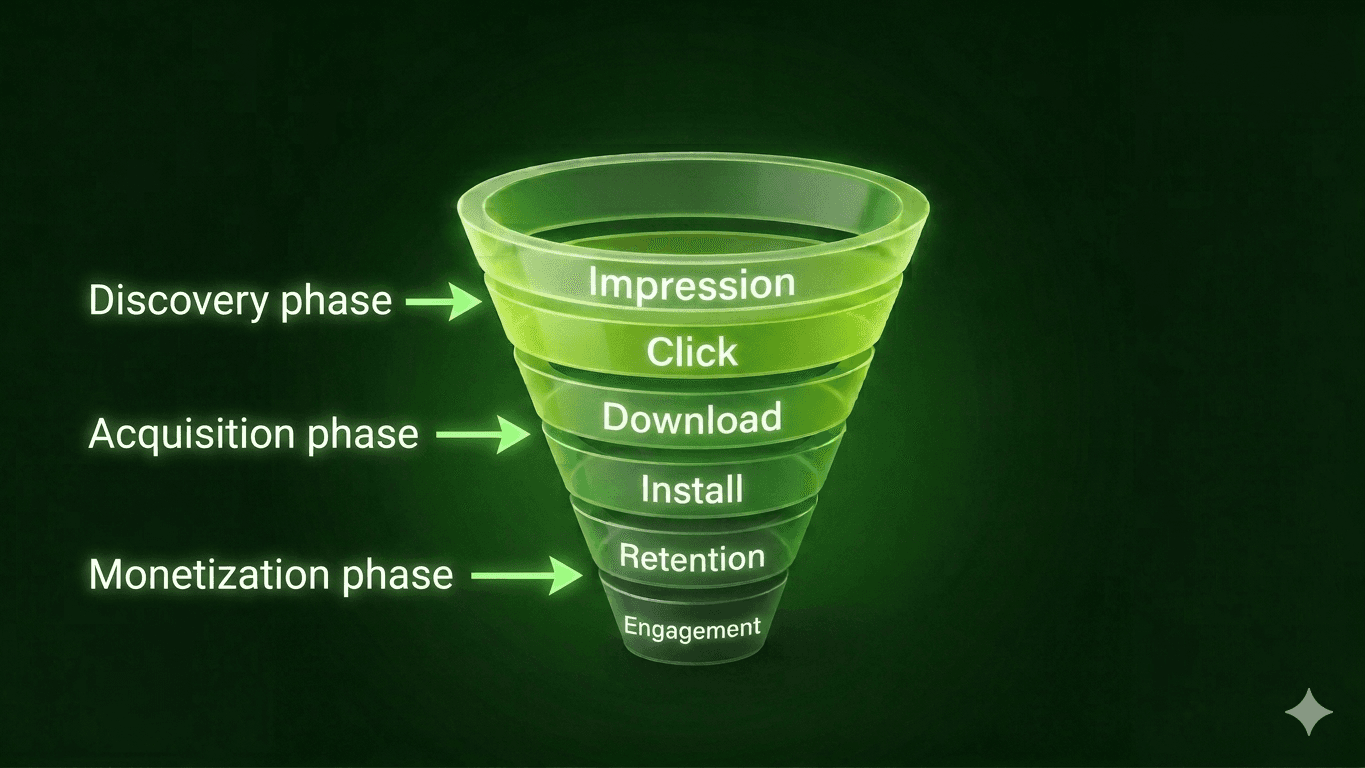
But most app marketing budgets are allocated almost entirely to stages 1 and 2 – awareness and acquisition. Stages 3 through 5 get a fraction of the attention. This is backwards. In my experience, improving activation by 15% and Day 30 retention by 10% is worth more to long-term revenue than doubling your install volume if those additional installs churn at the same rate as before.
Want to boost your app marketing success at each stage?
Launch a loyalty program via the Enable3 Loyalty and Engagement Platform.
How to Build a Successful Mobile App Marketing Strategy: Step by Step
Before you write a single brief or pick a channel, you need to make a set of foundational decisions. Skip them and your mobile app growth strategy will be a collection of tactics without a spine. Here is a proven process we, at Enable3, use to help clients build a mobile app marketing plan that actually holds up: :
Step 1: Define Your Target Audience & User Personas
The most common mistake we see in audience definition is abstraction. "Urban millennials aged 25–35 who use smartphones" is not a persona. It's a demographic. Demographics don't make decisions. People with specific problems, motivations, and behavioral patterns do.
Build personas across three dimensions:
Behavioral – What do they actually do in your app? How often? In what context? What triggers them to open your app? What makes them close it?
Motivational – What problem are users trying to solve, or what aspiration are they trying to fulfill by using your app? This is rarely the obvious answer. Duolingo users aren't primarily motivated by language learning – they're motivated by the identity of being "someone who speaks Spanish" or the social anxiety of traveling abroad unprepared.
Contextual – When and where do users use your app? A fitness app used during a 6 am run has completely different UX and app engagement requirements than the same app used on a lunch break.
This distinction drives every downstream decision: messaging, channels, onboarding design, notification strategy, and reward mechanics.
Pro Tip: Build your personas from real data. Even 10-15 qualitative user interviews – combined with cohort analysis from Mixpanel or Amplitude – will surface insights that months of assumption-led app marketing strategy never will. Crucially, talk to your churned users, not just your active ones. They will tell you the real reason they left your mobile app, and that information is worth more than any survey your active base fills in.
Step 2: Set Measurable Goals & KPIs
Vague goals produce vague results. "Grow our user base" is not a goal – it is a wish. A real goal sounds like: "Increase Day 30 retention from 12% to 18% within two quarters by improving onboarding and introducing a first-30-days engagement challenge." Every word in that sentence is doing work: specific metric, starting point, target, timeline, mechanism.
Before launch, I'd set targets for each mobile app marketing funnel stage:
Acquisition (Installs): CPI, cost per registration, cost per activated user
Activation (Onboarding): Day-1 retention rate, onboarding completion rate, time to first value
Engagement: DAU/MAU ratio, session frequency, session length
Revenue (Monetization): ARPU, conversion-to-paid rate (including in-app purchases), subscription renewal rate
Retention: Day-7 and Day-30 retention rates (these are your early warning system)
Referral (Growth): referral conversion rate, cost per referred user
One metric deserves particular attention: cost per activated user, not cost per install (CPI). An activated user has completed your onboarding and taken at least one meaningful action. That's the first point in a user's lifecycle where you have evidence they might stay. CPI without activation rate is a vanity metric.
Pro Tip: For each stage of your funnel, set at least one primary metric and one guardrail metric. The guardrail exists to ensure you do not optimize one number at the expense of another. If you aggressively push Day 1 retention with heavy push notifications, your guardrail might be notification opt-out rate – ensuring you are not burning the long-term relationship to hit a short-term number.
Step 3: Analyze Competitors & Market Landscape
Effective app promotion strategies require to start with real market research — knowing what you are competing against, not just for market share, but for attention and habit formation. At Enable3, we recommend our clients to map the top 5 to 10 mobile apps in their category on both Apple App Store and Google Play Store. Analyze their keyword rankings and review volume through ASO tools.
The most underrated competitive research tactic we have found: read 1-star, 2-star, and 3-star reviews – not of your own app, but of your competitors'. This is where users articulate exactly what the category is failing to deliver. Those unmet needs are your app positioning opportunity, and they are available to anyone who reads carefully enough.
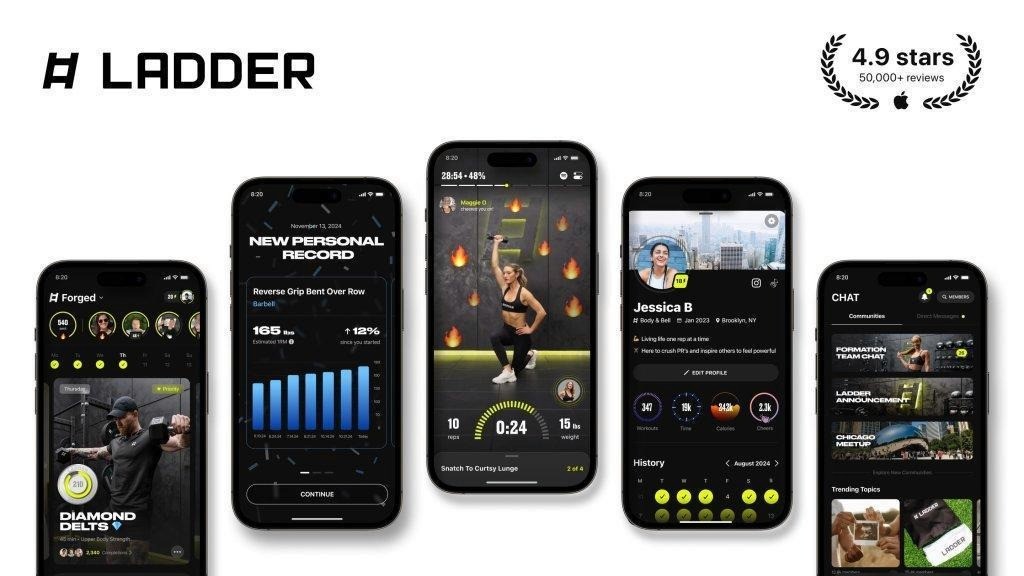
Real-world example: Ladder, a top-grossing strength training app with roughly 300,000 paid members, built its initial positioning largely around complaints in one-star reviews of existing strength training apps. Users consistently mentioned that competitors’ apps felt impersonal. Ladder built authentic coach accountability into their core product loop – and it became their primary differentiator.
Pro Tip: Download apps of your competitors. Use them. Read their reviews – both negative ones and positive ones. Map their paid creative strategy on Meta Ad Library and TikTok Creative Center. Read the comprehensive Product Marketing Tools Guide to identify the specific tools worth using at each stage of this analysis.
Step 4: Choose Your Marketing Channels
Channel selection must follow user behavior, not trends. A B2B procurement app targeting enterprise finance teams should not lead with TikTok. A Gen Z social discovery app probably should. The question is always: where is your persona already spending attention, and what format earns that attention most efficiently for your category and budget?
That said, here's a working framework for choosing the right app marketing channels in 2026:
App Marketing Channel | Best Use Case | App Marketing Funnel Stage | Key Advantage |
Apple Search Ads | High-intent iOS discovery | Acquisition (App Downloads) | Captures users already searching your category |
Google UAC | Volume acquisition, Android | Acquisition (App Downloads) | Broad reach across Search, Play, YouTube, Display |
Meta Advantage+ App | Creative-driven volume | Acquisition (App Downloads) | AI-optimized creative delivery at scale |
TikTok App Ads | Young audiences, lifestyle apps | Awareness + Acquisition (App Downloads) | Native video drives strong install intent |
ASO (Organic) | Long-term install volume | Awareness (App Discovery) + Acquisition (App Downloads) | Compounds over time at zero marginal cost |
Referral Programs | Viral growth, lower blended CAC | Acquisition (App Downloads) + Retention (App Users Engagement) | Delivers users with built-in social proof |
Push / In-App Messaging | Re-engagement, retention | Retention (App Users Engagement) | Highest ROI retention channel when personalized |
Pro Tip: For context on how a good mobile app marketing strategy fits into broader product positioning, the detailed Product Marketing Strategy Guide is worth reading in parallel.
Top 6 Effective App Marketing Strategies for User Acquisition
Customer acquisition is the engine that fills the top of your app marketing funnel. The challenge in 2026 is not a shortage of channels – it is using them efficiently enough that your acquisition costs do not outpace the lifetime value of the users you bring in. Here is what we have found works across the most important mobile app marketing channels.
1. App Store Optimization (ASO)
ASO is one of the highest-ROI levers in any mobile app marketing strategy – and one of the most consistently under-invested in by teams focused on paid growth. According to Apple, more than 65% of downloads on the App Store come directly from search. Your app’s title, subtitle, keyword field, screenshots, and preview video are doing active selling work every hour of every day:
Title and subtitle: Your primary keyword belongs in the title, naturally placed. "Fitness Tracker: Workout Planner" is discoverable. "FitApp Pro" is a brand name that strangers will never search.
Screenshots and preview video: The first three screenshots drive the vast majority of conversion decisions. Lead with the outcome a user gets, not a screen full of interface. "Track every macro in 30 seconds" converts better than a mobile app settings page screenshot.
Ratings and reviews: Apps with a 4.0+ average rating convert significantly more from search to install. Prompt satisfied users for a review at the moment of highest satisfaction – after a completed workout, a successful transaction, a level completion.
Keyword strategy: Research which terms your target users actually search, not what you assume they do. Sensor Tower and AppTweak show real search volume data, and AI-driven ASO tools like Appfigures are increasingly used to automate this keyword research and metadata testing at scale.
Localization: Translating your listing and adapting screenshots for local market expectations can expand organic app install volume significantly without adding paid spend.
Alternative app stores: Listing on Samsung Galaxy Store, Huawei AppGallery, or other regional stores can capture organic installs that the Apple/Google duopoly doesn't reach — particularly valuable in markets where these stores have real penetration.
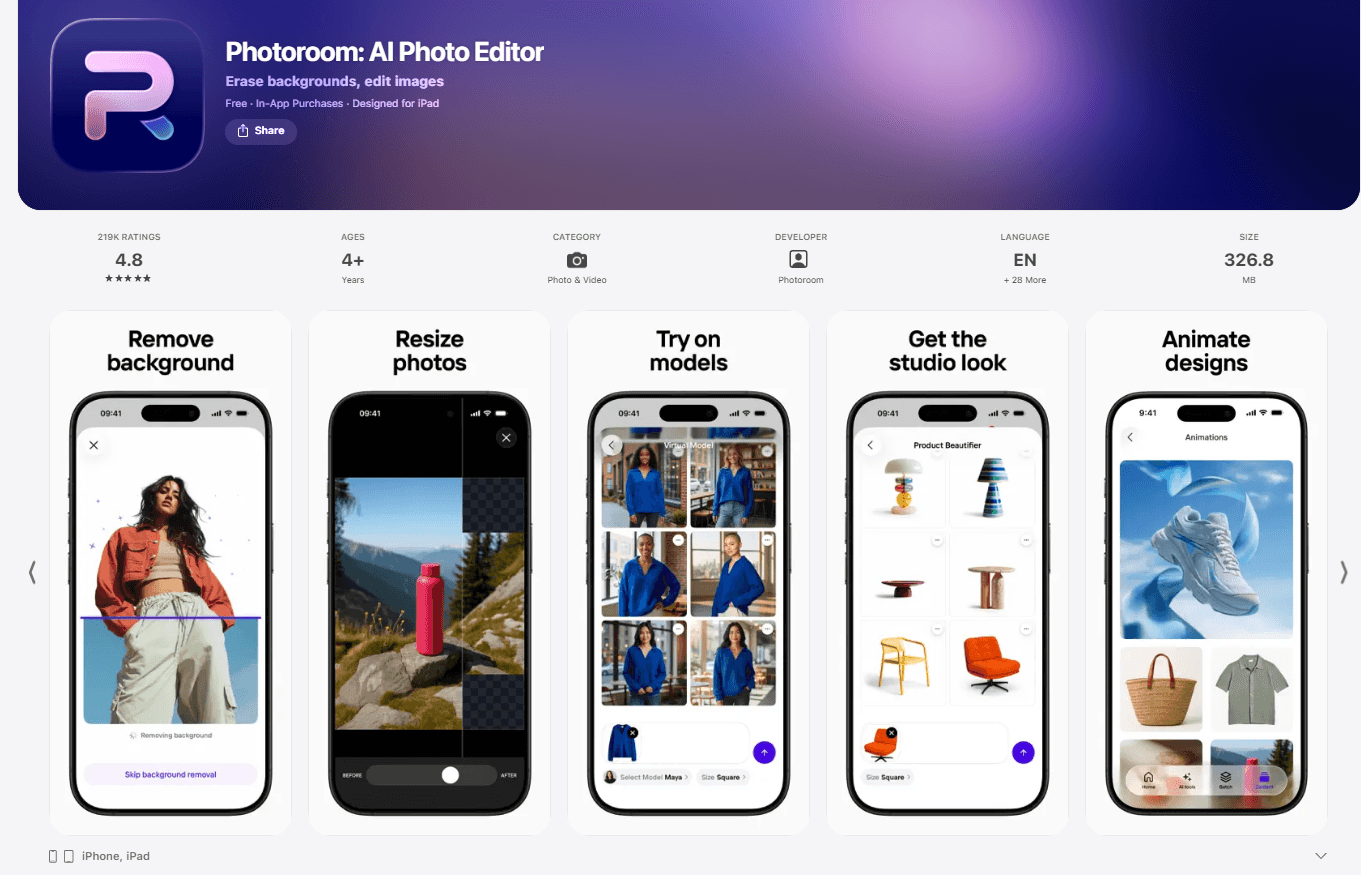
Real-world example: Photoroom, an AI-powered photo editing app, grew its organic install volume substantially by systematically A/B testing screenshot variants using Apple's Custom Product Pages. Testing different visual framings of the same core feature revealed that outcome-led framing drove higher conversion than tool-led framing, meaningfully. This insight came entirely from ASO testing, almost at zero cost.
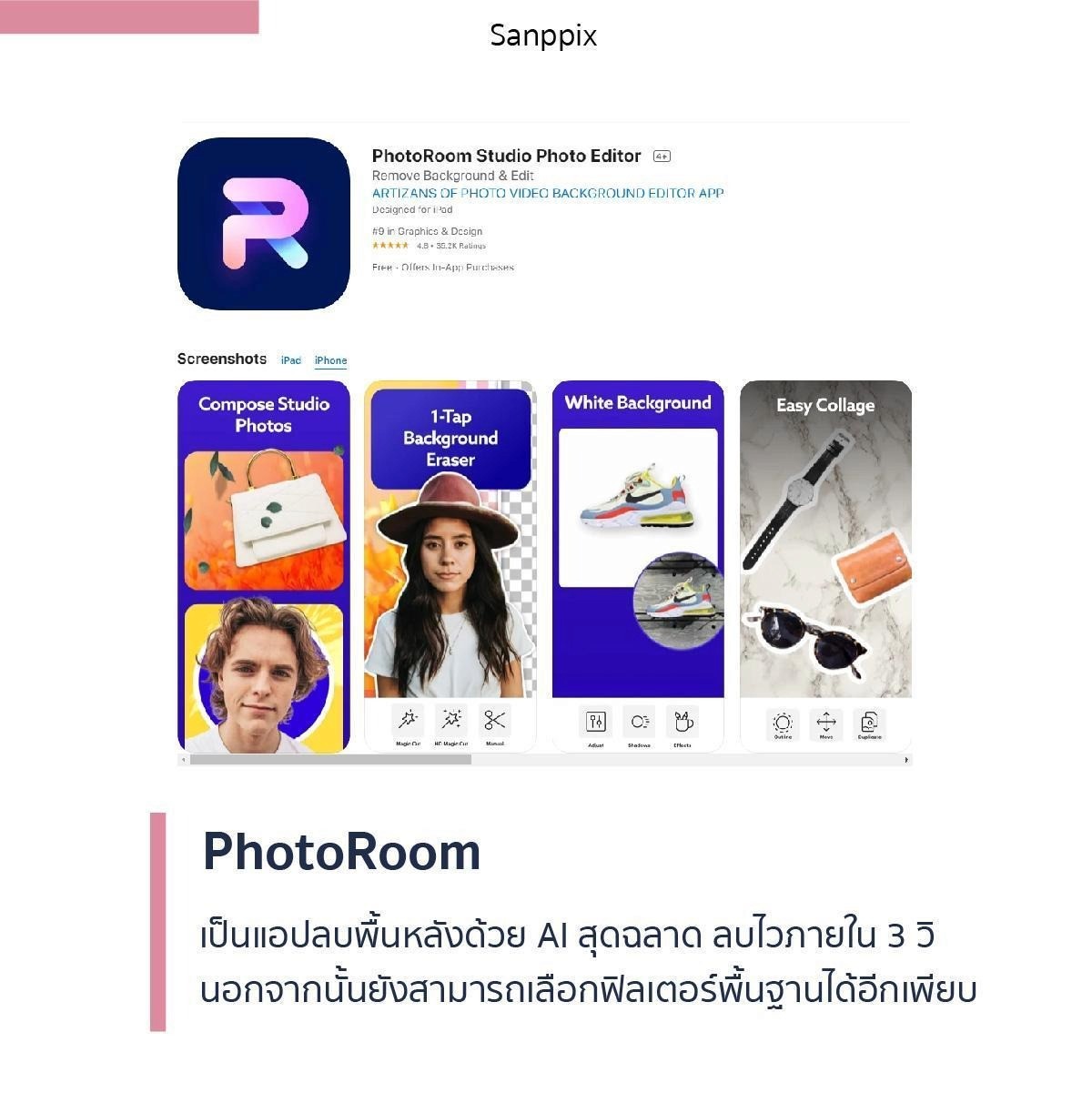
Old variant
VS
Current variant
2. Paid User Acquisition (UA) for Mobile Apps
Paid UA accelerates app growth when organic traction is still building. Any serious mobile app marketing campaign in 2026 runs across at least two of the three dominant platforms: Apple Search Ads, Google App Campaigns (Google UAC) , and Meta Advantage+ App campaigns. Most serious UA teams run all three with differentiated creative strategies rather than reusing the same assets across placements. Increasingly, teams are also testing web-to-app funnels — routing users through a web landing page before the store — for better attribution and control, especially as first-party data and SKAN 4-compliant, privacy-first attribution become the backbone of reliable UA reporting.
Run creative testing as a continuous app marketing program, not a quarterly project. Creative fatigue is the leading cause of declining ROAS in mature paid UA accounts. Test at least 3 conceptually distinct hooks per week – different problem framing, different emotional entry points, not just a color change. AI-assisted creative and testing tools now let you generate and test these variants far faster than manual production ever allowed. None of this matters if the tap doesn't land somewhere useful: deep links make sure a click from an ad routes to the exact in-app screen it promised, not your home screen.
Real-world example: Calm's most effective video ad formats open with 15-30 seconds of ambient nature footage – no text, no narration, no product. The viewer experiences the emotional state of calm before the app is introduced at all. This emotional-state creative consistently outperformed conventional feature-led ads across Meta and TikTok placements and has since been widely adopted across the wellness app category.
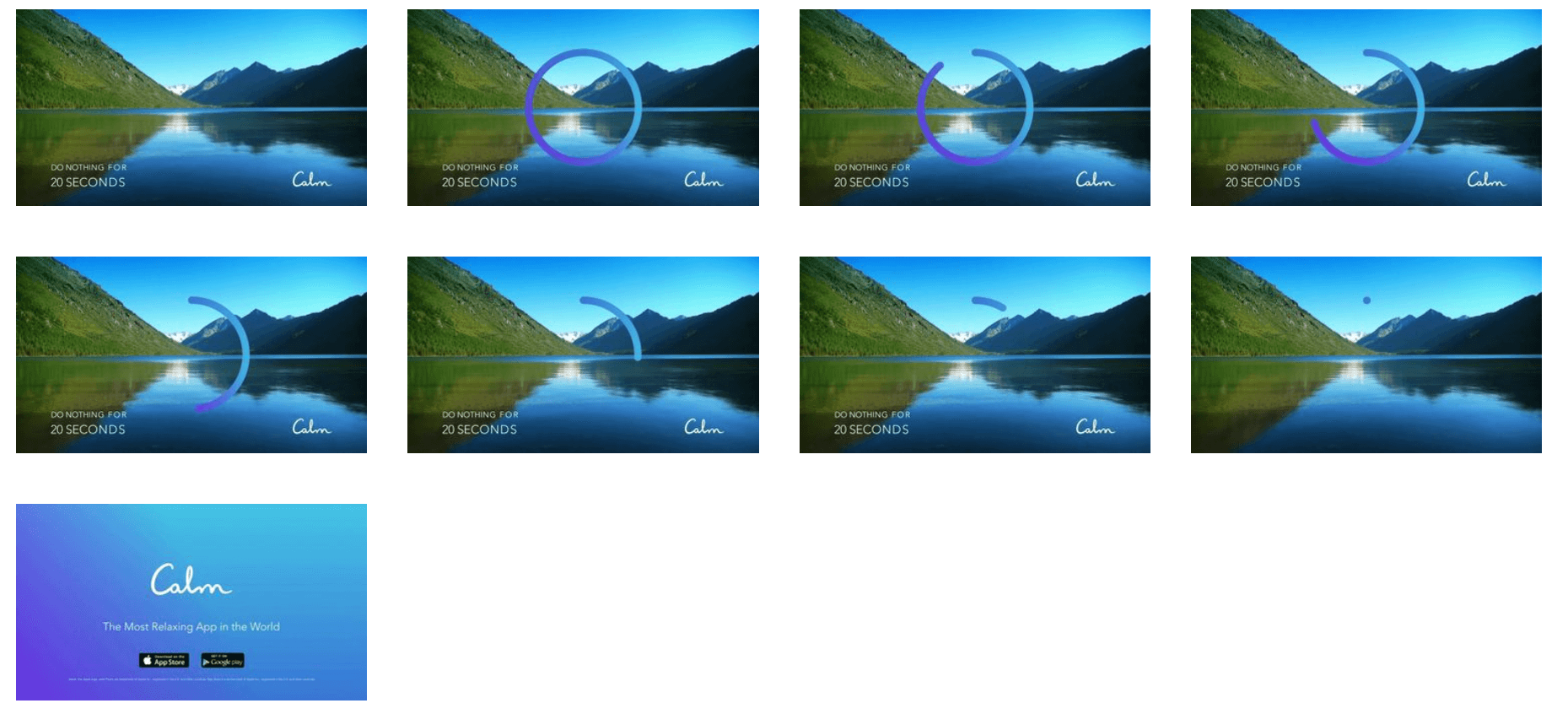
Screenshots from one of Calm’s commercial ads
3. Social Media Marketing for Mobile Apps
Social media sits at the awareness and consideration stages of the mobile app marketing funnel. The approach that works differs substantially across major social media platforms, and forcing one content format on all of them is a reliable way to perform poorly everywhere simultaneously.
TikTok and Instagram Reels: Short-form video demonstration of the app is solving a real, recognizable problem. Native, unpolished creative consistently outperforms agency-produced spots. The platform rewards authenticity over production value. This is also where user-generated content (UGC) — real customers posting about your mobile app unprompted — does more for credibility than anything your team produces in-house.
YouTube: Tutorial-style "How to do X" content that introduces your app as part of the answer can drive installs for months after publishing – and indexes in Google search, giving it organic reach long after the initial spend.
LinkedIn: The right channel for B2B apps. Thought leadership content and product explainers aimed at decision-makers drive organic consideration that is otherwise expensive to reach.
Reddit: Underused but powerful for mobile apps with technical or niche audiences. Authentic participation in relevant subreddits – answering questions, solving problems – builds credibility that paid ads cannot replicate.
Pro Tip: Remember that effective social media for mobile apps starts with a different question: what content does my target user want to consume, and how does my app connect to that? Spotify doesn't post about Spotify – it posts about music culture and personal identity. Nike's apps don't promote features – they promote athletic identity and community. Revolut's social presence is about money freedom and financial empowerment, not banking features.
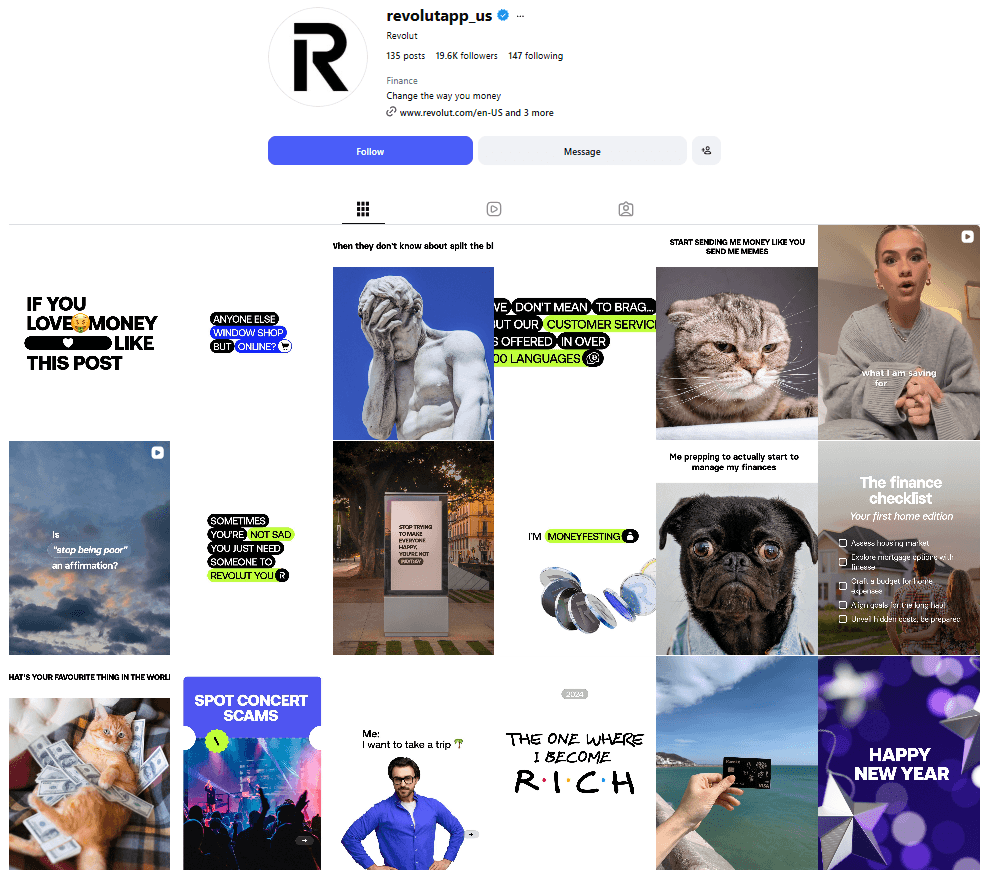
Because the right content builds the right audience. The right audience builds the right community. The right community drives app downloads and paying referrals. That's the compounding loop, and it doesn't work if you skip straight to product promotion.
4. Influencer & Creator Marketing for Mobile Apps
Influencer marketing for apps works when it's genuine and fails when it isn't. People have become remarkably good at detecting sponsorships that don't match the creator's actual behavior and interests – and the conversion data reflects it.
The formula of influencer marketing for apps that really works: find creators who are already in your target user's exact situation, and who would genuinely use your app. Partner with them in a way that shows the product in actual use, solving a real problem they have.
Fitness apps partnering with running coaches who track their actual training on the app.
Budgeting apps partnering with creators who document their debt payoff journey.
Language learning apps partnering with travel creators who actually use the app on trips.
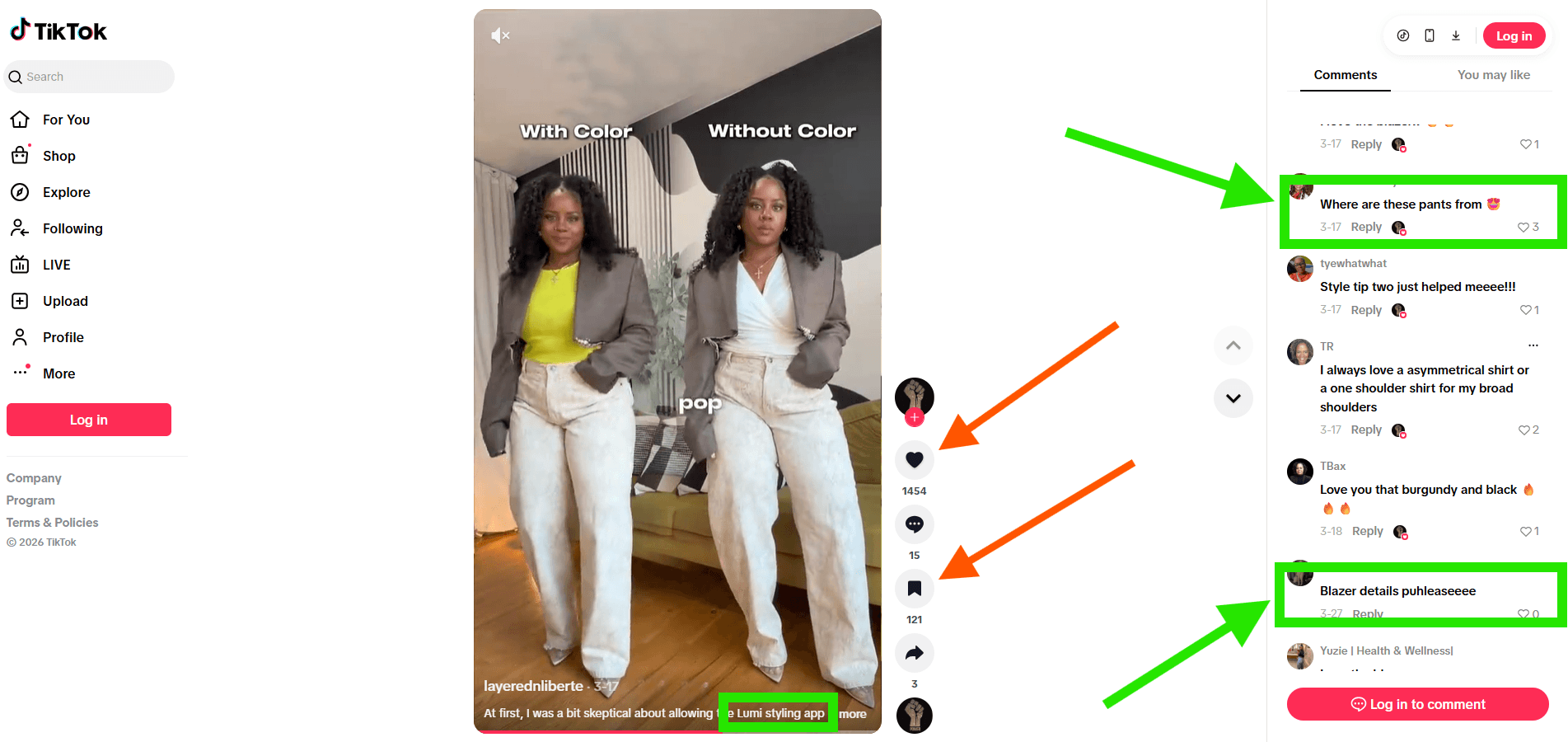
Example of how apps such as the LUMI styling app gain engagement through micro-influencers on TikTok
Pro Tip: Target micro-influencers (10K–100K followers) in your relevant niches. They show 60% higher engagement rates than macro-influencer campaigns at a fraction of the cost. The mechanism is trust density: smaller creators have more concentrated trust with their specific audience than broad-reach creators.
5. Content Marketing & SEO for Mobile Apps
Content marketing compounds where paid marketing channels don't – the same principle that makes web marketing SEO valuable applies here. An article ranking for "best budgeting app for irregular income" keeps delivering qualified installs for years at near-zero marginal cost. A paid ad stops the moment your budget runs out.
The strategic frame for content is category education, not product promotion. Your potential users are searching for solutions to their problems, not for your app specifically. Your content should meet them at the problem-awareness stage – before they know your product exists – and guide them through a journey that ends with your mobile app as the logical solution.
The gap between a problem-aware content and a product-aware content is where most app content marketing fails. An app that helps people track their sleep should rank for "why do I wake up tired" and "how to improve sleep quality," not just "best sleep tracking app." The people searching the first two queries are a much larger and more qualified audience than the people already searching for the category.
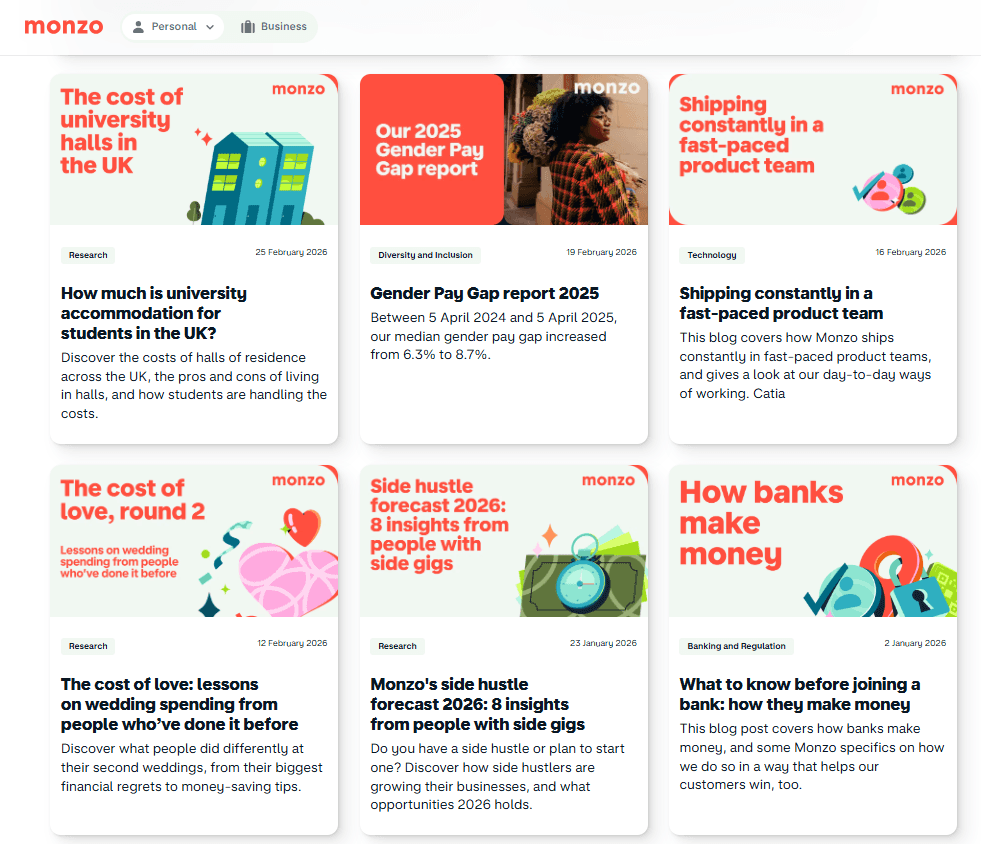
Real-world example: Monzo, a prominent UK-based digital, app-only bank with over 12 million customers, built a remarkably effective early content strategy by publishing genuinely useful personal finance content – guides on budgeting, plain-English explanations of overdraft fees, breakdowns of international payment charges. This content ranked for queries Monzo's target audience was already searching. Monzo reached 8 million UK customers largely without traditional mass-market advertising, and their content marketing program was a meaningful contributor to that outcome. |
Pro Tip: One tactic I find consistently underused: repurpose content systematically. A well-researched 2,000-word guide becomes a YouTube video script, a LinkedIn carousel, an infographic, and a five-part email sequence – the same research investment generates traffic across 5 channels simultaneously.
6. Referral Program for Mobile Apps: Building Viral Loops That Work
Referral programs are the highest-ROI acquisition channel available to most apps — but only when structured correctly. The structural error we at Enable3 see most often is rewarding the wrong behavior.
Flat referral bonuses ("give $10, get $10") reward signups, not user engagement. The result is a predictable pattern: a spike in app installs from deal-hunters, followed by near-zero activation from that cohort, followed by a spreadsheet conversation about why the referral program "didn't work." It worked exactly as designed – the design was just wrong.
The frame that works is conditional loyalty rewards tied to the behavior you actually want. The referrer earns only when their referred user completes a meaningful action: first deposit, first purchase, first workout logged, subscription activated. Both parties earn when both parties have demonstrated the real value. This screens out deal-hunters by design and brings in users who have actual intent.
Real-world example: Revolut grew to over 50 million customers globally in significant part through a referral program that rewarded both parties with cash when the referred user ordered and used their card. By tying the reward to card activation rather than account creation, Revolut ensured referred users were genuinely engaged customers – not incentive collectors. Their blended customer acquisition cost (CAC) via referral has consistently tracked below paid acquisition costs.
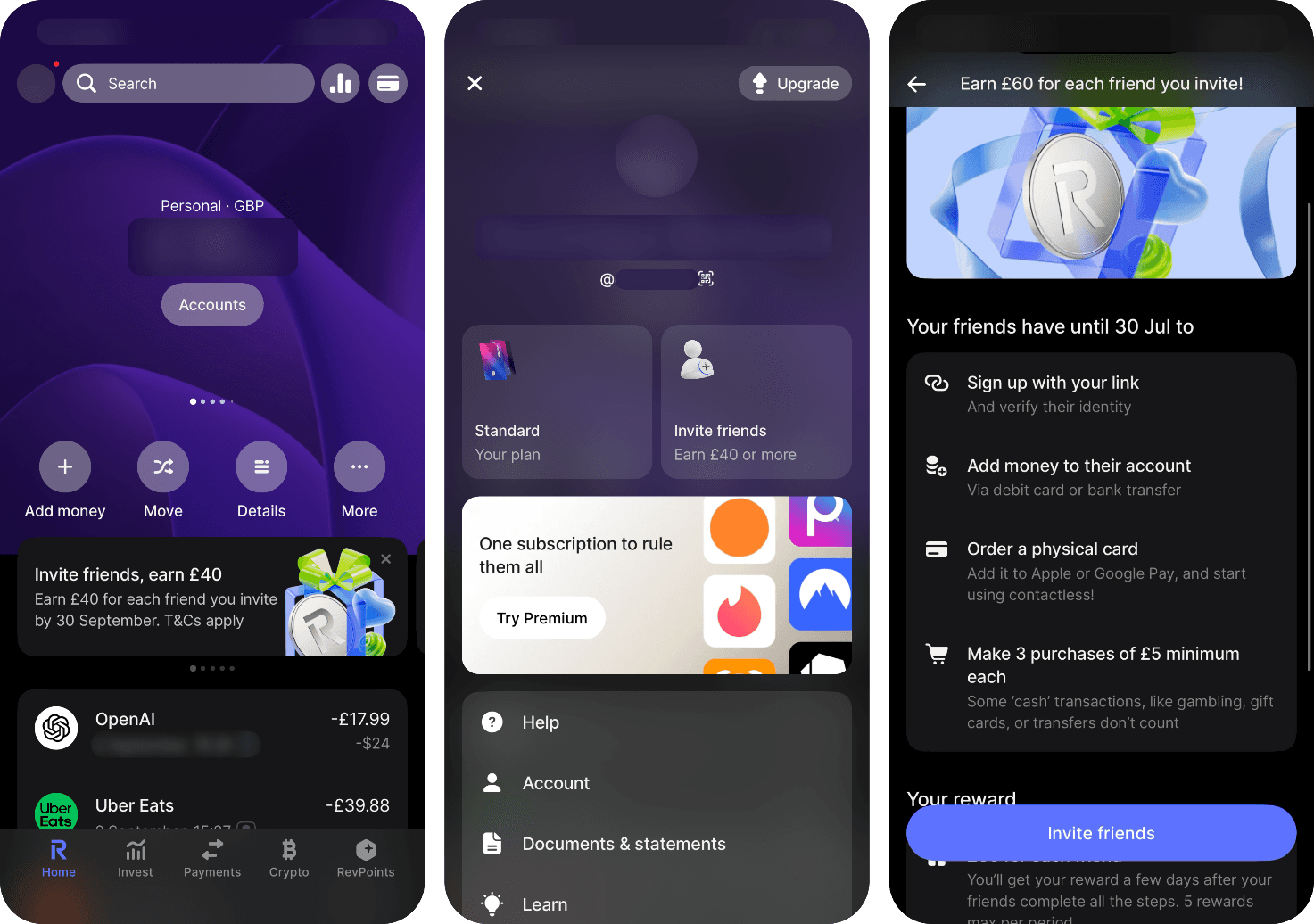
For the full mechanics of building referral programs that attract users who stay, see our in-depth guide "The Power of Referral Gamification – Turn Sharing into a Game" covering the structural decisions in detail.
Proven Mobile App Launch Marketing Tactics
The first 72 hours of your app launch set your store ranking trajectory for weeks. App store algorithms heavily weight early install velocity and rating volume. You cannot compensate for a weak launch with strong app performance in week three — the algorithm has already made its initial judgment.
Pre-launch is where most of the work happens. Build a waitlist through a pre-launch landing page, content, community, and organic social. Run a closed beta through TestFlight (iOS) or early access programs (Android). Line up creator partnerships, press outreach, and email sequences before day one. Establish your ASO foundation – optimized title, screenshots, description – before anything else.
App launch day strategy: concentrate your paid spend, activate all influencer partnerships simultaneously, send your waitlist email, and immediately prompt positive reviews from beta users who've had good experiences. The goal is a coordinated spike, not a slow build. A coordinated spike triggers algorithmic tailwinds that a slow build never generates.
Real-world example: Notion's public launch was deliberately soft – they focused on a small community of power users for nearly two years before any meaningful marketing push. By the time they scaled acquisition, tens of thousands of passionate users had already created public templates, written tutorials, and built genuine brand advocacy. Their app launch marketing was largely their community speaking on their behalf.
User Retention Strategy: Efficient Engagement Tactics That Keep Users After the Install
This is the part of your app engagement strategy that most mobile app marketing plans either skip or treat as an afterthought. I'd argue it's the most important section in the entire guide.
Here's the frame I'd encourage you to internalize: customer retention is not a product problem. It's a design problem, and it's solvable with the right mobile app retention and engagement mechanics. Companies like Duolingo, Strava, and Revolut didn't achieve exceptional retention because their products are better than competitors’ in some abstract technical sense. They achieved it because they engineered mobile app engagement systems that make returning feel rewarding and not returning feel like a loss.
Onboarding Optimization for Mobile Apps
You have roughly 90 seconds to demonstrate value before a new user makes their first unconscious judgment about whether your app is worth their time. Most apps spend those 90 seconds explaining their features. The apps with strong customer retention spend those 90 seconds creating the first experience of value.
The distinction is fundamental: feature tours describe what the app can do. Effective onboarding makes the user feel what the app does for them. Duolingo gets you completing your first lesson before you've created an account. Headspace runs your first meditation before asking for personal information. Both approaches deliver the product's core promise before asking for anything in return.
Three principles worth building into every app onboarding flow:
Minimum viable ask. Request only the information required to deliver value in the first session. Everything else can be collected progressively over time as the user's investment in the product grows.
Visible progress. Users who see a progress indicator – "Step 2 of 4" or a percentage bar – complete app onboarding flows at significantly higher rates than users who face an undifferentiated series of screens. Progress creates commitment.
Early reward. Something valuable should happen in the first session: a personalized recommendation, a completed goal, a points balance appearing in their wallet, a result that wouldn't exist without your mobile app. That first reward establishes the expectation that using your app feels really good.
Push Notifications & In-App Messaging
Push notifications are simultaneously the most powerful re-engagement tool in mobile marketing and the most commonly misused one. The average user receives 46 push notifications per day. Most are ignored. A meaningful percentage causes app uninstalls.
The difference between notifications that convert and notifications that irritate comes down to one variable: relevance. Not relevance as a vague concept, but relevance as a function of behavioral triggers.
A notification sent because a user hasn't logged in for 7 days and has an expiring reward is relevant to that specific user at that specific moment.
A notification sent at 10 am on Tuesday, because that's the standard send time, is relevant to no one.
In-app messaging operates on a different psychology: you're reaching someone who is already engaged. Use it for progressive feature disclosure (showing app’s advanced features only after basic ones are mastered), upsell moments that feel timely rather than intrusive, and feedback collection while the experience is fresh.
Real-world example: Deliveroo replaced a scheduled promotional push calendar with a heavily segmented, behavior-triggered system. A user who typically orders on Friday evenings receives a push on Friday afternoon. A user who has not ordered in 10 days receives a 'your favorite restaurants are waiting' message with a personalized shortlist. The result was significantly higher open rates and order conversion, while simultaneously reducing opt-out rates.
That's segmentation in practice — treating different behavioral cohorts differently instead of blasting one list.
Loyalty Program for Apps: Where Gamification Fits In
That's a significant missed opportunity, and in our experience, a loyalty program built around gamification is the highest-leverage thing you can add to a product that already has a working core experience.
Loyalty programs for apps are not about giving discounts. They're about three things:
creating structured, recurring reasons to return;
rewarding the specific behaviors that drive your business metrics and loyalty program KPIs and targets; and
building switching costs through accumulated value that users would lose by leaving your app.
Users in customer loyalty programs are 59% more likely to choose a brand over competitors. For mobile apps specifically, users engaged in a loyalty program typically churn at 30–40% lower rates than non-participants. That's a retention impact that most retention-focused engineering investments would struggle to match at equivalent cost.
The gamification mechanics that work particularly well in mobile apps:
Missions tie rewards to specific behaviors — "Log in 3 days in a row," "Complete your financial profile," "Activate your first eSIM plan." The critical design principle is that missions should reward behaviors that correlate with long-term retention, not arbitrary actions. If Day-7 retention among users who have completed your app onboarding mission is 3x higher than among users who haven't, that's the mission worth optimizing.
Streaks create daily engagement habits through loss aversion – the psychological discomfort of breaking a streak that has accumulated value. Duolingo's streak mechanic is the most studied example: this language learning app observably drives returns from users who are logging in specifically to protect their streak, not because they particularly feel like studying that day. That's behavioral design working exactly as intended.
Tiers create status incentives and escalating switching costs. A user who has reached Gold tier by virtue of six months of consistent engagement has two strong reasons not to churn: the status recognition they'd lose and the future loyalty program benefits they haven't yet earned. Both are powerful customer retention mechanisms — and together, they're how tier progression turns a casual user into a loyal user.
Re-Engagement & Win-Back Campaigns for Mobile Apps
No matter how effective your mobile app retention strategy is, some users will go dormant. The question is not whether it happens – it will – but whether you have a structured customer loyalty program to win them back before the relationship is permanently lost.
The most effective win-back campaigns I have seen share three characteristics:
First, they are triggered by behavior, not scheduled on a calendar.
Second, they lead with personalized value rather than generic sentiment — "You have 250 points expiring in 7 days" consistently outperforms "We miss you!" because it gives a concrete, self-interested reason to return to the app.
Third, they escalate across app marketing channels: push notification first, then email, then a final offer with a defined expiry date.
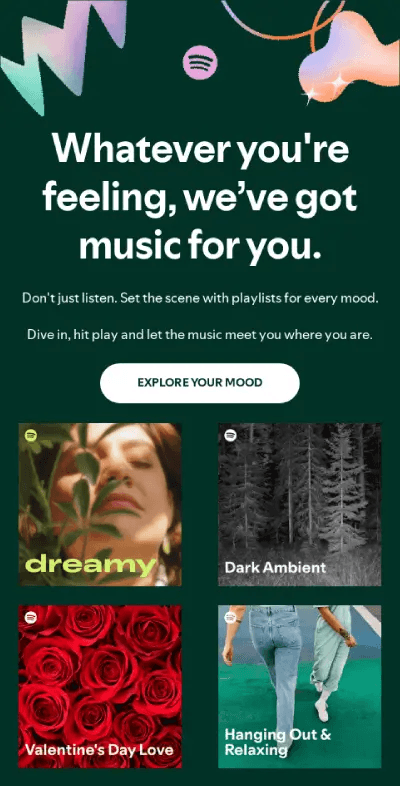
Real-world example: Spotify regularly uses personalized "You haven't listened to X artist in a while" nudges using each user's own listening history as the hook. These messages reference something specific the individual user did – they cannot be sent to anyone else. Their annual Wrapped campaign generates hundreds of millions of organic social shares – the ultimate app re-engagement driver built entirely on personalized data.
Pro Tip: One mistake we, at Enable3, see repeatedly: escalating discounts as the primary customer re-engagement lever. Training dormant users to wait for a discount before returning to your app is a pattern that compounds – you end up with a segment that only engages when you pay them to. Lead with points expiry, new features, or social proof ("your friends on the leaderboard are pulling ahead") rather than margin erosion.
Common Mobile App Marketing Mistakes to Avoid
We gathered the most common app marketing mistakes that consistently underperform below, along with the reasoning behind why each one fails.
Mistake 1. Optimizing for Installs Instead of Activated Users
An app install is a cost, not a result. An activated user – someone who has completed a meaningful first action signaling genuine engagement – is the beginning of a business relationship. Retool your customer acquisition metric to reflect a qualified post-install action.
Mistake 2. Scaling Paid UA Before Retention Benchmarks Are Met
Pouring acquisition budget into a leaky bucket accelerates losses, not growth. If your Day 7 retention sits below 15%, adding spend will not fix the underlying problem – it will deliver more users who leave your app at the same rate.
Mistake 3. Neglecting ASO After App Launch
The app store algorithms evolve. Competitor apps iterate on keyword strategies. A listing optimized at app launch will decay in relative app’s performance without a quarterly review. Most teams invest intensively in ASO pre-launch and then treat it as a closed task.
Mistake 4. Treating Every App User Identically
A first-time user who installed your mobile app yesterday has fundamentally different needs from someone active for six months. Sending identical notifications to every app user regardless of their stage or history is not efficient – it is a missed revenue.
Mistake 5. Training App Users to Wait for Discounts
The overwhelming majority of mobile app marketing conversations are dominated by how to lower customer acquisition costs. But growing actual revenue from your existing base – through loyalty mechanics, cross-sell, upsell, and referral activation – is almost always more capital-efficient. Bain & Company research shows that increasing customer retention by just 5% can increase profits by 25-95%.
Mistake 6. Disconnecting Marketing from the Product Experience
The strongest mobile app marketing strategies treat the product experience as the primary retention mechanism. If the app is confusing to navigate or the value proposition is not immediately evident in session one, no loyalty mechanics or push notification strategy will compensate for the structural problem.
How Enable3 Can Help You Build App Retention That Actually Compounds
Getting app installs is one problem. Getting users to stay, develop a habit, and bring others with them is a different problem – one that most acquisition-focused teams aren't equipped to solve. Here's where the friction is, and what we've found works.
Problem #1: Users drop off after their first action
A user completes app onboarding, takes one action, and disappears. You have no structured loyalty mechanism to pull them back, and your push notification open rates are low enough to make a meaningful dent.
Enable3's event-based Missions create engagement loops tied to specific in-app actions. "Deposit $100 → earn X points." "Activate your first eSIM plan → bonus 150 points." "Complete your financial profile → unlock your first reward." The missions aren't arbitrary – you configure them around the actions that correlate with long-term retention in your specific product. A user who hits three meaningful milestones in their first week of using your mobile app is far less likely to churn than one who hits one.
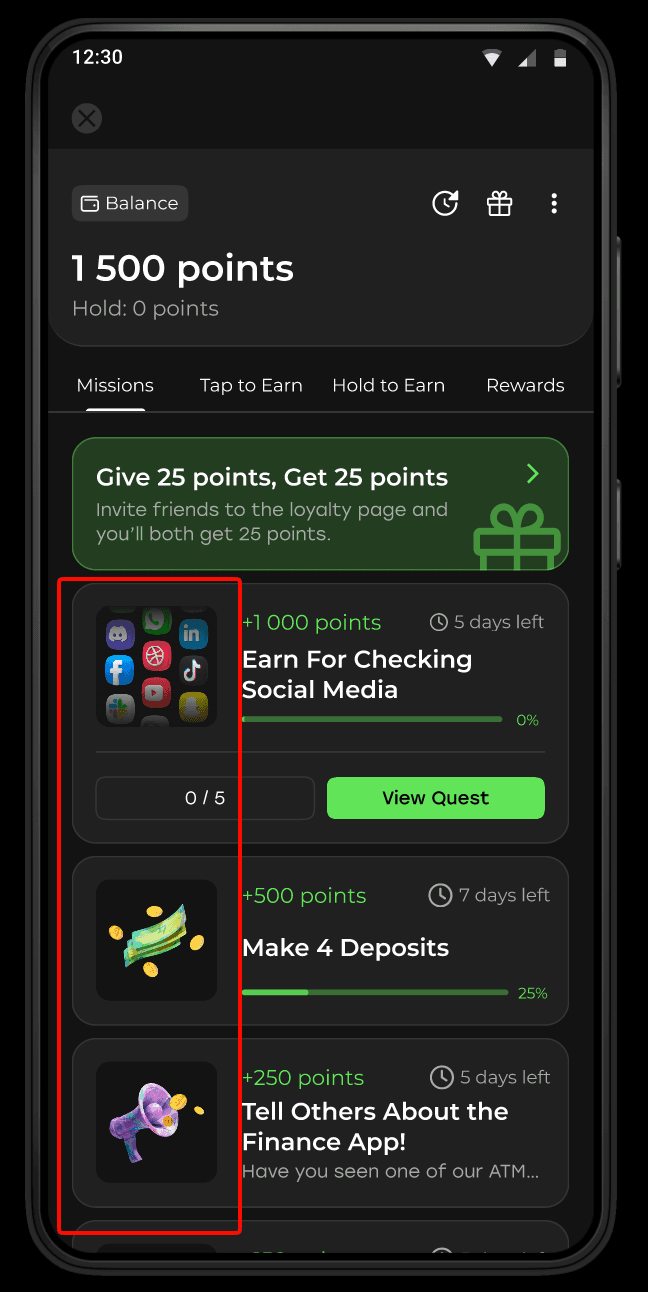
One of our clients – a well-known mobile data provider – came to us with a textbook one-and-done churn problem: 80–90% of app users made a single purchase and never returned. After launching Missions tied to onboarding, referral, and plan upgrade behaviors – alongside a points system and time-based Quests – repeat purchase rate increased by 28.8% and average paid users grew by 56.2%, with a 5.4% overall conversion rate.
Problem #2: Your app gets opened when it's needed, not as a habit
This is the utility trap. Fintech apps get opened to check a balance. Telecom apps get opened to pay a bill. Both interactions are transactional, not habitual – and transactional users churn the moment a competitor offers a slightly better deal.
If you want users to open your mobile app daily without requiring a transaction each time, Enable3's Streak mechanic is exactly what you need. "Check in daily to earn loyalty points." "Top up your balance by $50 for 3 months in a row → unlock a 2× multiplier." It rewards presence and creates the habit of using the app consistently, making every other retention and monetization mechanic more effective.

Problem #3: Your referral program is generating low-quality app users
You offer a signup bonus. You get a spike in app installs from users who collect the reward and churn within a week. Your CAC goes up, your cohort quality goes down, and your next marketing budget conversation is harder than it needed to be.
Enable3's referral program supports conditional, tiered rewards: "Invite 1 friend who completes KYC → 100 points." "Invite 5 friends who top up $50 → 300 points." The conditions ensure that both parties have demonstrated intent before either party gets paid. The tiered structure rewards your best brand advocates disproportionately – the app users who bring in 10 qualified referrals are not the same as the user who brings in one, and the incentive structure should reflect that.
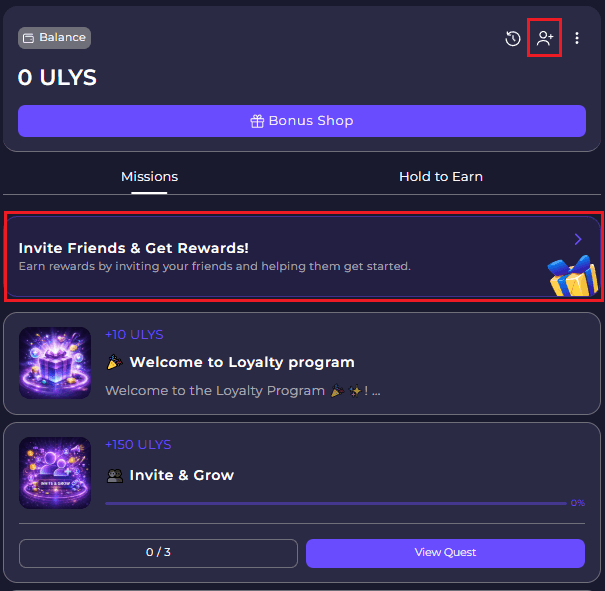
With one of our clients, Enable3's referral program generated 628 new users – of whom 34 converted to paid customers. That paid conversion rate from referred users is the metric that matters: referred users who arrive through conditional app loyalty programs have demonstrated intent before they've been rewarded, which is why their downstream quality is meaningfully higher than users acquired through flat bonuses.
Problem #4: You're running the same campaign to your entire app user base
You send a re-engagement push to all lapsed users. It converts at 2%. The remaining 98% ignore it or unsubscribe, and you've made your next communication to that segment harder. The same logic applies to loyalty campaigns.
If you want your loyalty campaigns to land differently with different app users – Enable3's Segments is the feature that makes that possible. You can group users by any behavioral dimension: purchase history, mission completion rate, time since last session, current tier, or engagement pattern. A lapsed high-value user gets a win-back Mission with a meaningful incentive. An active user who's approaching a tier threshold gets a progress-nudge Mission. A new app user in their first week gets an onboarding Mission sequence. Different app users participate in different loyalty campaigns – all with no manual list-building.
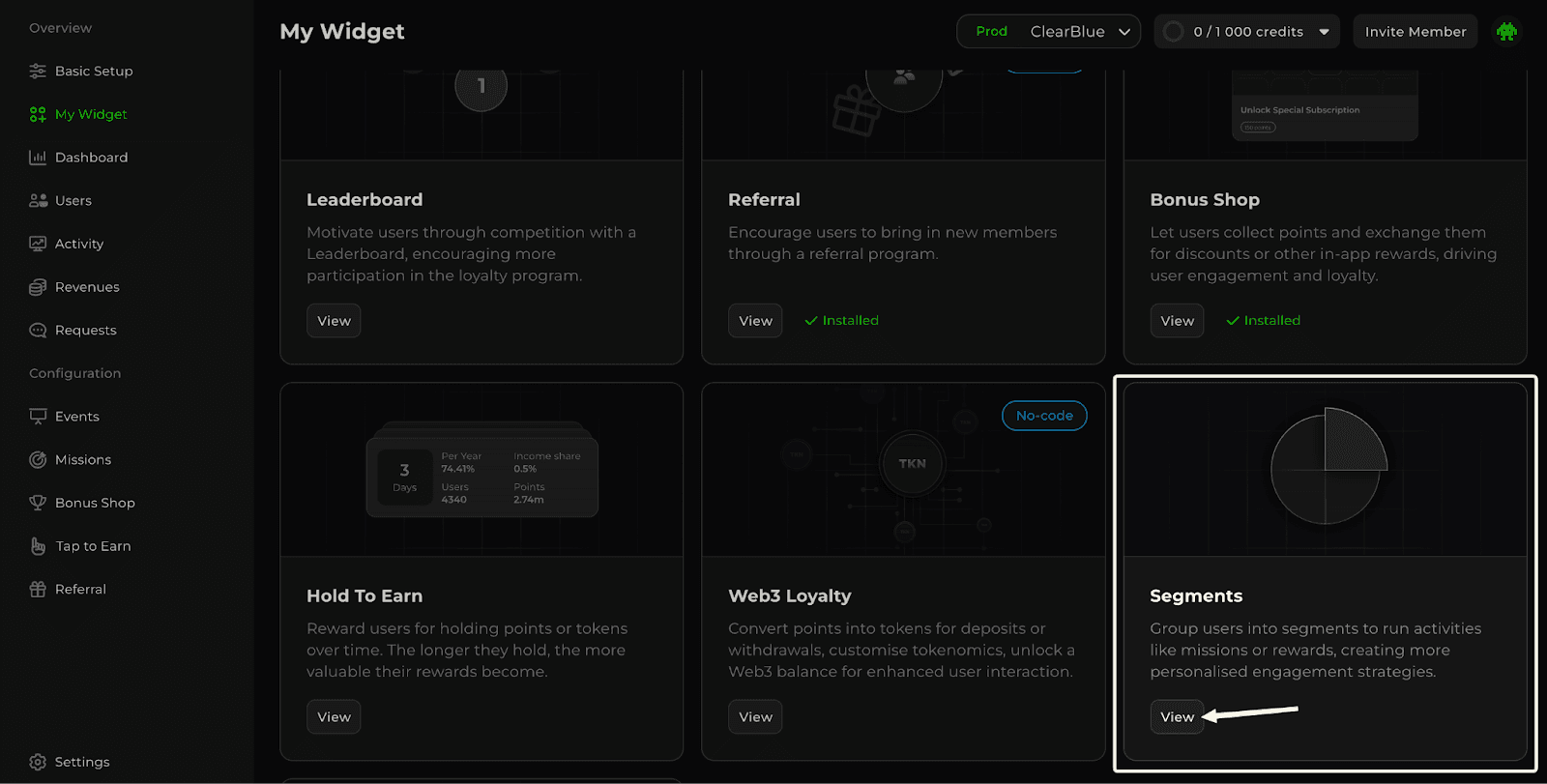
Our clients who see the strongest customer engagement results are those who build Missions around distinct behavioral stages – app onboarding, referral activity, plan upgrade behaviors – rather than applying a single loyalty campaign uniformly across all app users. That targeting precision is what makes the engagement feel relevant rather than generic, and relevance is the primary driver of both mission completion and downstream conversion.
Problem #5: Users don't discover or use your app’s highest-value features
You launch a new feature in your mobile app. Your existing users don't notice. You end up spending acquisition budget marketing to people who are already your customers. Feature adoption stalls, and the investment in building the app feature doesn't compound.
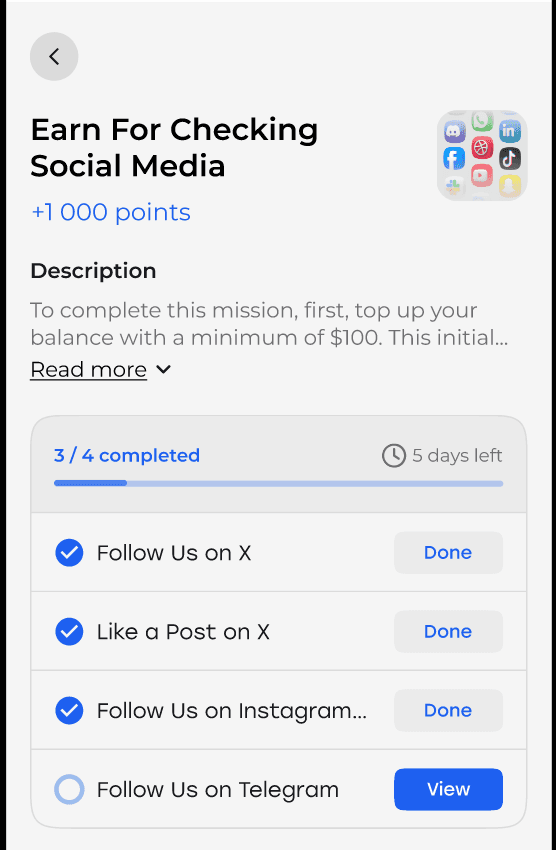
If you want to guide users from first awareness to habitual use of a feature – rather than hoping a push notification does the job – Enable3's Quests are exactly what you need. A Quest groups a sequence of missions into a single, time-limited challenge with escalating reward value. Instead of a one-time nudge, users work through a structured progression: learn about the app’s new feature, try it, use it again, unlock a reward at each step. Each stage feels like natural progress rather than a separate task – and the time limit creates urgency that a static loyalty campaign never generates.
Problem #6: You can't prove the app retention ROI to stakeholders
You know customer engagement mechanics work. Your retention curve looks better than it did six months ago. But when it comes time to defend the marketing budget, you can't draw a clean line from loyalty program investment to revenue outcomes.
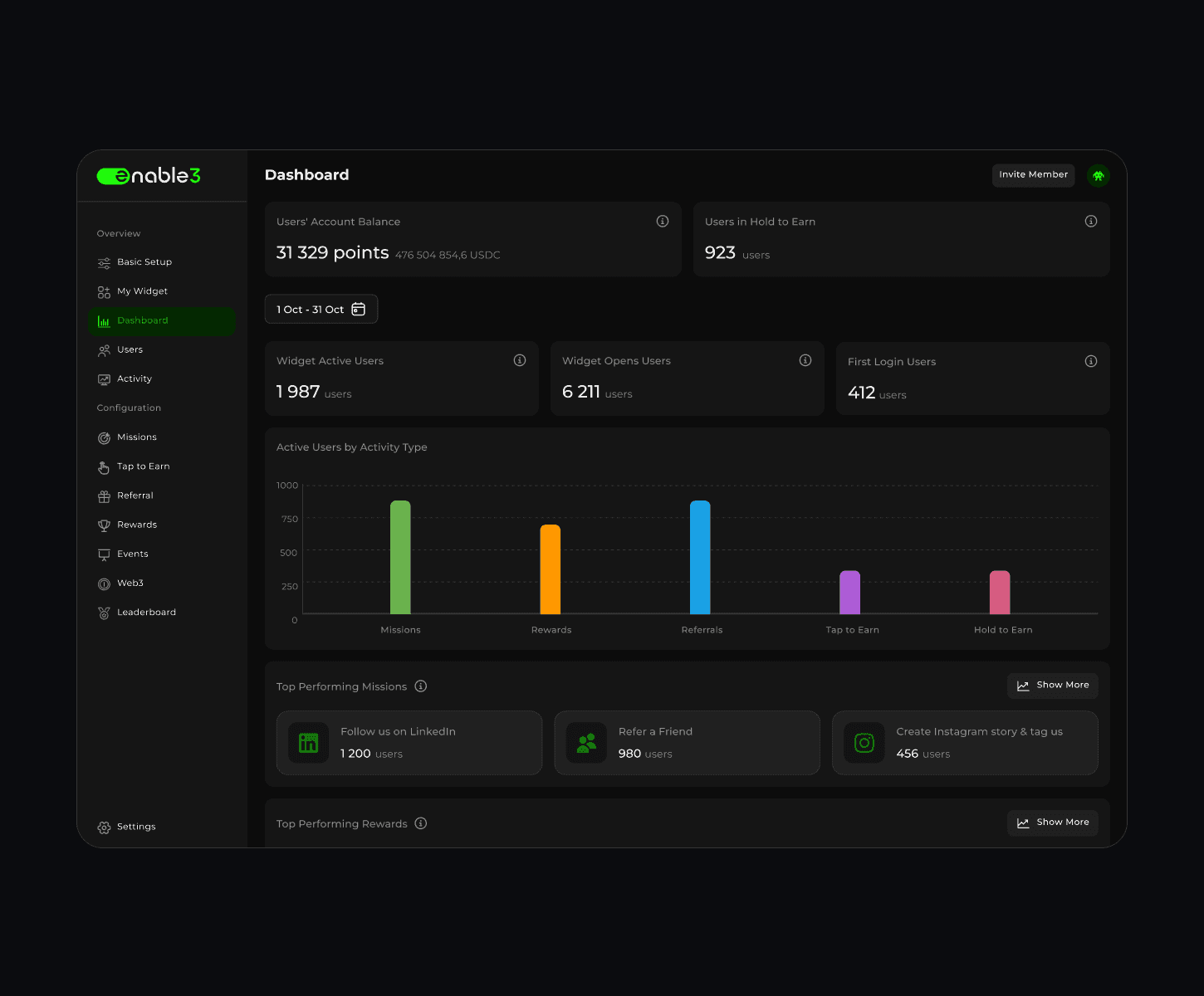
Enable3's analytics dashboard shows mission completion rates, reward redemption patterns, and point activity in real time. You can see which missions drive app return sessions, which rewards get redeemed versus ignored, and where users drop off in your engagement flows. That's the data to optimize your customer loyalty program continuously – and the data to make the business case to anyone who questions whether the investment is worth it.
Problem #7: Your loyalty program feels like a third-party tool, not part of your product
Users notice when something has been bolted on. A loyalty widget that looks different from your app, opens in a separate tab, or asks for a separate login is not a loyalty program – it is a friction point wearing loyalty clothing. Every layer of context-switching between your core product and the rewards experience dilutes user engagement and dilutes your brand.
Most customer loyalty platforms are built to be deployed, not integrated. The difference matters enormously to your users, even if they cannot articulate why.
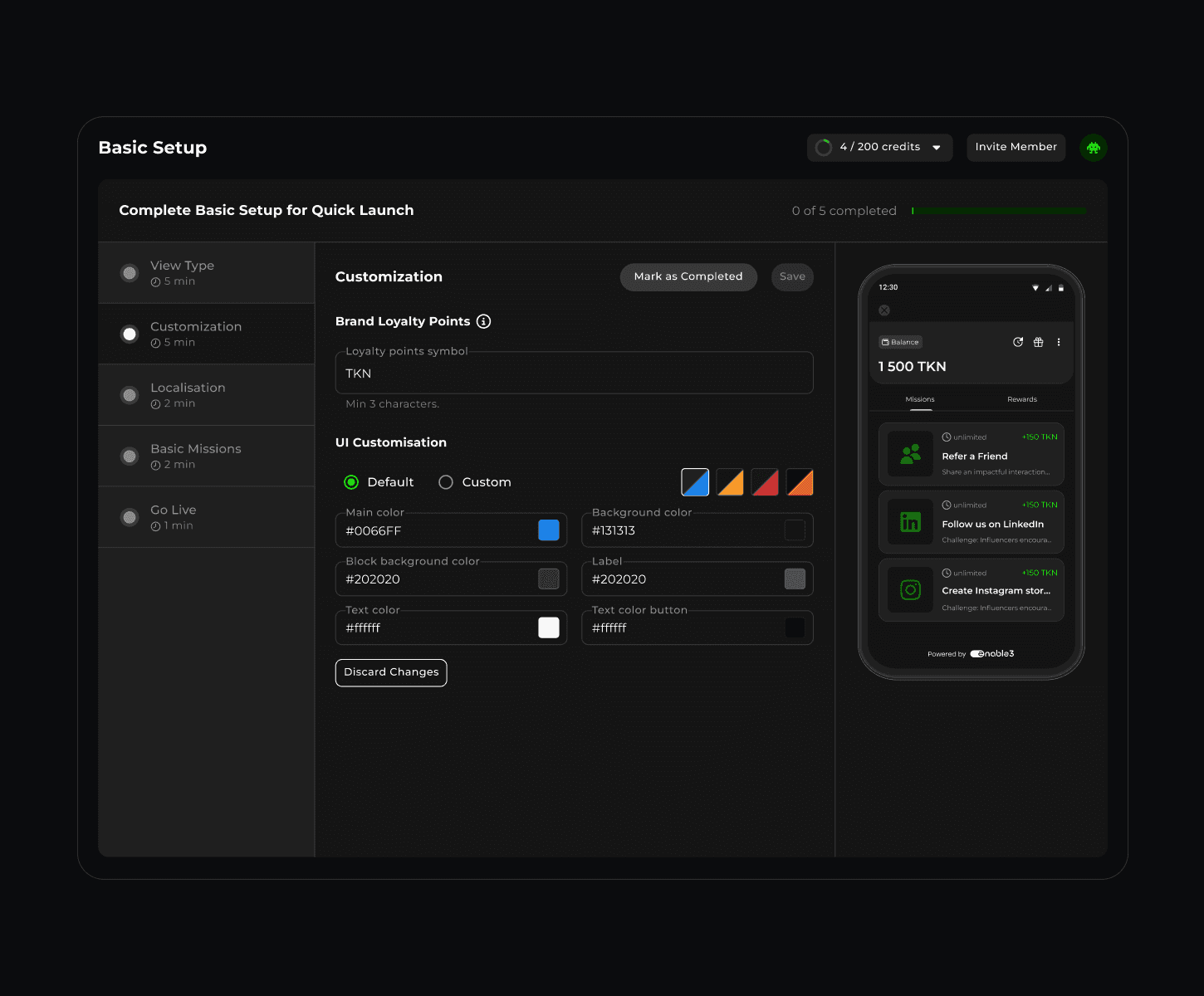
If you want your loyalty program to feel like it was always part of your product – Enable3's white-label loyalty platform is built for exactly this. Every element of the experience – the UI, the tone, the reward names, the mission logic, the onboarding flow – is customizable to match your brand. Users engage with your loyalty program inside your app, in your voice, with your visual design. They never have to leave the experience they already trust to access the rewards you are offering them.
This matters most for teams operating in categories where brand coherence is a genuine differentiator:
SaaS platforms where the product experience is the product
fintech apps where trust is the entire value proposition
mobile apps where the in-app experience is the only touchpoint you fully control.
The technical back-end – loyalty point calculations, mission triggers, reward fulfilment, analytics – runs silently in the background. What your app users see is an experience that feels like it was designed by your team, for your users, from the start. Because with Enable3 – this is possible.
Boost your app’s success and profit with Enable3
Discover how to launch a loyalty and engagement program in days with our low-code platform.
FAQ
What is an app marketing strategy, and why does every mobile app need one?
A mobile marketing strategy for apps is a structured, data-driven plan for acquiring users, activating them within the app, and retaining them long enough to generate meaningful business value. It covers app marketing channel selection, messaging architecture, KPI definition, and the specific app marketing mechanics – loyalty program, push notifications, referral systems – used to drive engagement across the full user lifecycle. Every mobile app needs one because there are over 4 million apps available across major stores as of 2026, and without a deliberate app marketing strategy covering the entire mobile app marketing funnel, apps consistently lose the vast majority of their installed base within the first week.
How do you market an app on a limited budget?
Start with ASO – it's free and compounds over time. Build organic social content around the problem your app solves, not product features. Design a conditional app referral program where cost is tied to qualified user actions, not signups. Focus your paid spend on the one app marketing channel with the lowest cost per activated user in your category, validate retention with a test cohort, and only expand from there. The Duolingo and Headspace examples show what's possible when the product experience and engagement design are strong enough to replace acquisition spend at scale.
What is app store optimization?
App store optimization (ASO) is the practice of improving your app's visibility and conversion rate within app store search — through your title, keywords, screenshots, description, and ratings — so more of the people already searching your category find and install your app organically.
What are the most important app marketing KPIs to track?
The core app marketing KPI framework covers four dimensions: acquisition efficiency (CPI and CAC), user quality and onboarding effectiveness (Day 1, Day 7, and Day 30 retention rates), customer engagement health (DAU/MAU ratio, session length, feature adoption rate), and monetization efficiency (ARPU, LTV, and monthly churn rate). Net Promoter Score is worth tracking as a leading indicator of organic referral potential. Measure these in clusters – no single loyalty metric tells the complete story, and optimizing one number in isolation often comes at the expense of another.
How do you launch an app successfully?
A successful app launch is won or lost in the first 72 hours, since app store algorithms weigh early install velocity heavily. That means doing the work before day one — building a waitlist, running a closed beta, lining up creator and press partnerships — then concentrating paid spend, reviews, and outreach into a coordinated launch-day spike rather than a slow ramp.
What is the difference between user acquisition and user retention in app marketing?
If you're trying to figure out how to increase app retention or how to reduce app churn, the first step is understanding this split. User acquisition covers everything involved in getting a new person to install your app: paid advertising, ASO, influencer marketing, content SEO, and referral programs. User retention covers everything that happens after the app install: onboarding design, push notification strategy, loyalty mechanics, gamification, and re-engagement campaigns. The most common strategic app marketing mistake is dramatically over-investing in customer acquisition while under-investing in customer retention. A 10% improvement in Day 30 retention is generally worth more to long-term revenue than a 10% increase in install volume, because retained users compound while churned ones represent irreversible sunk cost.
How do loyalty programs improve long-term app retention and revenue?
Loyalty programs improve app retention through economic and psychological mechanisms working simultaneously. Economically, accumulated loyalty points, tier status, and earned rewards raise the switching cost – a user who has achieved Gold tier and 2,000 points has a concrete financial reason not to switch to another app that a user with no accumulated value simply does not have. Psychologically, visible progress mechanics, achievement milestones, and streak-based engagement loops create habit-forming patterns that operate independently of the core product content. 79% of consumers say loyalty programs make them more likely to continue doing business with a brand – translating into higher Day 30 and Day 90 retention, higher ARPU among loyalty-enrolled cohorts, and meaningfully higher referral rates.